
MjjM Salons Blog
What Does a Cosmetologist Do at a Franchise Hair Salon?
By the MjjM Salons team
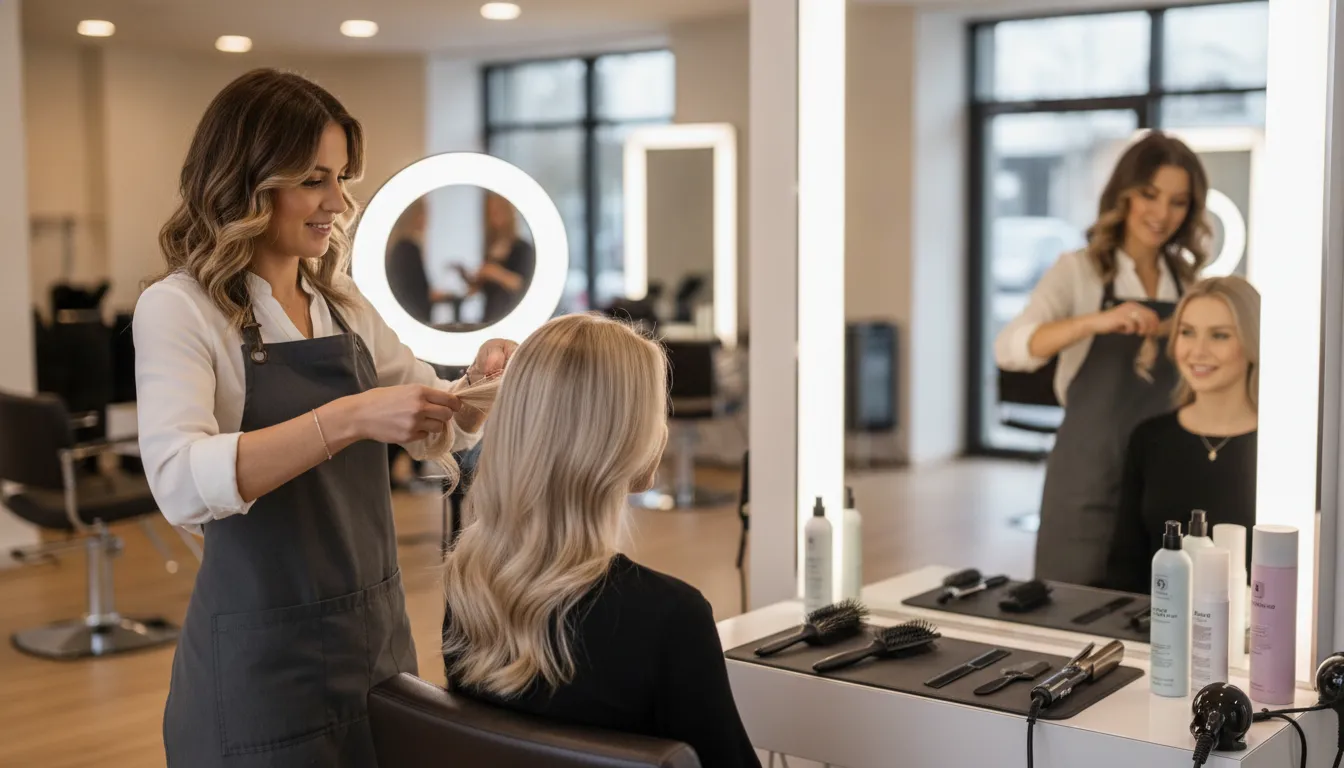
A cosmetologist at a franchise hair salon balances technical service, steady pacing, and the details that keep a salon running well. The day may begin with a client consultation, continue through a precision haircut and basic styling, and include retail guidance, sanitation, and professional training between appointments.
In practical terms, what does a cosmetologist do at a franchise hair salon? They deliver consistent hair services within a high-throughput schedule, often working in 20-minute service windows while adapting the consultation and finish to each client. The U.S. Bureau of Labor Statistics projects 5 percent employment growth for barbers, hairstylists, and cosmetologists from 2024 to 2034. Learn more in this complete hiring guide for cosmetologist jobs in Maine and New Hampshire.
For a job seeker, the role is easier to evaluate when you can picture its rhythm. The sections ahead follow a typical workday, from the first client conversation through the service, cleanup, and ongoing development that support a successful franchise salon career.
Apply for cosmetologist jobs with MjjM Salons
What Does a Cosmetologist at a Franchise Hair Salon Do Each Day?
If you are asking, "what does a cosmetologist do at a franchise hair salon," the answer is a blend of focused client service. Technical consistency, and behind-the-scenes salon responsibilities. At a MjjM Salons location. A cosmetologist works through a structured rhythm that can make each appointment efficient while still leaving room for a professional consultation and thoughtful recommendations.
The day commonly begins with a consultation. Before picking up the shears, the cosmetologist confirms what the client wants, discusses length and shape. Considers the client's routine, and identifies any practical concerns that may affect the service. A clear consultation helps the stylist set realistic expectations and choose the right approach for the appointment. It also creates an opportunity to explain maintenance needs in plain language rather than assuming the client already knows what to request.
Consultation, precision cutting, and basic styling
In a high-throughput franchise salon, consultations, cutting, and basic styling often take place within 20-minute service windows. That schedule requires preparation, calm communication, and strong time management. The cosmetologist needs to listen closely, make decisions efficiently, and keep the service moving without making the client feel rushed.
Precision cutting protocols provide a consistent technical foundation. Franchise cosmetologists may use standardized techniques such as Supercuts' Precision Haircutting to support reliable results across locations. Standardization does not remove professional judgment. It gives the stylist a repeatable framework while the consultation guides how that framework is adapted to the client's hair, preferences, and requested finish. The appointment typically ends with basic styling, a quick review of the result, and practical guidance the client can use at home.
For a broader look at the role, including qualifications and career considerations, read the complete hiring guide for cosmetologist jobs in New Hampshire.
Responsibilities beyond the chair
The workday does not end when the client leaves the chair. Cosmetologists may recommend retail products that fit the client's styling goals and explain how to use them. Recommendations should be relevant and useful, not a sales script. The stylist also helps maintain a clean, orderly environment by sanitizing tools and work areas according to salon procedures. Consistent sanitation supports a professional experience for every client and helps the team stay ready for the next service.
Ongoing learning is another part of the role. MjjM Salons supports professional development through paid five-day Hairstylist Academy training and advanced technique certifications. That training can help a cosmetologist strengthen existing skills, learn consistent service methods, and prepare for continued growth in a franchise environment. Across Maine, New Hampshire, and Massachusetts, the day-to-day role combines hands-on artistry with dependable systems. Teamwork, and a commitment to helping each client leave with a practical, well-executed result. Candidates can explore cosmetologist roles at MjjM Salons to compare the available locations and expectations.
What Services Does a Cosmetologist at a Franchise Chain Perform?
A cosmetologist at a franchise hair chain typically provides a practical range of haircutting, styling, coloring, and treatment services. The exact menu depends on the salon, the stylist's training, and the client's needs. In a franchise setting, however, services are generally delivered through shared techniques and service expectations, so clients can receive a familiar experience from location to location.
Core hair services
Most of the appointment is spent consulting with the client, selecting an appropriate service, and carrying it out safely and efficiently. Common responsibilities include:
- Haircuts: Consult with the client about length, shape, maintenance, and styling preferences, then perform a precision haircut using the salon's established cutting techniques.
- Styling: Provide basic blowouts, finishing, and other styling services suited to the client's haircut and requested look.
- Color services: Apply approved color services according to the salon's procedures, while discussing the client's goals and the upkeep involved.
- Treatments: Recommend and perform appropriate conditioning or other hair treatments available through the salon.
- Client consultation: Assess the hair's current condition, clarify the requested result, and explain realistic service and maintenance considerations before beginning.
At MjjM Salons, the customer knowledge base describes franchise cosmetologists as using standardized techniques such as Supercuts' Precision Haircutting. These protocols are intended to support consistent customer results while still leaving room for the stylist's professional judgment and communication with each client.
Responsibilities beyond the appointment
The role also includes work that supports the salon's operation and the client's experience. A cosmetologist may recommend retail products that fit a client's hair type, service, and home-care routine. Recommendations should be relevant and informative rather than a substitute for the consultation itself.
Sanitation is another routine responsibility. Stylists clean and disinfect work areas and tools according to salon procedures, maintain an orderly station, and help keep shared spaces ready for the next client. When color or treatment services are performed, following product directions and established safety practices is part of delivering the service responsibly.
Franchise standardization can make these expectations clearer. Shared service methods, product guidance, sanitation procedures, and training give stylists a common foundation across the chain. Ongoing certification training can then build on that foundation as a cosmetologist develops new skills. The result is a role that combines hands-on hair work with consultation, product knowledge, cleanliness, and continued professional development.
How Client Volume and Scheduling Work at a Franchise Salon
A busy franchise salon usually runs on a clear appointment rhythm. Rather than waiting for each client to arrive before deciding what happens next. The schedule gives the stylist a working plan for consultations, cuts, styling, and transitions throughout the day. At MjjM Salons, the workflow is designed for high-throughput service, with many appointments organized around 20-minute windows for consultation, precision cutting, and basic styling. This service model calls for focus, preparation, and the ability to deliver a consistent experience from one guest to the next.
What a full chair can feel like
When the schedule is full, a cosmetologist may move from a returning guest to a walk-in, then to another booked appointment with little downtime between services. Each interaction still begins with listening. The stylist confirms what the client wants, considers the current shape and condition of the hair, and explains what can be completed within the appointment. The service then moves into the technical work, followed by a quick review of the finished look and any practical styling guidance.
That pace rewards cosmetologists who can stay organized without making clients feel rushed. Tools need to be ready, the station needs to remain clean, and products must be used thoughtfully. The next appointment may have a different goal, so the stylist has to reset mentally as well as physically. A busy chair is not simply a matter of working faster. It is a matter of managing time while maintaining clear communication and careful technique.
How online booking and check-in shape the day
Online booking helps clients select available services and appointment times before they enter the salon. Online check-in can also give the team advance notice that a guest is arriving, helping the salon organize its queue and reduce unnecessary waiting. Walk-ins add flexibility to the schedule, but they also require the team to assess current availability and fit the requested service into the day responsibly.
For a cosmetologist, this means the appointment book is an active part of the workday. A small delay can affect several later appointments, while an opening may be filled by a walk-in or an online booking. Staying aware of the schedule helps the stylist set realistic expectations, communicate timing changes, and protect the quality of each service.
Why consistent client flow matters
Franchise support can make client volume more predictable than a model in which an independent stylist must generate every appointment alone. Marketing support and an established salon name can contribute to consistent client flow, including both scheduled guests and people looking for a convenient walk-in service. The result is a steadier opportunity to build relationships, practice service skills, and develop repeat business over time.
For a closer look at the work environment at a franchise salon, consider how scheduling support and marketing fit into the larger employment model. The daily experience still depends on the individual salon and schedule. But the basic expectation is consistent: provide attentive service, work safely, and keep the client experience moving smoothly.
Tools, Products, and Standardized Training at a Franchise Salon
One practical answer to what does a cosmetologist do at a franchise hair salon is that the job includes working within a supported service system. You are still responsible for professional judgment, consultation, and hands-on technique, but you do not have to build every part of the operation from scratch. Standardized tools, product lines, and training can give you a dependable foundation for serving clients and developing your career.
Work with established tools and product systems
Franchise salons use defined service protocols to promote consistent results across locations. For example, cosmetologists may follow a precision-cutting system rather than relying on an entirely different method for every appointment. A shared approach helps stylists communicate about techniques, maintain service standards, and deliver a familiar experience for clients who visit different salons within the same brand.
The salon environment also provides the products and operational supplies needed for daily work. That can reduce the guesswork and personal expense involved in purchasing your own professional inventory. Instead of outfitting a full station and deciding which retail products to carry alone. You can learn the salon's established product lines and how they fit different client needs. Product recommendations become part of the service conversation, alongside consultation, styling, sanitation, and other routine responsibilities.
This structure does not remove the need for creativity. A cosmetologist still evaluates hair type, listens to the client's goals, and adapts a standardized technique to the individual service. The system simply gives you a reliable starting point, which can be especially useful when you are joining a new salon or building confidence after completing cosmetology school.
Build skills through paid training and certifications
Training is another important part of the franchise model. MjjM Salons provides paid 5-day Hairstylist Academy training for professional stylists, along with advanced technique certifications. Paid onboarding gives a new team member dedicated time to learn the salon's service expectations, tools, and workflow before taking on the full pace of the role. Advanced certifications can then support continued learning as your interests and experience develop.
On-the-job training also connects daily work to longer-term career development. You may strengthen consultation skills, improve precision cutting, become more comfortable with retail recommendations, or learn additional techniques through structured coaching. Franchise career paths can extend beyond the stylist position into leadership and management, supported by company-wide training and standardized methods.
For a broader look at cosmetologist jobs in Maine and New Hampshire, review the complete hiring guide. MjjM Salons operates locations across Maine, New Hampshire, and Massachusetts. So the available opportunity and training support may vary by salon while remaining part of the same overall franchise system.
How a Franchise Salon Role Differs from an Independent Salon
Both franchise and independent salons can offer rewarding careers, but the business structure shapes a cosmetologist's daily experience. In a franchise salon, the employer typically manages the brand, marketing, operating systems, and much of the customer acquisition. In a booth-rental arrangement, the cosmetologist operates more like an independent business owner, responsible for rent, attracting clients, and managing many business details directly.
The right fit depends on how much control, support, and business responsibility you want. This comparison outlines the practical differences without treating one model as universally better.
| Consideration | Franchise or commission salon | Independent or booth rental |
|---|---|---|
| Compensation model | Usually commission-based, with earnings tied to services and the salon's pay structure. | The cosmetologist pays booth rent and keeps the remaining service revenue after business expenses. |
| Client flow | Steady marketing support and consistent client flow can reduce the need to build every appointment from scratch. | The cosmetologist generally attracts and retains their own clients, so appointment volume may depend more directly on personal marketing and referrals. |
| Marketing support | Brand-level campaigns, location marketing, and established visibility may support customer acquisition. | The booth renter usually controls marketing and pays for or manages promotional efforts independently. |
| Training | Structured programs, standardized techniques, and ongoing certifications can provide a defined learning path. MjjM Salons, for example, offers paid 5-day Hairstylist Academy training. | The cosmetologist chooses training based on individual goals and typically funds and schedules continuing education themselves. |
| Benefits | Depending on the employer and position, a commission role may include workplace benefits and operational support beyond the service payment. | Benefits and business protections are generally the individual's responsibility, along with supplies, payment processing, and other overhead. |
| Career progression | A larger organization may offer advancement from stylist to manager, supported by company-wide training and established systems. | Progression may mean expanding a personal clientele, renting additional space, hiring staff, or opening an independent salon. |
These differences affect more than compensation. A franchise environment can provide a clearer operating framework for someone who wants to concentrate on consultations. Technical services, and client relationships while receiving support with customer flow and promotion. An independent cosmetologist may prefer greater control over pricing, scheduling, branding, products, and the overall guest experience, even when that control brings additional administrative work.
Before applying, consider whether you want predictable systems or maximum autonomy, and ask prospective employers how commission, scheduling, training, benefits, and advancement work in practice. Reviewing the daily life at a franchise salon can also help you compare the work environment with the way you want to build your career.
What a Cosmetologist Needs to Know Before Applying
Before applying to a franchise salon, confirm that your cosmetology license meets the requirements for the state where you want to work. Licensing is a basic requirement for cosmetologists, and requirements can vary between Maine, New Hampshire, and Massachusetts. If you are considering more than one market, review each state's current licensing rules and keep your license information ready for the application process.
MjjM Salons operates franchise Supercuts locations across all three states: Maine, New Hampshire, and Massachusetts. That footprint may give licensed cosmetologists options to pursue a role closer to home or consider a different location as their circumstances change. For a broader overview of the hiring process and career considerations, see the complete guide to cosmetologist jobs in Maine and New Hampshire.
What franchise employers look for
A license establishes that you can work professionally, but hiring managers also look at how you serve clients and contribute to the salon team. Reliability matters because a salon schedule depends on stylists arriving prepared, communicating clearly, and honoring appointments. Service skills matter just as much. Employers want cosmetologists who can listen during a consultation, explain realistic options, perform services carefully, and create a respectful experience for every client.
Willingness to train is another important quality. Franchise salons use standardized techniques and may provide structured development, including paid training and advanced certifications. Being open to learning a salon's service systems can help you deliver consistent results while continuing to build your own skills. Ongoing responsibilities may also include sanitation, product recommendations, and participating in professional training, not only cutting or styling hair.
The career outlook is also encouraging. The U.S. Bureau of Labor Statistics projects 5% employment growth for barbers, hairstylists, and cosmetologists from 2024 through 2034, faster than the average for all occupations. Read the BLS occupational outlook for the source and additional career information.
Questions to ask yourself before applying
- Do I have the required license? Confirm that your license is current and valid for the state and role you are pursuing.
- Can I work reliably in a scheduled salon environment? Consider your availability, punctuality, and ability to communicate with clients and teammates.
- Am I willing to learn a franchise system? Be ready to follow established techniques while developing your personal service strengths.
- How do I apply with MjjM Salons? MjjM Salons uses a chat-to-apply system that guides candidates through the initial application. You can begin the process online and share your experience, licensing details, and preferred location.
A commission-based franchise salon can also offer structured marketing support and consistent client flow compared with independent booth rental. Those factors may be useful to weigh alongside pay, schedule, training, location, and the kind of salon environment where you do your best work. Before making a decision, review MjjM Salons career opportunities and ask which terms apply to the specific role.
Start your cosmetologist application with MjjM Salons
Frequently Asked Questions
What does a cosmetologist do at a franchise hair salon?
A cosmetologist consults with each client, performs haircuts and styling, recommends appropriate retail products, maintains sanitation standards, and continues technical training. At a high-volume franchise salon, services may follow structured techniques and run in approximately 20-minute windows, so clear communication and efficient execution matter. Learn more about MjjM salon services and standards.
How is working at a franchise salon different from working independently?
A franchise role typically provides an established brand, marketing support, salon systems, and a steady flow of clients. While an independent stylist or booth renter generally carries more responsibility for attracting clients, managing business costs, and promoting services. The right choice depends on whether you value structured support and a team environment or prefer greater control over your business model.
What services can a cosmetologist perform in a franchise salon?
Services vary by salon and licensing scope, but the role commonly includes precision haircuts, basic styling, color-related services, client consultations, and product recommendations. Cosmetologists may also complete sanitation tasks and participate in additional training or certifications as their skills develop. Ask the individual salon which services and techniques are included in a specific position.
What training and qualifications are needed to apply?
You generally need an active cosmetology license that meets the requirements where you will work, including Maine, New Hampshire, or Massachusetts. Franchise employers may also provide structured onboarding and paid technical development. For example, MjjM Salons offers a paid five-day Hairstylist Academy and advanced technique certifications. Review the role details and apply through the employer's chat-to-apply system to confirm current requirements.
Ready to Apply with MjjM Salons?
If you are looking for a cosmetologist role with a structured franchise salon environment, MjjM Salons may be a practical next step. The team welcomes applicants interested in opportunities across Maine, New Hampshire, and Massachusetts.
Apply for cosmetologist jobs with MjjM Salons
The chat-to-apply system guides you through the initial application. Get started by reviewing the available opportunities and sharing your experience, licensing details, and career interests.