
MjjM Salons Blog
Cosmetologist Jobs New Hampshire: Hiring Guide
By the MjjM Salons team
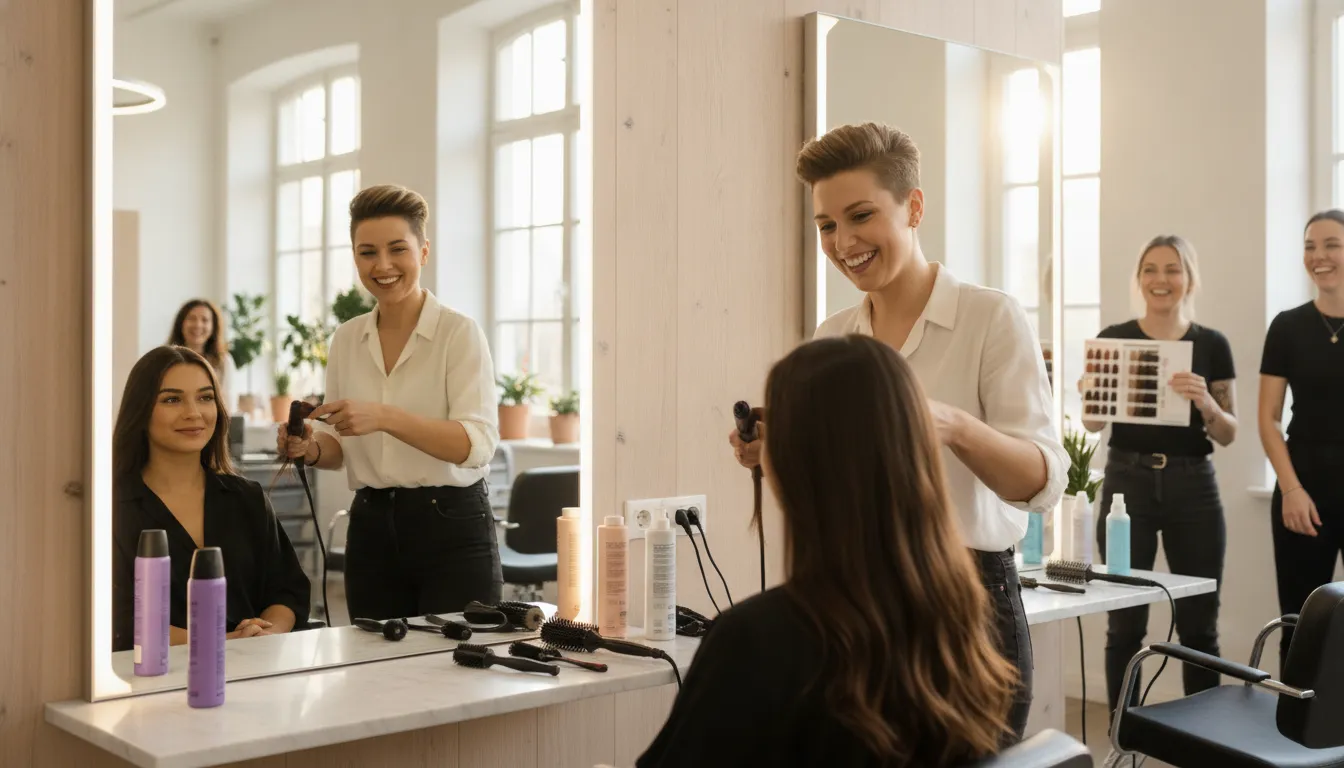
Finding the right salon role in New Hampshire takes more than scanning a job board. You need to compare the work environment, understand licensing expectations, and identify an application process that respects your time. New Hampshire's Board of Barbering, Cosmetology, and Esthetics regulates cosmetology practice, while national guidance confirms that cosmetologists must meet state licensing requirements before performing professional services.
Book your next haircut with MjjM Salons
Start your New Hampshire cosmetologist job search today at the Mjjm Salons careers page.
When you search for cosmetologist jobs new hampshire, look for openings that match your license status, preferred services, schedule, and career goals. Mjjm Salons offers opportunities across its New Hampshire locations, with a guided chat-to-apply system designed to make the first step straightforward.
This guide explains how to evaluate available roles, weigh franchise and independent salon settings, and prepare an application that shows what you can contribute. For broader context, review our guide to cosmetology careers in Maine and New Hampshire, then start by looking at the types of positions currently available.
What Cosmetologist Jobs Are Open in New Hampshire?
Cosmetologist jobs in New Hampshire appear across salons, spas, and other personal care settings, with openings suited to different stages of a beauty professional's career. The right role depends on your license status, technical strengths, preferred schedule, and the kind of client experience you want to build. New Hampshire's Board of Barbering, Cosmetology, and Esthetics regulates these professions, so candidates should confirm that their credentials meet current state requirements before applying.
Common roles for New Hampshire candidates
- Entry-level stylist: New graduates and early-career professionals may find assistant or developing-stylist positions that combine supervised practice, ongoing education, and service work. These roles can help build speed, confidence, and a client base while the stylist gains experience.
- Licensed cosmetologist: A licensed professional may provide haircutting, styling, chemical, and other services within the scope of the applicable credential. Employers often look for both technical ability and a consistent, welcoming approach to client service.
- Color specialist: Stylists with strong color, formulation, corrective-color, or chemical-service skills may find roles that emphasize more specialized work. A portfolio showing relevant results can help employers evaluate your experience.
- Esthetician: Some listings focus on skin-care services rather than hair. Review each posting carefully to confirm the license, training, and service experience required for the position.
Where to look for current openings
Start with broad job boards, but do not rely on them exclusively. Salon career pages often provide more detail about scheduling, training, compensation structure, and the application process. Local salons may also post openings on social media or accept direct applications even when a job-board listing is not active. Checking the employer's own site can reveal roles that are not indexed everywhere.

Mjjm Salons operates 34 Supercuts locations across Maine, New Hampshire, and Massachusetts, creating multiple locations for candidates to review. Its franchise hiring channel is another option for applicants who want to compare location, schedule, and role details in one process. For context on the model, see working at a franchise salon in Maine and New Hampshire. You can also review broader cosmetology careers in Maine and New Hampshire before narrowing your search.
The Bureau of Labor Statistics projects continued employment growth for barbers, hairstylists, and cosmetologists as demand for routine hair and personal-care services continues. That outlook does not guarantee an opening or a particular outcome, but it supports researching several role types and applying where the requirements match your qualifications.
Franchise Salons vs Independent Salons Hiring in New Hampshire
Both franchise and independent salons can offer strong opportunities for licensed cosmetologists in New Hampshire. The better fit depends on how much structure, operational support, and control you want in your day-to-day work. Mjjm Salons operates 34 Supercuts locations across Maine, New Hampshire, and Massachusetts, giving candidates the chance to consider a multi-location franchise environment alongside independent options.
| Consideration | Franchise salon | Independent salon or booth rental |
|---|---|---|
| Training and standards | Centralized training and brand standards can create a consistent service framework across locations. | Training may be more informal or shaped by the owner, manager, or stylist's individual approach. |
| Client flow | Local marketing, brand recognition, and established demand may help provide a steady flow of clients. | The salon may have a loyal local following, but booth renters generally build and maintain their own clientele. |
| Business responsibilities | The operator may handle marketing and client acquisition, allowing stylists to focus primarily on services. | Booth renters typically manage marketing, scheduling, supplies, and other responsibilities as independent business operators. |
| Career growth | A larger organization may offer structured advancement, mentoring, or paths into district management. | Growth can be highly personal and flexible, but advancement depends on the salon's size and the owner's structure. |
| Compensation questions | Ask whether the role uses hourly training pay, commission, tips, benefits, or a combination. | Clarify booth rent, product costs, payment processing, taxes, and how much revenue remains after expenses. |
- Consideration
- Training and standards
- Franchise salon
- Centralized training and brand standards can create a consistent service framework across locations.
- Independent salon or booth rental
- Training may be more informal or shaped by the owner, manager, or stylist's individual approach.
- Consideration
- Client flow
- Franchise salon
- Local marketing, brand recognition, and established demand may help provide a steady flow of clients.
- Independent salon or booth rental
- The salon may have a loyal local following, but booth renters generally build and maintain their own clientele.
- Consideration
- Business responsibilities
- Franchise salon
- The operator may handle marketing and client acquisition, allowing stylists to focus primarily on services.
- Independent salon or booth rental
- Booth renters typically manage marketing, scheduling, supplies, and other responsibilities as independent business operators.
- Consideration
- Career growth
- Franchise salon
- A larger organization may offer structured advancement, mentoring, or paths into district management.
- Independent salon or booth rental
- Growth can be highly personal and flexible, but advancement depends on the salon's size and the owner's structure.
- Consideration
- Compensation questions
- Franchise salon
- Ask whether the role uses hourly training pay, commission, tips, benefits, or a combination.
- Independent salon or booth rental
- Clarify booth rent, product costs, payment processing, taxes, and how much revenue remains after expenses.
What franchise structure can provide
Franchise salons often appeal to cosmetologists who want a defined operating model, ongoing support, and a pathway to build experience. Centralized training helps locations follow consistent service expectations, while high-volume settings can provide frequent hands-on practice with different hair types. That repetition may help newer stylists refine technique and confidence, although the experience will vary by location, team, and schedule.
Franchise operators may also provide more formal growth paths than a typical small salon, including leadership or district-level roles. Mjjm Salons describes opportunities for specialized training and portfolio-level support. Candidates comparing cosmetology careers in Maine and New Hampshire should ask what training is available, how performance is evaluated, and whether advancement is tied to technical, mentoring, or management responsibilities.
Where independence offers flexibility
Independent salons and booth rental can suit stylists who want greater control over pricing, scheduling, branding, product choices, and the client experience. That control also comes with more responsibility. A booth renter may need to attract clients, maintain appointment systems, purchase supplies, manage business expenses, and plan for taxes without the operational support provided by an employer.
Before accepting either type of role, compare the full arrangement rather than focusing only on the advertised percentage. Review the cosmetologist salary guide, then ask about training pay, commission, tips, benefits, scheduling expectations, and ownership of client records. A clear comparison helps you choose a position that matches your current skills, business goals, and preferred level of support.
How to Find Cosmetologist Job Listings in New Hampshire
A focused search is more effective than relying on a single job board. Use public listings to understand demand, then investigate each salon's expectations and apply through the hiring channel it actually monitors.
Want a direct way forward? Review open cosmetologist roles at Mjjm Salons and apply in minutes
- Check New Hampshire job boards and salon career pages Start with broad job boards, but do not stop there. Search for licensed cosmetologist, stylist, colorist, and entry-level roles, then filter by the cities and commuting range that work for you. Salon websites may list openings that never appear on a third-party board, so make a shortlist of employers and check their career pages directly. Read each description carefully for license requirements, service expectations, schedule needs, and whether the role is hourly, commission-based, or a combination.
- Use New England professional networks and career fairs Personal connections can uncover opportunities before a formal listing is posted. Stay in contact with instructors, former classmates, salon educators, and other hair professionals across New Hampshire and New England. Attend beauty-industry events, hair shows, school career fairs, and local recruiting events with a concise introduction ready. Networking is not only about asking for a job. It can help you learn which salons are hiring, what services are in demand, and which managers welcome new talent. Bring a current resume and a small, professional portfolio of your work. Before-and-after photos of cuts, color transformations, and finished styles give employers a clear view of your technique.
- Research employer culture before applying A promising listing still needs to fit your working style and career goals. Review the salon's website and social media, then look for employee feedback that may clarify team environment, management style, and professional expectations. Consider whether the salon offers the pace, mentorship, training, and service mix you want. Also note scheduling language. Flexibility for evenings or weekends can be valuable because those periods are often busy, but confirm that the expected schedule matches your availability.
- Apply through the salon's hiring channel Once you have identified a good fit, apply directly through the employer's official process. For Mjjm Salons, you can visit the Mjjm Salons careers page and use the application flow for current openings. The process uses a mobile-friendly chat-to-apply system designed to make it easier for hair artists to apply and potentially schedule an interview. Prepare a resume that lists your cosmetology education, license details, specialized training, and certifications. If you are newly licensed, review resources on entry-level salon jobs for graduates as you compare your options.
What New Hampshire Salons Pay Cosmetologists and What Benefits They Offer
Compensation for cosmetology work in New Hampshire can vary by experience, service mix, location, schedule, and salon model. The figures below are benchmarks, not guarantees, and candidates should ask each employer how its pay plan works before accepting an offer.
One reference point places the average New Hampshire cosmetologist wage at about $42,000, roughly 19% above the national median of $35,250. New Hampshire also has no state income tax, although federal taxes and other payroll deductions still apply. Treat the average as a way to frame questions, not as a promise of what a particular role will pay.
How pay can change with experience
New graduates may begin at an hourly training rate of approximately $15 to $18, plus tips, while they build speed, confidence, and a returning clientele. As a stylist develops a stronger book of business, a commission model may become more important. Experienced stylists may earn about 40% to 45% commission plus tips, while senior stylists may reach approximately 50% to 60% commission. The applicable percentage, eligible services, retail terms, minimum guarantees, and transition points should all be confirmed in writing.
Tips can add roughly 30% to 40% to a stylist's earnings, but that amount depends on client volume, service prices, schedule, and customer behavior. A higher commission percentage does not automatically mean higher total pay if the salon provides fewer clients or less operational support. Compare the full structure rather than one number.
Benefits and professional development
Benefits may add meaningful value beyond direct wages. The supplied benchmark estimates benefits at about 29.4% of compensation value, but the actual package differs by employer and eligibility. Ask about paid time off, health-related benefits if offered, retirement options, product discounts, and when coverage begins. Some opportunities may also include up to $500 per year for continuing education. Confirm the allowance, qualifying courses, reimbursement process, and any tenure requirements.
When comparing the cosmetologist salary guide for Maine and New Hampshire, bring a portfolio of before-and-after work and ask how training, advancement, tips, and benefits fit together. A clear conversation about total compensation helps you evaluate a role realistically and choose a salon aligned with your goals.
How to Stand Out When Applying for a Cosmetologist Job in New Hampshire
Start with a strong application. It gives a salon a clear picture of what you can do and where you want to grow. Treat each part of the process as an opportunity to demonstrate preparation rather than simply listing your availability.
Show your work with a focused portfolio
Build a portfolio that reflects the services you want to perform. Include well-lit before-and-after photos of haircuts, color transformations, and finished styles, with permission from each client when required. A smaller collection of strong, representative examples is more useful than a large folder of unrelated images. Add brief context when it helps, such as the service performed, the client's goal, and the techniques you used. A professional portfolio is a practical way to demonstrate artistic ability during an interview.

If you are developing a specialty, make that visible. Whether your interests include advanced cutting, creative color, or building a loyal client base, your examples should communicate where your skills and goals align with the salon's services.
Make your resume easy to evaluate
Your resume should clearly list your cosmetology education, New Hampshire license status or license details, and any specialized training. Include certifications in color, chemical services, or advanced cutting. Add salon experience, school clinic work, apprenticeships, customer-service roles, and measurable responsibilities when relevant. Since cosmetology practice is regulated by the New Hampshire Office of Professional Licensure and Certification, accurate licensing information signals attention to professional requirements. You can also review the broader guide to cosmetology careers in Maine and New Hampshire for context as you plan your next step.
Prepare for a two-way interview
Be ready to explain which services interest you, what kind of guest experience you aim to create, and how you continue developing your technique. Strong candidates also ask thoughtful questions. Clarify how hourly pay, tips, commissions, or service-based bonuses are structured before comparing offers. Ask what training is provided, how the salon supports stylist growth, and how the team works together. The interview should help both sides assess fit.
Be honest about your schedule, while noting any flexibility for evenings or weekends. Salon traffic often peaks during those periods, so dependable availability can strengthen an application. Finally, arrive prepared and follow the salon's professional appearance and dress-code expectations. Technical ability matters, but warm customer service, reliable communication, and consistent brand standards help build trust from the first conversation.
Ready to take the next step? Apply for a cosmetologist job at Mjjm Salons in New Hampshire
Find your next haircut at MjjM Salons
Frequently Asked Questions
What job openings exist for cosmetologists in New Hampshire?
Openings may include entry-level stylist, licensed cosmetologist, color specialist, and related salon roles. Check major job boards, individual salon career pages, and franchise hiring channels. Mjjm Salons operates 34 locations across Maine, New Hampshire, and Massachusetts, so its careers page is one place to review current opportunities.
How much do cosmetologists make in New Hampshire?
A published New Hampshire benchmark lists average cosmetologist pay at about $42,000 per year, compared with a $35,250 national median. Treat that figure as a benchmark, not a guarantee. Actual compensation depends on experience, schedule, tips, commission, service mix, and the salon's pay structure. Ask for a clear explanation of hourly pay, tips, commissions, and any bonuses before accepting an offer.
Do you need a New Hampshire cosmetology license to get a cosmetologist job?
New Hampshire regulates cosmetology through the Office of Professional Licensure and Certification's Board of Barbering, Cosmetology and Esthetics. A license is generally required to perform regulated cosmetology services. Applicants still completing school or pursuing an apprentice credential may find support or training roles, but should confirm the duties and requirements with the employer and state board.
Should I work at a franchise salon or an independent salon in New Hampshire?
Neither model is best for every stylist. A franchise salon may offer centralized training, established marketing, and a more structured path for development. An independent salon may provide greater control over scheduling, services, or booth-rental arrangements, but can place marketing, booking, and supply responsibilities on the stylist. Compare the training, client flow, compensation, schedule, and growth support.
How do I apply for cosmetologist jobs at Mjjm Salons in New Hampshire?
Start on the Mjjm Salons careers page and follow the guided chat-to-apply system. The process is designed to be mobile-friendly and quick. Have your resume, license status, work history, service interests, and availability ready. Be accurate about your experience and ask about training, scheduling, compensation, and next steps during the conversation.
Ready to apply for cosmetologist jobs in New Hampshire?
If Mjjm Salons' salon environment and career opportunities fit what you are looking for, the next step is straightforward. Review the available openings and share your experience, skills, and goals through the guided chat-to-apply system. Visit the Mjjm Salons careers page to apply for cosmetologist jobs in New Hampshire. Your application gives the recruiting team a clear starting point for discussing the role that may fit your background.