
MjjM Salons Blog
Hair Salon Apprenticeship Programs Massachusetts
By the MjjM Salons team
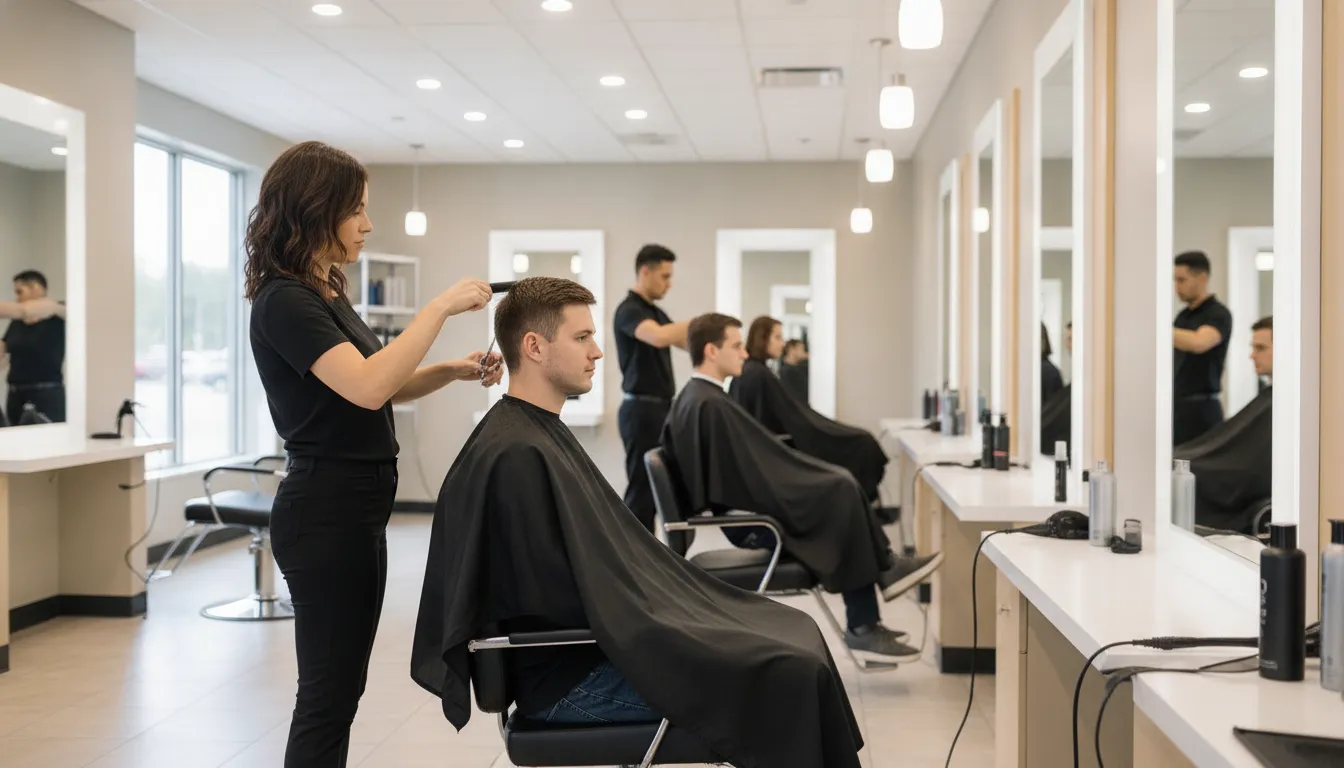
Hair salon apprenticeship programs Massachusetts students hear about are not all the same thing. Some are Board-approved apprentice programs run by a licensed school. Others are shop jobs for students who are already enrolled in a regular school program. A third option is an employer's new-hire training after you are licensed. Mixing those paths up can delay your license or put you in a shop before the Board says you may work.
This guide is for people comparing those options in Massachusetts. It explains what the Board of Registration of Cosmetology and Barbering requires, how to judge mentorship, and how to plan the move into salon employment. It does not promise that MjjM Salons runs a formal apprentice program. Confirm every filing step on the current Mass.gov apprenticeship and shop-employment page before you rely on it.
What Hair Salon Apprenticeship Programs Massachusetts Readers Should Separate
Start by naming the path you are actually on. The Board uses specific words, and a salon brochure may use "apprenticeship" more loosely than the state does.
A Board apprentice is a student in a Board-approved apprentice program at a licensed cosmetology or barber school. The Board must also register that student as an apprentice. The school operates the program. A shop does not invent one on its own. The Board's policy was last revised on August 10, 2023. It says an apprentice program may be operated only by a licensed school after Board approval.
A shop-employed student is different. That person is enrolled in a Board-licensed school and registered to work in a licensed shop under supervision. You cannot hold both statuses. If you are in an apprentice program, you cannot also be registered as a shop-employed student, and the reverse is also true.
Employer training is a third category. MjjM Salons hires licensed stylists, current students, recent graduates, and returning professionals, and it offers paid training and technique education. That support can help you build speed and client habits. It does not replace school hours, Board registration, or the written exam.
The school path still sits underneath licensing
To become a licensed cosmetologist in Massachusetts, the Board says you complete a 1,000-hour course in a licensed school. You then pass a written theory exam. Barber students follow the same 1,000-hour school minimum. Manicurist, aesthetician, and electrologist programs use other hour minimums. This article does not cover those licenses.
School hours are hours of that 1,000-hour curriculum earned with licensed instructors on licensed school premises. Shop hours, in the apprentice policy, are hours of that same curriculum earned in a Board-licensed shop under the policy's rules. Do not assume every hour you spend at a salon chair counts. Ask the school which hours it will report.
How the Massachusetts Apprentice Route Works
If a school offers a Board-approved apprentice program, the public application rules are concrete. Use them as a checklist, not as a guarantee that a nearby salon participates.
- Enroll and stay in good standing in a Board-approved apprentice program at a licensed cosmetology or barber school.
- Complete 25 school hours covering basic safety, sanitation, and shampooing before you apply to become an apprentice.
- Submit a complete application. The Board asks for a 2-inch by 2-inch photo, a copy of your driver's license or other state ID, and a notarized CORI form.
- Wait for written Board approval. You must be registered as an apprentice before you perform any cosmetology or barbering services in a shop.
- Work only in a shop licensed by the Board, and only within the services your school has already taught you in theory and practice.
The school submits the apprentice application with a certification of the date you will have finished those 25 hours. A shop cannot skip that step because it is busy or short-staffed. Incomplete applications are not accepted.
Email the packet to cosmetologyandbarberingboard\@mass.gov, or call the Board's services line at 617-701-8792 if you need the current written instructions. After approval, the Board's how-to page says you receive a registration. Keep that record. A future employer may ask for it.
What to ask the school before you commit
Ask which shops may host apprentices. Ask who supervises you there. Ask which services you may perform after each block of school instruction. Ask how shop hours are logged and who signs them. Ask what happens if you leave the school or fall out of good standing. Those answers belong to the school and the Board, not to a job ad.
Shop-Employed Student Work Is a Separate Choice
Many students want paid salon time while they are still in a regular school program. Massachusetts allows that only through shop-employed student registration, and the limits are strict.
You must be registered before you start work. A qualified licensee must supervise you at all times. You may not perform a service in the shop that you have not been trained for during school hours. Cosmetology and barbering students cannot provide chemical services before they complete all of their school hours. Manicuring students, if that is your program, can perform only basic manicures and pedicures before they finish their hours.
After you graduate, a shop-employed student registration expires 180 days after you complete the program. Graduates may then provide services they were trained in, still under the Board's policy, until that registration ends. Plan your license application so you are not relying on an expired student registration to keep working.
This status is useful when you want real clients while you finish school. It is a poor fit if you expected unsupervised chemical work or a shortcut around the 1,000-hour course. The Board is clear that chemical services wait until school hours are complete.
Compare Programs Before You Choose One
Use the same questions for every school and every salon that mentions training. Write the answers down. A clear "we do not offer that" is more useful than a vague promise of mentorship.
| Question | Board apprentice program | Shop-employed student | Employer training after school |
|---|---|---|---|
| Who runs it? | A licensed school, after Board approval | Your school plus a licensed shop | The employer |
| When can you serve clients? | After Board registration. Only for services the school has taught. | After shop-employed registration. A licensee supervises you. | When you hold the license the salon requires. |
| What it does not replace | The rest of the 1,000-hour course. It also does not replace the written exam. | School or registration. It does not lift the chemical-service limit. | State education. It does not replace the exam. |
| Best first check | Ask the school for Board approval. Confirm the 25-hour rule. | Confirm you are not also in an apprentice program. | Ask what training is paid. Ask who coaches you. |
- Question
- Who runs it?
- Board apprentice program
- A licensed school, after Board approval
- Shop-employed student
- Your school plus a licensed shop
- Employer training after school
- The employer
- Question
- When can you serve clients?
- Board apprentice program
- After Board registration. Only for services the school has taught.
- Shop-employed student
- After shop-employed registration. A licensee supervises you.
- Employer training after school
- When you hold the license the salon requires.
- Question
- What it does not replace
- Board apprentice program
- The rest of the 1,000-hour course. It also does not replace the written exam.
- Shop-employed student
- School or registration. It does not lift the chemical-service limit.
- Employer training after school
- State education. It does not replace the exam.
- Question
- Best first check
- Board apprentice program
- Ask the school for Board approval. Confirm the 25-hour rule.
- Shop-employed student
- Confirm you are not also in an apprentice program.
- Employer training after school
- Ask what training is paid. Ask who coaches you.
If a Massachusetts salon says it has an apprenticeship but cannot name the licensed school and the Board registration, treat that claim as employer training until the school confirms otherwise. That distinction protects you. Working before registration is the problem the Board's rule is written to prevent.
Red Flags and Money Questions to Settle Early
A serious program can explain its rules without asking you to ignore the Board. Walk away, or pause, if someone tells you to start cutting hair before your registration arrives. Pause if the shop cannot show a Board shop license. Pause if you are asked to do color, bleach, or a perm before the school says those hours are complete.
Get the pay terms in writing before you accept shop time. Ask whether student hours are paid, whether tips are allowed, and who sets your schedule around class. Ask whether you must buy tools or a kit. A school tuition bill and a salon job are separate agreements. Do not sign one because the other sounds promising.
Cost is part of the comparison, and it varies by school. This guide does not quote tuition, because those prices change and MjjM does not set them. If you need help paying for school, start with how students look for cosmetology scholarships. Scholarship research does not change the hour or registration rules above.
Keep a simple file while you train. Save your enrollment letter, the 25-hour certification if you are an apprentice, the Board registration, and any shop schedule. If you later move or apply for a job, that file answers questions faster than memory does. If you already hold a license from another state, read how license transfer works when you move before you assume an apprentice seat is the right next step.
Booth rental and private-suite arrangements are a later decision. They are not a way to finish school. If you are comparing employment with renting space after you are licensed, use the booth rental and salon employment comparison. MjjM's own model is a private suite with operating support, and the careers page is the place to read that description. Do not treat a suite as an apprentice program.
How to Judge Mentorship and the Move Into Salon Work
Licensure gets you eligible. Mentorship is what makes the first months at the chair feel workable. Compare both, and do not trade one for the other.
A useful training plan names the skills, the feedback, and the timeline. Look for sanitation refreshers, consultation practice, and a stated way to get help during a service. Ask who watches your first haircuts, how often you get notes, and whether advanced color or cutting classes are paid time. MjjM's careers page describes paid training, technique education, coaching, and real client work for eligible roles. Ask a recruiter which of those apply to the location and schedule you want.
Also ask how a student or new graduate is scheduled. Flexible scheduling matters if you are still in school. Built-in clientele matters if you do not want to build a book from zero. Benefits such as medical coverage, paid vacation, sick time, license-fee reimbursement, and student-loan assistance are listed for eligible full-time employees, and they vary by role. None of those facts means every opening is an apprentice seat.
When you are ready to compare workplaces, read what cosmetologists compare in Massachusetts salons and how hair stylist jobs in Massachusetts are structured. For the first job after graduation, the entry-level salon jobs guide covers duties and hiring steps this article leaves out. If your training is in Maine or New Hampshire instead, use the separate Maine and New Hampshire apprenticeship guide. Rules there are not the Massachusetts rules on this page.
A practical sequence
Pick the license you want, then confirm the hour minimum on the Board's how-to-become page. Choose either an apprentice program or a standard school program, not both statuses at once. If you want shop time during school, register as a shop-employed student and follow the supervision and chemical-service limits. After you finish school, apply for the license through eLIPSE, pay the Board's listed fee, and wait for PSI exam approval. Incomplete license applications stay open for 180 days, then they are abandoned.
While that paperwork moves, line up the job you want after you are eligible to work. MjjM Salons careers explains the salon-suite model, locations in Massachusetts, New Hampshire, and Maine, and the application path. You can also review salon locations before you apply so the commute fits your school schedule.
See how MjjM Salons hires stylists and students
Frequently Asked Questions
Does Massachusetts have hair salon apprenticeship programs?
Yes, but only through a licensed cosmetology or barber school that the Board has approved to run an apprentice program. A salon cannot create that status by itself. You must also be registered by the Board before you perform services in a shop.
Can I work in a salon while I am still in cosmetology school?
You can if you are registered as a shop-employed student, or as an apprentice if you are in an approved apprentice program. You cannot be both. A qualified licensee must supervise shop-employed students, and chemical services are not allowed before you finish all school hours.
Does an apprenticeship replace the 1,000-hour cosmetology course?
No. The Board's apprentice policy treats school hours and shop hours as parts of the 1,000-hour curriculum, not as a replacement for it. You still need to finish the required education and pass the written theory exam.
Does MjjM Salons offer a Board apprentice program?
MjjM Salons does not advertise a Board-approved apprentice program. The company does hire current students and recent graduates and describes paid training, coaching, and client work. Ask the school that would register you if a specific shop is part of an approved program.
Where do I send the apprentice application?
The Board says to email the completed application and documents to cosmetologyandbarberingboard\@mass.gov. Include the photo, state ID, and notarized CORI form. Call 617-701-8792 if you need the current instructions.
Plan the Path, Then Apply
Hair salon apprenticeship programs Massachusetts students can use are a school-and-Board process first and a job second. Confirm the 25-hour start, the registration, and the service limits before you cut hair in a shop. Use employer training to build speed after you are eligible, not as a substitute for the license.
When you want to talk with MjjM about student or graduate roles, apply directly to MjjM Salons. The application uses a guided chat and asks for your location. It is not a Board apprentice filing.