
MjjM Salons Blog
Types of Fade Haircuts: What Every Client Should Know
By the MjjM Salons team
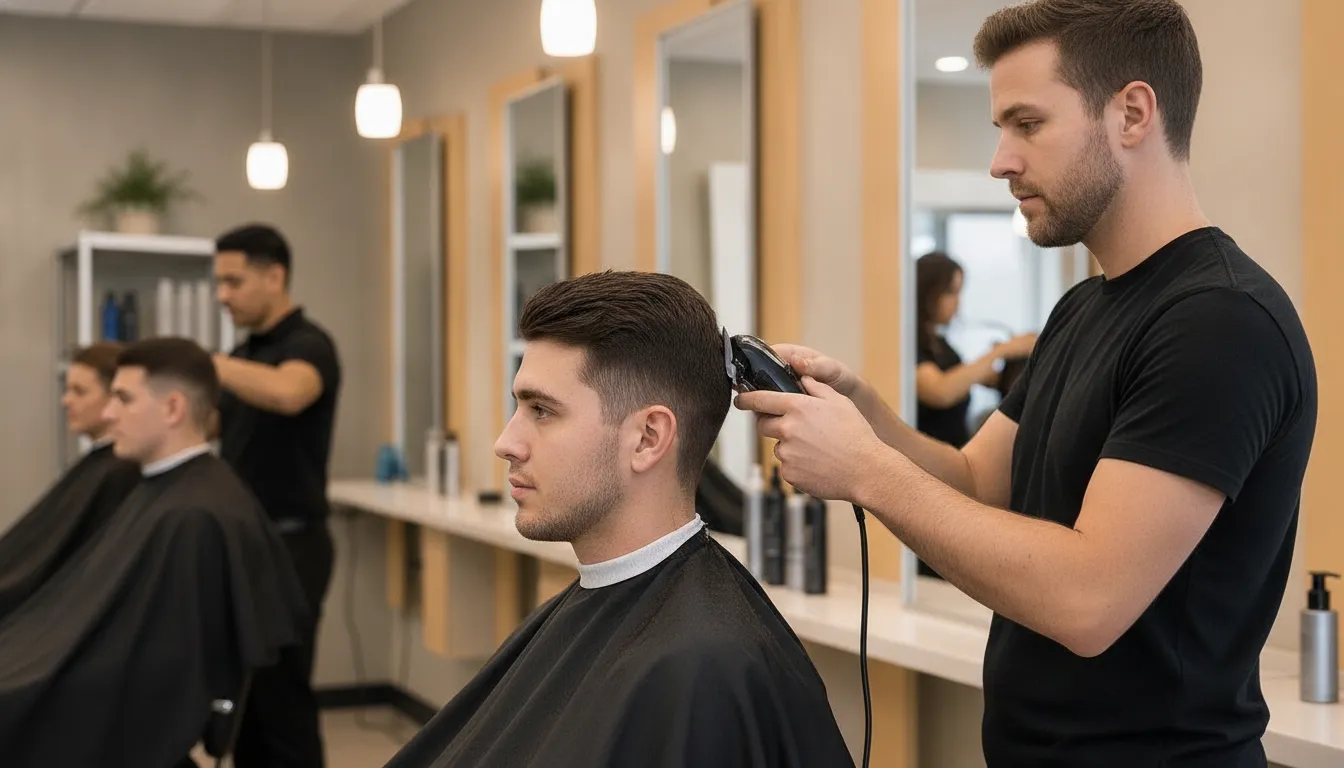
If you are searching for the right fade, the names can feel more complicated than the haircut itself. The main types of fade haircuts are defined by three choices: where the blend begins, how short it becomes, and how the shape follows the head. This guide explains those choices in plain language so you can arrive at the salon with a realistic idea of what you want. MjjM Salons' documented men's and adult haircuts are listed starting at $22, with final pricing varying by location.
Find a MjjM Salons location for your next haircut
A fade is not one fixed style. It is a cutting technique that can support a crop, buzz cut, quiff, side part, curls, or longer hair on top. A low fade with a textured top will not give the same impression as a high skin fade with a short top, even though both use a gradual blend. Learning the language helps you make a better request, but your stylist should still adapt the cut to your hair, head shape, growth pattern, and daily routine.
What Is a Fade Haircut?
A fade haircut is a gradual transition from longer hair on top to shorter hair along the sides and back. The blend is created through controlled changes in length, so the haircut moves from the top section toward the ears and neckline without a harsh step. The fade itself is the transition. The hairstyle on top, such as a crop or quiff, is a separate decision that completes the look. This definition also matches the explanation in GQ's fade haircut guide.
That distinction is useful when you are looking at pictures. A photo may show a mid fade, but the overall haircut could also include a curly top, a side part, a fringe, or a short textured finish. If you ask for only the name of the fade, your stylist may still need to ask about the top length and how much contrast you prefer.
A fade is a technique, not a complete hairstyle
MjjM Salons' existing men's fade haircut guide describes the fade as a foundation that can be paired with many top styles. That is why two clients can request a fade and leave with noticeably different haircuts. A fade can look neat and understated, textured and casual, or sharp and high contrast, depending on the other choices made during the consultation.
The word fade also does not tell you whether the shortest area reaches skin. A low, mid, or high fade describes placement. Skin, shadow, and similar terms describe the finish. Drop, burst, and temple terms describe shape or location. Think of the request as a combination of labels rather than a single magic phrase.
The three decisions behind most fade names
- Height: Where does the blend begin on the side of the head?
- Finish: Does the shortest area end at skin, short stubble, or a little more length?
- Shape: Does the blend run evenly around the head, drop behind the ear, or fan around the temple?
The starting point is the main difference between low, mid, and high fades. The finish and shape can be added to any of those broad categories.
How Do Fade Height and Finish Change the Look?
Fade height controls the visual weight of the haircut. A lower blend leaves more hair above the ear and usually creates a quieter transition. A higher blend removes more of the side area and puts more attention on the top. The finish controls how close the shortest section is cut. Combining a height with a finish gives a much clearer request than saying only "a fade."
Height means low, mid, or high
A low fade starts close to the ear and keeps the blend in the lower portion of the side. A mid fade begins around the temple area, giving a balanced transition between the top and the lower side. A high fade begins higher on the head and creates a stronger separation between the top and the sides. These descriptions are practical starting points, not rigid measurements. Head shape and hair density can change how the same label looks from one person to another.
Moving the fade higher generally increases contrast. That does not make a high fade better than a low or mid fade. It simply produces a more noticeable change in the side profile. If you prefer a classic appearance, want more room for the top to blend into the sides, or do not want the sides to dominate the haircut, a lower starting point may feel more natural.
Finish means skin, shadow, or a softer blend
A skin fade, sometimes called a bald fade, takes the shortest area down to skin level. It can be low, mid, or high. A shadow fade leaves a soft stubble effect instead of a completely skin-close finish. A taper usually keeps more hair at the hairline and concentrates the reduction at places such as the sideburns and nape. These are finish and placement decisions, so they should not be treated as interchangeable names. The terminology is also explained in this professional skin fade guide.
The word taper is used differently by different stylists and barbers. A taper is generally described as a gradual reduction toward the hairline, while a skin fade reaches skin level and finishes above the natural hairline. Because the terminology is not universal, show a reference photo and explain where you want the shortest area.
Low, Mid, and High Fade Haircuts Explained
The three basic fade heights create the foundation for most requests. A low fade keeps the transition near the lower side of the head, a mid fade balances the blend around the temple, and a high fade brings the transition higher for stronger contrast. Each can be finished as a shadow fade or skin fade and paired with many top styles.
Low fade
A low fade begins just above the ear. It leaves more visual weight on the lower side and can create a softer, classic finish. Because the blend starts lower, the top and side can feel connected rather than sharply separated. A low fade can work well with a side part, a textured crop, a short quiff, or a longer top that needs some support around the sides.
For clients with longer face shapes, a lower blend may help keep the haircut visually balanced, although a stylist should assess the whole shape before making a recommendation. Hair density, cowlicks, and the top style can matter as much as face shape.
Mid fade
A mid fade starts around the temple area. It offers a middle ground between the softer lower placement and the more dramatic higher placement. The result can show clear definition while leaving enough side structure to support a range of top styles. A mid fade is often a practical choice when you want the haircut to look deliberate but not have the fade become the only feature.
This height can pair with a textured crop, side part, pompadour-inspired top, curls, or a short brushed style. On thick hair, the stylist may use the blend to reduce visual bulk. On finer hair, the top and side transition may be kept conservative so the cut does not appear too thin. The label stays the same, but the technique should respond to the individual head and hair.
A mid fade is sometimes recommended as a flexible starting point, but it is not automatically right for every client. Bring the reference that best reflects your preferred contrast.
High fade
A high fade begins higher on the side of the head and creates more contrast with the hair left on top. It is often paired with short styles because the strong side transition can make the top look more defined. A high fade can also support textured or curly hair when the client wants a clear silhouette and is comfortable with a more noticeable side profile.
This placement can create the visual impression of more height, which is one reason it may be considered for rounder face shapes. That is a styling observation, not a rule. A high fade can emphasize the shape of the head, so a consultation matters if you have a prominent growth pattern, uneven density, or a particular concern about the side view.
If you want a high fade but prefer a less severe finish, ask about a shadow finish instead of a skin finish. If you want the cleanest possible contrast, ask whether a skin finish fits your hair and maintenance preferences. The height and finish should be discussed separately.
| Fade height | Where blending begins | Visual effect | Useful pairing |
|---|---|---|---|
| Low | Close to the ear | Softer, lower contrast | Side part, crop, or longer top |
| Mid | Around the temple | Balanced definition | Crop, curls, quiff, or part |
| High | Higher on the side | Stronger contrast | Short top, textured top, or bold shape |
- Fade height
- Low
- Where blending begins
- Close to the ear
- Visual effect
- Softer, lower contrast
- Useful pairing
- Side part, crop, or longer top
- Fade height
- Mid
- Where blending begins
- Around the temple
- Visual effect
- Balanced definition
- Useful pairing
- Crop, curls, quiff, or part
- Fade height
- High
- Where blending begins
- Higher on the side
- Visual effect
- Stronger contrast
- Useful pairing
- Short top, textured top, or bold shape
This table compares the basic placement choices. It does not replace a consultation because the same height can look different depending on hair texture, density, head shape, and the finish selected.
For a client-focused overview of fade styling, see MjjM Salons' complete men's fade guide. For a haircut appointment, you can also browse MjjM Salons locations across the region.
Skin, Taper, and Shadow Fades: What Is the Difference?
Skin, taper, and shadow describe different approaches to the shortest part of a fade. A skin fade reaches skin level, a taper focuses the reduction around the natural hairline, and a shadow fade keeps a visible stubble-like finish. None of these labels alone identifies the height. You can have a low skin fade, a mid shadow fade, or a high fade with a softer finish.
Skin fade or bald fade
A skin fade uses a very close finish at the shortest point, creating clear contrast with the longer hair above it. It may be combined with a low, mid, or high placement. A low skin fade generally keeps the exposed area lower, while a high skin fade brings that contrast farther up the side. The final look depends on how the stylist connects the close finish to the top.
Skin fades can look especially crisp in a fresh cut, but the exposed transition may make new growth more noticeable to you. If you prefer a softer grow-out, ask whether a shadow finish or lower height would better suit your routine. This is a practical preference, not a judgment about which style is superior.
Taper and taper fade
A taper gradually reduces length as it approaches the hairline, usually focusing attention on the sideburns, temples, and nape. It typically keeps more surrounding hair than a skin fade. The phrase taper fade is common, but it is not used consistently. Some people use it for a localized fade at the temples and nape, while others use it more broadly for a gradual fade with a conservative finish.
For a clearer request, describe the areas you want cleaned up. You might say that you want the sideburns and nape tapered, the sides left fuller, and the top kept at its current length. If you want skin visible at the temples, say so directly. This makes the consultation more precise than relying on a label that may be interpreted differently.
Shadow fade
A shadow fade keeps the shortest part at a soft stubble finish rather than taking it fully to skin. It can make the transition appear less stark and may feel more forgiving as it grows. A shadow fade can still be low, mid, or high because shadow describes the finish, not the placement. A visual comparison of this finish appears in Cultured Grooming's fade reference.
Ask about a shadow fade if you like the shape of a fade but want less exposed skin or a quieter contrast. It can also be paired with a textured top, a short crop, or curls. The stylist may adjust the length and blend based on density and the direction of your hair growth.
Drop, Burst, and Temple Fades Use Shape
Some of the most useful fade terms describe the shape of the blend rather than only its height. A drop fade follows the curve of the head and drops lower behind the ear. A burst fade radiates around the ear. A temple fade concentrates the transition near the temple and may continue through the nape. These shapes can be combined with different heights and finishes.
Drop fade
A drop fade curves down behind the ear and toward the back of the head. That curved line follows the head's natural contour instead of continuing at an even height all the way around. It can add shape to a curly, wavy, or textured top, but it is not limited to those textures.
Ask for a drop fade when you like a lower back profile or want the blend to follow the head rather than run straight around it. You should still specify whether you prefer a low, mid, or high starting point and whether the shortest area should be skin or shadow. A drop shape does not answer those questions.
Burst fade
A burst fade fans outward around the ear in a circular or radial pattern. It leaves more length behind the ear and can frame a mohawk-inspired top, curls, a faux hawk, or another style with a central ridge. The shape is more localized than a traditional fade that travels evenly around the side of the head.
Because the burst pattern is visible from the side and back, reference photos are particularly helpful. Tell the stylist how much length you want around and behind the ear, and say whether you want the finish soft or skin-close. The same burst shape can look understated or high contrast depending on those choices.
Temple fade
A temple fade focuses detail near the temple and sideburn area. It may be called a temple taper or taper fade, although the terminology varies. This option can clean up the front side of the haircut while preserving more length through the rest of the sides. It is useful when you want a small change rather than a full side-to-neck fade.
When requesting a temple fade, point out how far you want the transition to travel toward the nape. The term can mean different things, so location-based language is more dependable than the label alone.
Which Fade Works With Your Hair Texture and Face Shape?
There is no single fade that is best for every client. A useful choice accounts for hair texture, density, growth pattern, head shape, face shape, top length, and the amount of styling you want to do. Professional style guides also emphasize that fade selection should reflect personal preference and hair texture, not just a trend or a photo.
Straight and fine hair
Straight hair can show the line and graduation of a blend clearly. If your hair is fine, a lower or mid placement with a conservative finish may help preserve the appearance of fullness at the side. The top can be styled with texture, a part, or gentle volume, but the exact approach should follow the density you actually have rather than a generic photo.
Bring a photo that shows the side profile you like. Ask how much length the stylist recommends keeping on top and whether the blend should stay soft. A very high contrast cut may make changes in density more visible, while a softer blend can create a connected look.
Wavy and thick hair
Wavy or thick hair can give a fade strong texture and movement. A drop shape may work well when you want the blend to follow the back of the head, while a mid fade can give the top a balanced frame. These are options to discuss, not rules. Your natural wave pattern and the way your hair sits after drying should guide the final technique.
If your top has significant weight, ask how the stylist plans to remove bulk without making the side transition look disconnected. A fade can control the side profile while the top keeps its natural movement. The right balance often matters more than choosing the most dramatic height.
Curly and coily hair
Curly and coily hair can work with low, mid, high, skin, shadow, drop, and burst fades. A stylist may use the fade to frame the texture on top, emphasize a shape, or create a clean outline. The finish should be chosen with the client's preference and routine in mind. A skin finish is not required for a defined result.
Explain how you wear your hair most days. If you prefer your curls or coils to remain full, ask for enough space on top and around the shape you want to preserve. If you prefer a shorter, more structured cut, discuss how the fade height will change the silhouette. The goal is a balanced haircut that works with your texture rather than asking the texture to behave like a different hair type.
Face shape is a guide, not a rule
Face-shape advice can help you compare options, but it should not overrule your preference. A lower fade may add visual weight near the sides, while a higher fade can place more attention on the top. The top style, fringe, part, and overall length can change the balance as well. A stylist should consider the full haircut and your side profile, not assign you a style from a face-shape chart alone.
If you are uncertain, ask for two realistic options. For example, you might ask how a mid shadow fade would compare with a low skin fade on your current length. This creates a useful conversation about contrast, upkeep, and how the haircut will look as it grows.
How Should You Pair a Fade With the Hair on Top?
The top style determines much of the haircut's personality. The fade controls the side transition, while the top controls length, movement, volume, and direction. MjjM's existing guide notes that fades can support a long quiff, short crop, curls, or buzz cut.
Short crop or textured top
A crop keeps the top relatively compact and can make the side transition easy to see. A low or mid fade can create a connected, balanced look, while a high fade produces more separation. Ask how much texture you want and whether you plan to use a product or let the top air-dry.
Buzz cut or very short top
A buzz-style top gives the fade a clear role in the overall silhouette. A high fade can make the contrast prominent, while a low or mid fade may leave a more gradual side profile. Because there is less top length to redirect attention, be specific about the finish and outline you prefer.
Quiff, side part, or longer top
Longer hair on top gives you more styling options but may need a side transition that supports the shape. A low fade can keep a longer top feeling classic, while a mid fade can add definition without taking over. A stylist can also advise whether your current length will hold the direction you want without excessive daily styling.
Curls and textured volume
With curls or textured volume, the fade can frame the top and make the natural pattern the main feature. Drop and burst shapes are options when you want the side transition to follow a particular contour. Tell the stylist whether you want the top to remain full, rounded, compact, or directed forward.
How Often Does a Fade Need Attention?
A fade changes as the shortest sections grow and the contrast between lengths softens. Short, high-contrast fades may look different to you sooner than a lower, softer fade, but there is no universal schedule that fits every client. Hair growth rate, texture, finish, personal standard, and the length kept on top all affect when you want a touch-up.
Signs that you may want a touch-up
- The transition no longer looks as clear as you prefer.
- The sideburns or neckline have lost their outline.
- The sides feel heavier than the top style.
- The drop or burst shape is no longer easy to see.
- Your usual styling routine no longer creates the same balance.
These are visual and practical signals, not a required timetable. If you prefer a softer grow-out, ask for a lower placement or shadow finish at your next visit. If you want the fresh contrast to stay prominent, discuss the maintenance pattern before choosing a skin finish or higher placement.
Simple habits between visits
Follow the styling instructions that fit your hair texture and the top length you keep. Use only the amount of product needed for control, and avoid changing the outline at home if you are not comfortable doing so. The sides may be short, but the top still needs to be shaped in the direction that supports the cut.
For more general styling and maintenance context, read the MjjM Salons men's fade haircut overview. If you need help choosing a location for a future appointment, use the MjjM Salons location directory.
What Should You Ask for at the Salon?
The clearest fade consultation covers more than a haircut name. Bring a reference photo, then describe the height, finish, shape, top length, neckline, and the amount of upkeep you want. MjjM's existing fade guide also recommends bringing reference photos and discussing details with your stylist. A good consultation leaves room for the professional to adapt the request to your hair and head shape.
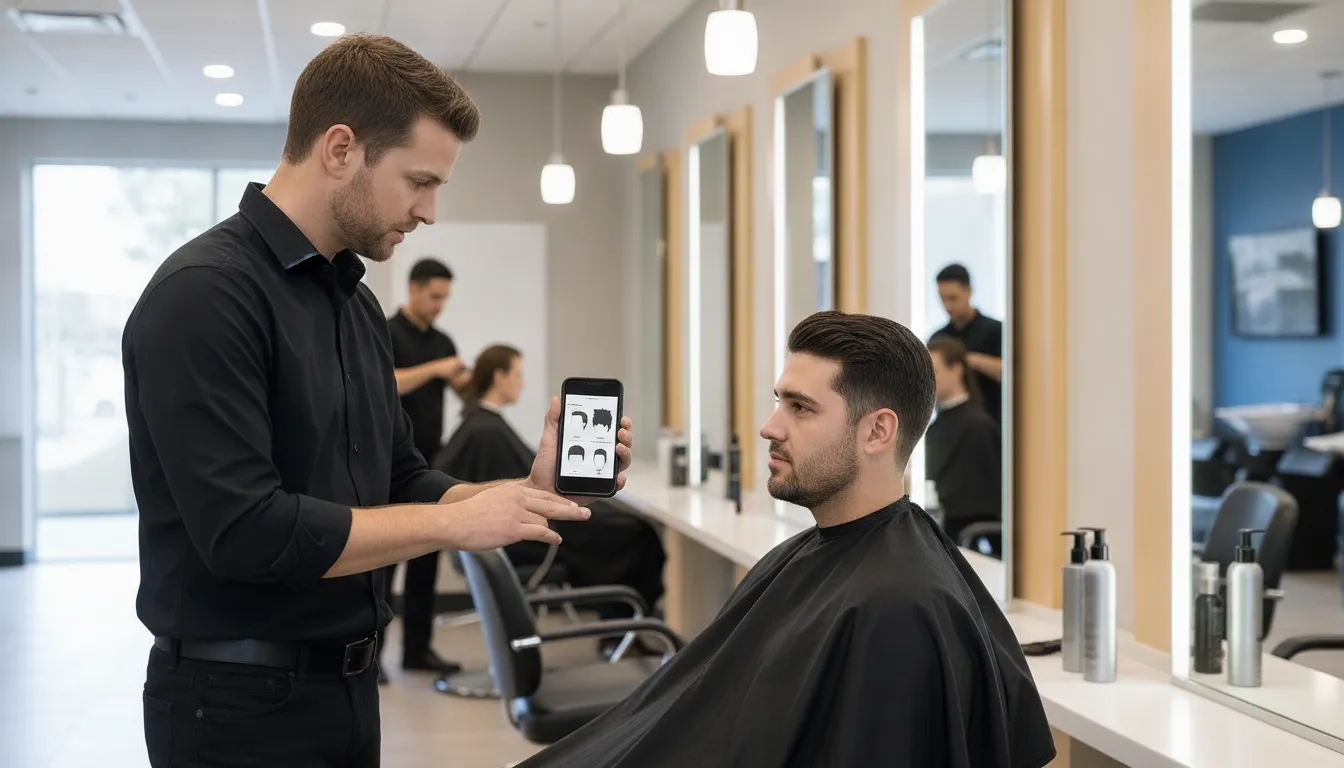
A clear consultation helps connect the fade name to the result you want.
Use a five-part request
- Height: Say low, mid, or high, and point to where you want the blend to begin.
- Finish: Say skin, shadow, or a softer taper if you have a preference.
- Shape: Explain whether you want the blend even, dropped behind the ear, burst around the ear, or focused at the temple.
- Top: Describe the length and direction you want to keep, such as a crop, part, curls, or a short textured top.
- Maintenance: Tell the stylist whether you prefer fresh contrast or a softer grow-out.
Questions that make the consultation easier
- Which height will work with the amount of length I want to keep on top?
- Would a skin or shadow finish better match the contrast I want?
- How will my hair texture affect the blend and the top shape?
- Would a drop or burst shape follow my head and top style well?
- What will this look like as the shortest area grows out?
If you are choosing between two styles, ask the stylist to compare them using your current length and routine. A professional can explain the tradeoffs without treating one fade as universally superior. You can also use the MjjM Salons location page to find a convenient salon in Maine, New Hampshire, or Massachusetts.
MjjM men's and adult haircuts are listed starting at $22, with final pricing varying by location. Review the available location information before booking so you can confirm the details for the salon you plan to visit.
Find a MjjM Salons location and plan your haircut
Frequently Asked Questions About Fade Haircuts
Which fade haircut is best?
The best fade depends on your hair texture, head and face shape, top length, preferred contrast, and maintenance routine. A mid fade is often a flexible starting point, but a low, high, skin, shadow, drop, burst, or temple fade may suit your goals better. Ask a stylist to compare realistic options for your hair.
What are the different kinds of fades?
The main categories include low, mid, and high fades for height; skin and shadow fades for finish; and taper, drop, burst, and temple fades for localized placement or shape. These terms can combine. For example, a client may request a low drop fade with a shadow finish.
What is the difference between a fade and a taper?
A fade generally creates a more extended blend along the sides and back, often reaching a very close finish. A taper usually focuses the gradual reduction around the hairline, sideburns, temples, or nape. Terminology varies, so describe the areas and finish you want instead of relying on the label alone.
What does a 3:2:1 fade look like?
Numbers in a fade request usually refer to clipper guard choices and the progression between lengths. The notation alone does not show the height, shape, finish, top length, or how the cut will look on your hair. Bring a photo and ask the stylist to confirm what those numbers would mean for your requested style.
What is a skin fade haircut?
A skin fade takes the shortest area down to skin level and blends it into longer hair above. It can be low, mid, or high. The height describes where the blend begins, while skin describes how close the shortest finish is.
How is a fade haircut created?
The stylist first discusses the desired height, finish, shape, and top length. They then establish the lengths, blend the transitions, and refine the outline and top so the haircut works with your hair texture and growth pattern. The exact technique varies by the style and the individual client.
Choose the Fade by Describing the Result
When comparing the types of fade haircuts, start with the result you want rather than the trendiest name. Decide whether you prefer a low, mid, or high blend, then choose a skin, shadow, or softer finish. Add shape language such as drop, burst, or temple, and explain the top length, texture, and maintenance level that fit your routine.
A reference photo can begin the conversation, but a good stylist will adapt the cut to you. MjjM Salons serves clients through locations across Maine, New Hampshire, and Massachusetts. Use the location directory to find the salon that fits your plans, then bring this guide's five-part request to your consultation.