
MjjM Salons Blog
Salon Suite vs Booth Rental - Which Fits You?
By the MjjM Salons team
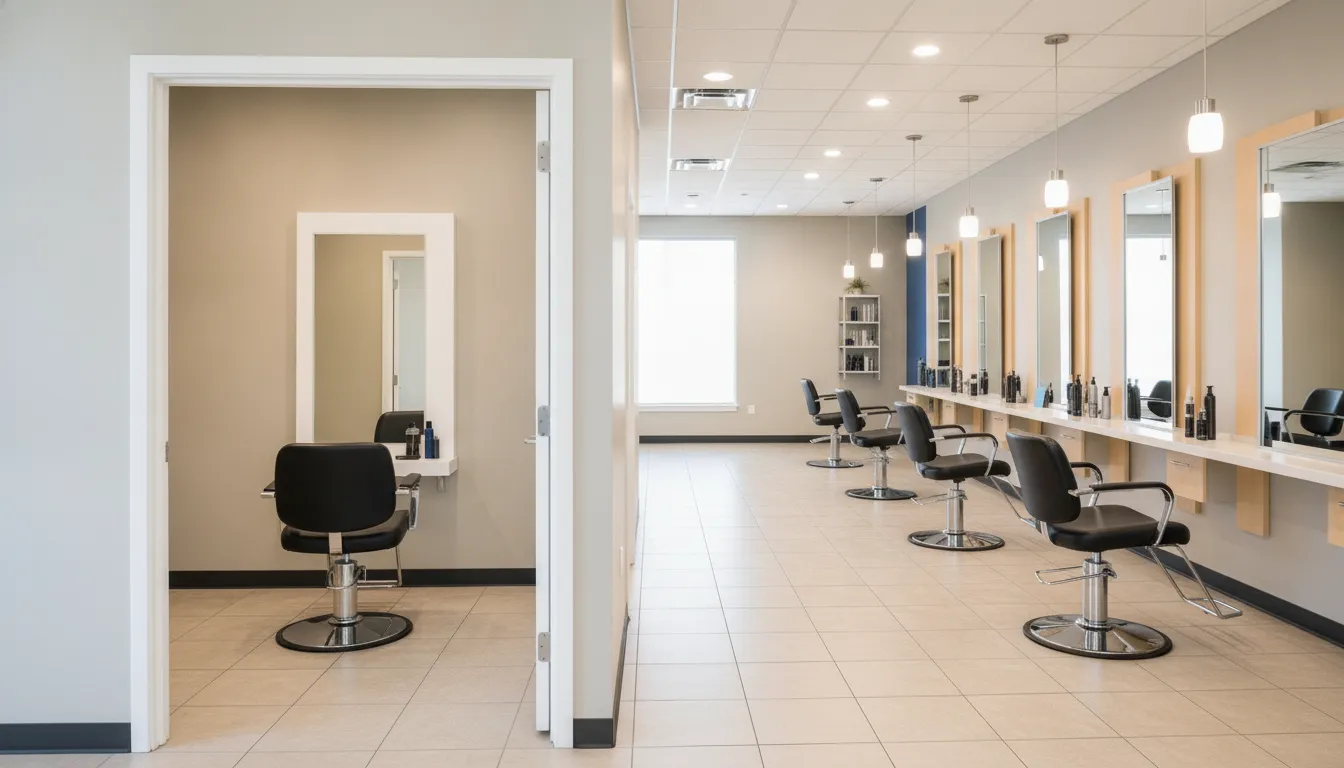
If you are comparing a salon suite vs booth rental, the biggest difference is not simply how much space you receive. It is how much control, responsibility, and operating cost you take on as an independent stylist. A booth usually means renting a station in a shared salon, while a salon suite is a private workspace within a larger facility. Both can support an independent business, but they create different day-to-day experiences for you and your clients.
Explore MjjM salon suite careers
This guide compares the two models without assuming that one is right for every professional. It also separates independent renting from employee salon work and franchise ownership, three arrangements that are often discussed together even though they are not the same. Before signing anything, use the questions below to compare the full agreement, not just the advertised rent. A label on a website is not the same as the lease in front of you.
What salon suite vs booth rental changes first
A booth rental is typically a station or chair inside a shared salon. You may have a personal client list and control over many business decisions, but you work in a common environment and follow the facility's operating rules. A salon suite is generally an enclosed room or studio that you rent within a salon-suite facility. You have more privacy and more influence over the setting, while you may also take on more setup and operating responsibilities.
| Factor. | Salon suite. | Booth rental. |
|---|---|---|
| Workspace. | Private room or enclosed studio within a shared facility. | Station or chair on a shared salon floor. |
| Control. | Usually greater control over atmosphere, schedule, branding, and guest flow. | Control varies and is shaped by the shared salon's rules and layout. |
| Privacy. | More separation for consultations and appointments. | Clients and stylists share the broader salon environment. |
| Cost pattern. | May include higher rent or setup costs for a dedicated space. | May have a lower starting overhead, but included items vary by agreement. |
| Daily operations. | You may manage most booking, supplies, cleaning, and business systems. | You may manage many of the same functions, with some shared amenities. |
| Best fit. | A stylist prioritizing privacy, autonomy, and a distinct client experience. | A stylist who values a shared salon environment and potentially lower fixed overhead. |
- Factor.
- Workspace.
- Salon suite.
- Private room or enclosed studio within a shared facility.
- Booth rental.
- Station or chair on a shared salon floor.
- Factor.
- Control.
- Salon suite.
- Usually greater control over atmosphere, schedule, branding, and guest flow.
- Booth rental.
- Control varies and is shaped by the shared salon's rules and layout.
- Factor.
- Privacy.
- Salon suite.
- More separation for consultations and appointments.
- Booth rental.
- Clients and stylists share the broader salon environment.
- Factor.
- Cost pattern.
- Salon suite.
- May include higher rent or setup costs for a dedicated space.
- Booth rental.
- May have a lower starting overhead, but included items vary by agreement.
- Factor.
- Daily operations.
- Salon suite.
- You may manage most booking, supplies, cleaning, and business systems.
- Booth rental.
- You may manage many of the same functions, with some shared amenities.
- Factor.
- Best fit.
- Salon suite.
- A stylist prioritizing privacy, autonomy, and a distinct client experience.
- Booth rental.
- A stylist who values a shared salon environment and potentially lower fixed overhead.
Read each row as a pattern, not a promise.
These are common patterns, not guarantees. A written contract can make a booth arrangement highly independent or provide a surprising amount of support. A suite facility can include shared services that reduce the work of running the space. Ask what is included rather than relying on the label.
Control, branding, and schedule
Control is often the main reason a stylist considers renting instead of taking a traditional salon job. In either rental model, you may have more say over your availability, pricing, service menu, products, client communications, and business identity than an employee has. The difference is how the physical environment affects that control.
What a private suite can change
A private suite gives you a defined setting for your own client experience. You can usually make more decisions about the room's presentation, the level of conversation, and how appointments move from consultation to service. That can matter if your ideal clients value a quieter appointment, more privacy, or a consistent atmosphere. It may also make it easier to build a recognizable personal brand within the larger facility.
More control does not mean every choice is unrestricted. The facility may set rules for hours, signage, products, sanitation, music, alterations, guest policies, and use of common areas. Confirm those boundaries before assuming that a suite can be operated exactly like a standalone salon.
What a booth can offer
A booth lets you operate your business while remaining part of a shared salon floor. Some professionals prefer the energy, visibility, collaboration, and natural interaction of that environment. A busy salon may also offer a more obvious way for guests to see your work, although walk-in traffic or referrals should never be treated as guaranteed unless the agreement says how they work.
The tradeoff is that your brand and schedule exist alongside the salon's broader identity. Rules about hours, promotions, retail, booking systems, client communication, and décor may be more noticeable because your workspace is open to the shared floor. The right question is not whether a booth is independent in name, but which decisions you can actually make without approval.
Compare the whole cost of a salon suite vs booth rental
There is no universal answer to which model costs less. Booth rent may appear lower because the workspace is smaller or some amenities are shared. A suite may require a larger recurring payment or more initial furnishing. Either model can become expensive if you compare only the base rent and overlook the other costs of operating an independent business.
Build a simple monthly comparison that includes:
- Rent, deposits, application fees, and any required minimum term.
- Products, color inventory, tools, laundry, disposables, and retail stock.
- Booking software, payment processing, phone service, website costs, and marketing.
- Insurance, licenses, permits, taxes, professional fees, and recordkeeping.
- Cleaning, laundry, maintenance, utilities, Wi-Fi, storage, and waste disposal.
- Education, replacement equipment, time off, and a reserve for slower weeks.
Then compare the expected time commitment, not only the dollar amount. A lower rent arrangement may require more unpaid hours for scheduling, marketing, supply runs, cleaning, and bookkeeping. A suite may cost more but provide the privacy and workflow that help you serve the clients you want. Ask for a written list of included amenities and a written list of charges that remain your responsibility.
For tax and worker-classification questions, use the agreement and your actual working arrangement as the starting point, not a social-media summary of booth rental. The IRS guidance on independent contractors explains that classification depends on the full relationship and degree of control. Consult a qualified tax or legal professional for advice about your circumstances.
Responsibilities and support
Independent renting can give you ownership of the business relationship with your clients, but it also moves operational work onto your schedule. Before you choose a model, list everything that must happen before, during, and after an appointment. Determine who does each task and who pays for it.
Questions about the business side
- Who owns the client records and controls appointment reminders?
- Who handles cancellations, refunds, chargebacks, and no-show policies?
- Can you set your own prices and accept your preferred payment methods?
- Who buys products and tools, and can you use the brands you prefer?
- Who is responsible for cleaning, laundry, sanitation supplies, and repairs?
- What insurance, license, permit, and tax responsibilities apply to you?
- Is front-desk help, laundry, reception, marketing, or education included?
Shared support can be valuable, but it should be specific. Ask whether a service is included in rent, available for an additional fee, or simply recommended. Also ask what happens when the facility is closed, equipment fails, or you need to take time away. A clear answer helps you estimate both financial risk and workload.
Client experience and privacy
The physical setting affects how clients experience your business, so include it in your decision. A booth can make an appointment feel connected to a lively salon community. That may suit guests who enjoy conversation and a visible, open environment. A private suite can provide a more focused setting for a consultation or a guest who prefers fewer distractions.
Neither setting automatically creates a better client experience. What matters is whether the space matches your services, communication style, ideal client, and capacity. Consider sound, waiting areas, accessibility, shampoo access, restroom access, guest arrival instructions, privacy, ventilation, and how the space looks at the beginning and end of the day. If you serve multiple clients at once or plan to bring another professional into the space, confirm what the agreement permits.
Also consider continuity. If you move locations, change your hours, or leave the facility, how will clients find you? Review the contract's notice period, client communication rules, non-solicitation language, and treatment of deposits or future appointments. These terms can matter more than the difference between a chair and a room.
How this differs from employee salon work
A booth lease and a private-suite lease are workspace agreements. Employment is a different decision. In an employee role, the salon or employer typically sets more of the operating framework. The role may include payroll, training, benefits, scheduling support, or other employment support, depending on the job. An employee does not normally sign a lease for a chair or a room, and does not normally carry the renter's responsibility for business taxes, client acquisition, and supply purchasing.
Keep the two decisions separate. If you want a defined operating structure and more of your time on guests, compare employee roles on their own terms. If you want to run an independent practice, compare the lease. Do not assume that a job described as a booth is an employee job, or that a private room automatically comes with a lease. MjjM already has a separate guide for the employment decision, booth rental versus salon employment. Use that guide for the job-versus-lease question, and use this one for the room-versus-station question.
How this differs from franchise ownership
Renting a private suite is also not the same as owning a franchise. A franchise owner typically invests in a broader business, signs a franchise agreement, follows brand standards, and carries responsibility for the location and its operation. A stylist comparing a suite lease is looking at one workspace agreement, not at ownership of the facility or the larger brand.
Brand affiliation can still matter. Ask which signs, products, systems, marketing, and public-facing rules come with the facility. Then separate what the lease lets you control from what the facility's policies still govern. Those are two lists, and only the written agreement tells you which items belong on each.
Where MjjM fits the comparison
MjjM's public pages state two facts, and they should stay separate. The careers page describes a private, personalized workspace inside a recognized salon, with clients, training, and professional operating support across Maine, New Hampshire, and Massachusetts. The about page says MjjM is the employer and has operated franchised Supercuts salons since 1989. The locations page is where the current 27-salon roster lives.
Neither page states a suite fee, a booth fee, a commission rate, or a tax classification. A private workspace is not the same fact as a private-suite lease, and an employer statement is not a pay rate. If you are comparing a salon suite vs booth rental as two leases, read the actual agreement before you treat MjjM as either one. If you are comparing a job with a lease, use the booth-versus-employment guide instead of stretching this comparison.
For eligible full-time employees, the careers page lists medical and dental coverage, paid vacation and holidays, sick time, mental-health support, flexible scheduling, annual cosmetology-license fee reimbursement, and student-loan assistance through Payback the Future. The page also says benefits vary by eligibility and role. Ask which of those apply to the role and location you are considering. Questions that are not answered online go through the MjjM contact route.
Questions to ask before choosing a model
Take these questions to every tour. Ask for the answer in writing when it affects your money or your control.
- What is the complete recurring cost, and which utilities or amenities are included?
- What deposit, notice period, renewal term, and early-exit rules apply?
- Who controls my schedule, prices, services, products, and client records?
- Which equipment, furniture, supplies, laundry, and cleaning duties are mine?
- What privacy, sound, guest, storage, signage, and décor rules apply?
- What marketing, reception, education, referrals, or operational support is actually provided?
- What licenses, insurance, permits, and tax records must I maintain?
- What happens to future appointments, deposits, and client communications if I leave?
- Can I speak with someone who works in the space about the day-to-day experience?
- Who employs me, what does the agreement call the pay or the rent, and where do I read the actual terms?
If the answers are vague, treat that as useful information. A clear contract should make it possible to estimate your costs, responsibilities, and freedom before you commit.
Frequently asked questions
Is a salon suite more independent than booth rental?
Usually, a private suite provides more control over the physical client experience and the room's atmosphere. Both models can be independent businesses, however, and the contract determines the actual freedom you have over schedule, pricing, products, records, and policies.
Is booth rental always cheaper?
No. Booth rent may have a lower base cost, but the total depends on what is included and what you must purchase yourself. Compare rent, products, software, insurance, utilities, cleaning, marketing, taxes, and the value of your administrative time.
Does renting a suite make me a franchise owner?
No. A suite lease is a workspace agreement. It does not by itself give you ownership of the facility, the larger salon company, or a franchise brand. MjjM's about page says the company operates franchised Supercuts locations. That company fact is not the same as a stylist owning a franchise.
Should a new stylist choose a booth or a suite?
Consider your current client base, savings, business systems, desired privacy, tolerance for administrative work, and need for support. A new independent stylist may want a model with manageable fixed costs and clear support, while an established stylist may place a higher value on privacy and brand control. The agreement matters more than the label.
What is the next step if I am considering MjjM?
Read the careers page for the private-workspace description and the about page for the employer statement. Then ask for the written terms that apply to the location you want. Do not fill a missing suite fee, booth fee, or commission rate with a guess.
Choosing between a salon suite and booth rental is a business decision as well as a workspace decision. Compare the full costs, responsibilities, support, client experience, and exit terms. The best model is the one that fits how you want to work and gives you a realistic path to serve clients consistently.