
MjjM Salons Blog
Men's Haircut Numbers: Clipper Guard Sizes Explained
By the MjjM Salons team
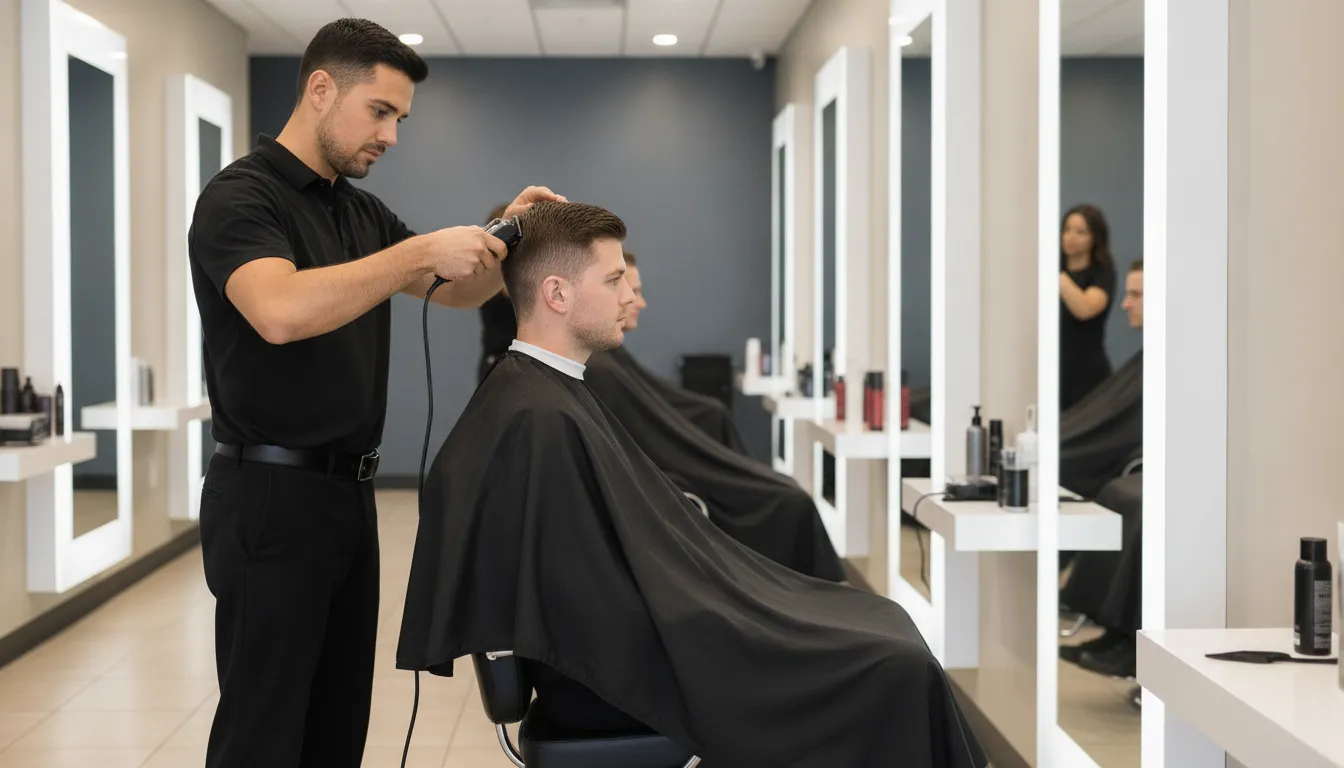
Haircut numbers are clipper guard sizes: the higher the number, the more hair the guard usually leaves behind. This haircut numbers guide explains the common 0 to 8 range, what each length looks like, and how to describe the cut you want before you sit in the chair.
Find a MjjM Salons location for your next haircut
A number is a useful starting point, not a complete haircut specification. Your stylist also needs to know where you want that length, how you want the sides blended, and how much length you want to keep on top. Guard measurements can vary slightly by clipper brand and blade setup, so use the chart below as a practical reference and confirm the finish during your consultation.
What Do Haircut Numbers Mean?
When a stylist asks whether you want a number 1, number 2, or number 4, they are usually referring to the clipper guard attached to the blade. The guard controls how close the clipper can cut. A lower number leaves less hair, while a higher number leaves more hair.
For example, a number 2 leaves a short layer of hair that is longer than a number 1. A number 4 leaves enough length for a softer, fuller appearance than a number 2. The number does not, by itself, tell you whether the cut will be a buzz cut, a fade, a taper, or a longer style. It describes one length used in the cut.
- Lower numbers: Shorter, tighter results that are often used on the sides, back, or throughout a buzz cut.
- Higher numbers: More length and coverage, which can leave room for texture, a part, or simple styling.
- Blended numbers: Different guards can be used together to create a gradual transition instead of one uniform length.
- Zero or no guard: Very close cutting, but the final result depends on the clipper blade, lever position, hair density, and the stylist's technique.
If you are unsure, describe the result you want rather than naming a number alone. Saying "short on the sides, but leave enough length on top to style" gives your stylist useful direction.
Clipper Guard Sizes from 0 to 8: A Visual Guide
The following haircut number chart shows common approximate lengths for standard clipper guards. Actual results vary by manufacturer, blade position, hair texture, and whether the stylist is blending or cutting one uniform length.
| Haircut number | Typical length | Common result |
|---|---|---|
| #0 | Very close, often less than 1/16 inch | Near-skin finish or the shortest part of a fade, depending on the blade setup |
| #1 | About 1/8 inch | Tight buzzed sides or a very short uniform cut |
| #2 | About 1/4 inch | Short buzz cut, clean sides, or a longer fade starting point |
| #3 | About 3/8 inch | Short but more visible coverage, often used in a blended cut |
| #4 | About 1/2 inch | Fuller sides or a short crew-style finish with noticeable texture |
| #5 | About 5/8 inch | Moderate clipper length with room for a little styling |
| #6 | About 3/4 inch | Longer clipper cut that can support a part or textured top |
| #7 | About 7/8 inch | Nearly an inch of coverage for a longer, softer clipper finish |
| #8 | About 1 inch | The longest common guard length, often used on top or for a uniform cut |
Some clipper sets include half guards, such as a #0.5, between the standard numbers. These intermediate sizes help a stylist soften a visible line between two lengths. They are especially useful when creating a smooth fade or taper.
What does a number 1 haircut look like?
A number 1 haircut is a very short cut with about 1/8 inch of hair left when using a typical guard. It creates a close, low-maintenance appearance and is often used on the sides or around the lower portion of a fade. Because it leaves little coverage, it can show more of the scalp than a number 2 or number 3.
What does a number 2 haircut look like?
A number 2 haircut leaves about 1/4 inch of hair with a standard guard. It is still short, but it generally provides more visible coverage than a number 1. A number 2 can work as a uniform buzz length or as part of a fade, taper, or short textured style.
What does a number 4 haircut look like?
A number 4 haircut leaves about 1/2 inch of hair. It looks fuller and less close-cut than a number 1 or number 2, and it can be a practical choice when you want short sides without an especially tight finish. It may also be used as a transition length below a longer top.
Which Number Should You Ask For?
The right number depends on how short you want the result, how often you want to maintain it, and whether you want one length or a blend. Use these starting points when discussing your preferences:
- For the shortest, simplest maintenance: Ask about a #1 or #2, and clarify whether you want that length all over or only on the sides.
- For a short cut with more coverage: A #3 or #4 may leave a softer outline and more visible texture.
- For a little styling flexibility: Ask whether a #5 through #8 can be used on top while the sides are cut shorter.
- For a fade: Give the stylist the shortest length you want at the bottom, then discuss how high or low you want the blend to rise.
- For a repeat haircut: Bring a reference photo and mention what you liked or disliked about the last cut. This is often more precise than relying on a number alone.
Hair texture and growth patterns matter too. Thick, curly, wavy, or very straight hair can look different at the same guard length. A stylist may adjust the number, use scissors on top, or change the blend so the finished shape works with your hair rather than simply matching a chart.
MjjM Salons men's and adult haircuts start at $22. Prices can vary by location and provider, so confirm the current service details for the salon you plan to visit. The MjjM guide to men's haircut pricing explains why location, complexity, and add-on services can affect the final price.
How Clipper Numbers Relate to Fade Styles
A clipper number and a fade name describe different parts of the haircut. The number describes the length left by a guard. The fade describes how the hair transitions from shorter to longer and where that transition begins.
- Low fade: The blend begins lower near the ears and neckline, leaving more length higher on the sides.
- Mid fade: The blend starts around the middle of the sides for a balanced change in contrast.
- High fade: The shorter section rises higher on the head, creating a stronger contrast with the top.
- Taper: The hair is narrowed around the sideburns and neckline, often with more length retained on the sides than a full fade.
A request such as "a low fade from a #1 into a #3" gives both the transition and the approximate lengths. It still leaves room for the stylist to adjust the blend to your hairline, head shape, and desired finish. For more background on fade placement and style options, read MjjM Salons' men's fade haircut guide.
The number on top may be different from the number on the sides. For instance, you might ask for a #2 on the sides, a gradual blend through the lower numbers, and scissor work or a #6 on top. That combination gives the stylist a clearer picture than saying only "short" or "a fade."
How to Explain the Cut You Want
Before the clippers start, answer four practical questions:
- How short should the shortest area be? Name a number if you know it, or describe whether you want a close, moderate, or fuller finish.
- Where should the transition begin? Say low, mid, or high if you want a fade, and show the stylist where you want the blend to sit.
- How much should stay on top? Explain whether you want clipper length, scissors, a part, texture, or enough length to style.
- How much maintenance is realistic? A very tight fade may look sharp but need more frequent cleanups than a longer taper or uniform cut.
A useful request might sound like this: "Please keep about a #2 on the sides, make it a low fade, and leave enough length on top for a textured style. I want the neckline cleaned up but not shaved too high." Your stylist can then confirm the details and recommend an adjustment before cutting.
Visit a MjjM Salons location to discuss your preferred haircut length
Frequently Asked Questions About Haircut Numbers
What do haircut numbers mean?
Haircut numbers usually refer to the clipper guard size used to cut the hair. A lower number leaves less hair, and a higher number leaves more. The number is only one part of the request because it does not specify the fade height, top length, neckline, or overall shape.
Is a number 0 the same as a bald haircut?
Not always. A zero guard or no guard creates a very close cut, but a truly skin-close result may require a different blade setup or finishing technique. Ask your stylist whether you want visible stubble, a near-skin finish, or a completely smooth result.
Is a number 2 shorter than a number 4?
Yes. With typical clipper guards, a number 2 leaves about 1/4 inch and a number 4 leaves about 1/2 inch. Both measurements are approximate, and the finished appearance changes with hair texture, density, and how the stylist blends the cut.
What number is best for a fade?
There is no single best number for every fade. Many fades start with a very short lower section and blend into longer guards above it, but the best combination depends on the contrast you want, your hairline, and how much length you want to keep. Ask for the fade height and the shortest length together.
How often should a haircut with short clipper numbers be maintained?
Short clipper cuts and fades usually show growth sooner than longer styles. Maintenance depends on how sharp you want the outline and how quickly your hair grows. Ask your stylist when a cleanup or full haircut would make sense for your chosen length and schedule.
Can I ask for a haircut number on the sides and scissors on top?
Yes. Many men's haircuts combine clipper work on the sides and back with scissors on top. Tell your stylist the side length you prefer, then describe how much length and movement you want on top. A reference photo can help clarify the shape.
Find your local MjjM Salons location and plan your next haircut.