
MjjM Salons Blog
Hair Stylist Work Sample Preparation: What to Include
By the MjjM Salons team
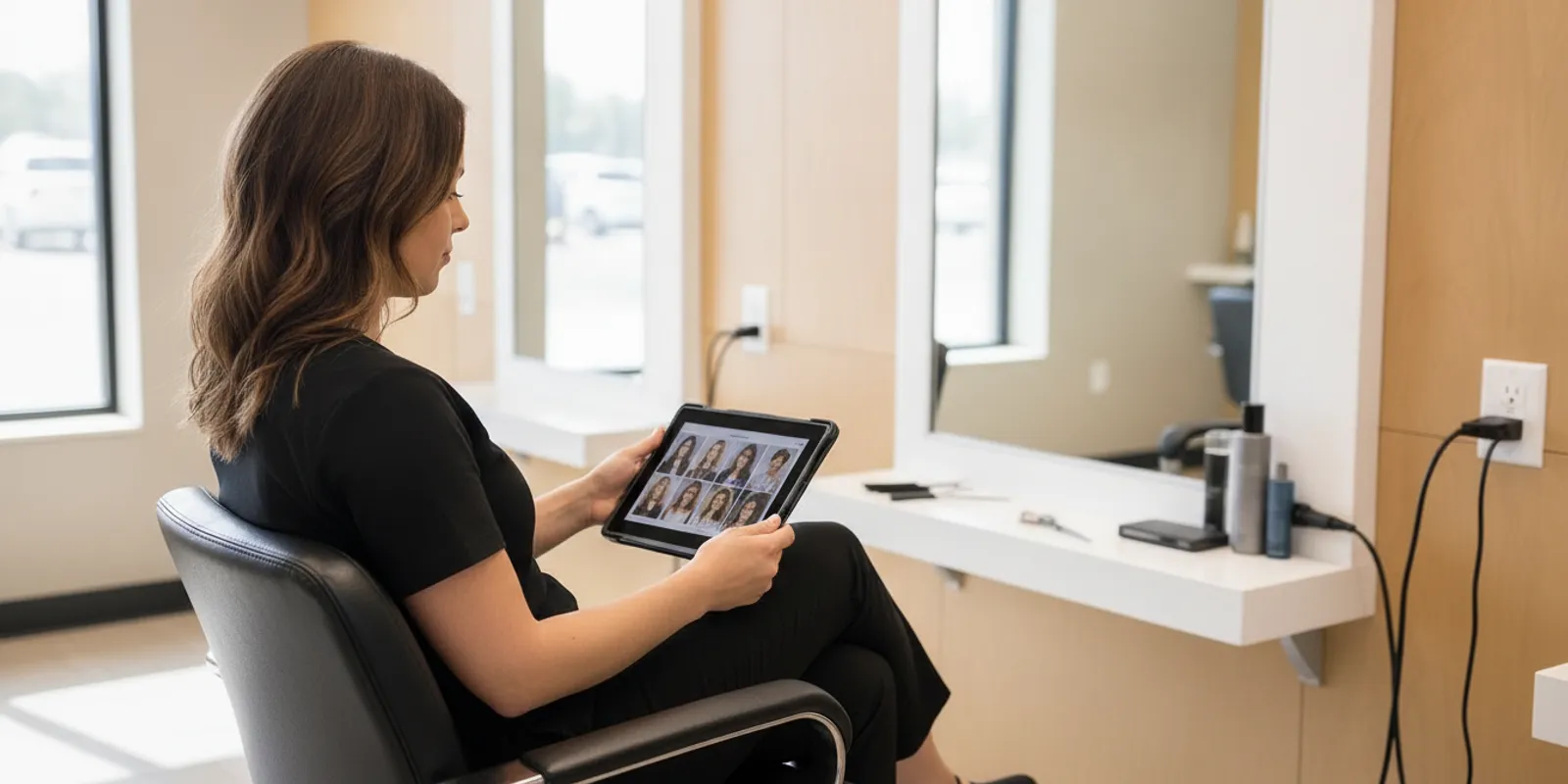
Thoughtful hair stylist work sample preparation helps you show how you approach consultations, technique, and finished looks—not just a collection of attractive photos. A useful work sample is focused, honest, and easy to review. It can support a conversation about your experience whether you are established or a recent cosmetology graduate building your first professional portfolio.
Apply for opportunities with MjjM Salons
What should a hair stylist work sample show?
Choose examples that represent real skills and the work you want to discuss. A reviewer should understand what you did, what the client requested, and how the result relates to your training or experience. Keep the explanation brief; the sample should lead to conversation, not replace it.
- Range: Include a few different services or techniques you can confidently explain, rather than many near-identical examples.
- Consistency: Select work that reflects care in consultation, sectioning, finishing, and presentation.
- Relevance: Put your strongest, most relevant examples first.
- Accuracy: Identify your role honestly, especially for collaborative work, school projects, or models.
If you are still in school or newly licensed, coursework, mannequin practice, and supervised work can show development. Label each item clearly so no one mistakes practice for a completed client service. Describe the technique you practiced and what you would refine next. The U.S. Bureau of Labor Statistics describes hairdressers, hairstylists, and cosmetologists as providing services such as cutting, coloring, and styling hair; that broad occupational outline can help you think about which parts of your skill set your work samples represent (BLS occupational description).
How should you select and organize examples?
Start by gathering more examples than you plan to use. Then review them for focus, clarity, and variety. A compact selection is easier to discuss than an extensive archive. Organize it so the first impression is strong, the middle adds useful context, and the final examples show range rather than repetition.
- Set a purpose. Decide what you want the sample to communicate: finishing skills, consultation, experience with a service, or progress during training.
- Choose a manageable set. Select only examples you can explain. A smaller set with clear context usually serves a conversation better than an unfiltered camera roll.
- Put them in a logical order. Lead with relevant work you can discuss confidently, then follow with examples that add another technique or situation.
- Add concise captions. Note the service or practice context, your role, and one relevant decision or challenge.
- Review the complete presentation. Check image quality, spelling, labels, and whether the sequence is easy to follow on the device or page you will use.
Use a simple test for every item: does it show a skill, help explain a decision, or provide context about your experience? If it does none of those, remove it. A sample does not need to prove that you can do everything. It should give a fair starting point for a focused conversation.
How can you balance variety and depth?
Variety is useful when each example adds something. For instance, three similar finished cuts photographed from slightly different angles may repeat the same information. One clear finished style, one example that shows a different technique, and one school or supervised project with a thoughtful explanation can tell a broader story. Do not include a technique simply to make the portfolio look more advanced. Choose work you can describe accurately and answer questions about.
If you have limited examples, depth can come from context rather than volume. Explain the request, the steps you personally took, and what you learned. A single well-labeled practice project may be more informative than several images with no explanation.
How do you present photos responsibly?
Use only images you have permission to share. Ask the client or model before including an image, and follow any school or employer rules. Avoid showing names, appointment details, or other identifying information. If permission is uncertain, leave the photo out. A respectful portfolio protects the people whose work helped you learn.
Choose clear, well-lit images that show the result without heavy filters or distracting backgrounds. Consistent framing makes work easier to review. If you have a before-and-after pair, present both fairly and avoid exaggerating a change through lighting, angle, or editing. Keep originals available in case a reviewer asks about context.
Before sharing, inspect the image beyond the hairstyle itself. Check mirrors and reflective surfaces for private details, crop out appointment cards or screens, and remove visible names from filenames and captions. Do not edit an image in a way that changes the apparent result. If a photo includes another stylist's contribution, identify that clearly or choose a different example. Your credibility depends on an accurate account of the work as much as on the image quality.
What should each caption explain?
A caption should add information, not repeat what is visible. Keep it factual and short. Identify whether the image shows a school assignment, supervised service, or work completed independently. Explain your specific contribution and mention one choice you made, such as how you responded to the requested shape or finish.
| Work sample type | What to include | What to clarify |
|---|---|---|
| Completed client work | Clear image and concise service context | Your role and permission to share |
| School or mannequin practice | Technique practiced and a clean result photo | That it was practice, not client work |
| Collaborative work | Result and relevant process detail | Which parts you personally completed |
| Work in progress | Include only when process is relevant | That it is not the finished result |
- Work sample type
- Completed client work
- What to include
- Clear image and concise service context
- What to clarify
- Your role and permission to share
- Work sample type
- School or mannequin practice
- What to include
- Technique practiced and a clean result photo
- What to clarify
- That it was practice, not client work
- Work sample type
- Collaborative work
- What to include
- Result and relevant process detail
- What to clarify
- Which parts you personally completed
- Work sample type
- Work in progress
- What to include
- Include only when process is relevant
- What to clarify
- That it is not the finished result
What is a useful caption format?
Use a repeatable three-part structure: context, your contribution, and a decision or learning point. For example: “Cosmetology school practice, mannequin. I completed the sectioning and styling exercise. I focused on maintaining even tension and would allow more time to refine the finish.” This tells the reader what they are seeing without suggesting a client appointment took place.
For client work, keep details general and private: “Finished style following a consultation; I completed the cut and finish. We discussed the requested length before beginning.” Avoid names, personal circumstances, and claims that cannot be supported by the photograph. A caption is not a testimonial and does not need to make the outcome sound exceptional.
How can you explain your work in a conversation?
For each selection, prepare a short explanation: what the person requested, what you did, what choices you made, and what you learned. Keep client details private. If the example involved a challenge, describe it professionally and focus on your response rather than criticizing another person or a prior workplace.
A practical explanation can follow this sequence:
- Request: Describe the goal in general terms, without identifying the client.
- Your role: State which steps you performed and whether the work was independent, supervised, or collaborative.
- Decision: Explain one technique or communication choice that mattered to the result.
- Reflection: Say what you learned or what you would continue practicing.
For example, you might say that a client asked for a particular shape, explain how you confirmed the goal before starting, then describe how you checked the finish. If it was a classroom exercise, say so and focus on the technique. Clear boundaries make the discussion more credible than implying every sample represents the same level of responsibility.
Consider bringing a digital copy that is easy to navigate and a backup in case a device or connection is unavailable. If you use a printed version, check that photos remain sharp and pages are in order. Elaborate design is not necessary. Readability and accurate context matter more than decoration. Name files plainly, keep the order consistent, and test that a viewer can open the presentation without signing into a personal account.
How should you prepare the format and review it?
A work sample can be a simple digital document, a neatly arranged set of images, or a printed selection, depending on how you will share it. Pick a format that opens quickly and does not distract from the work. If you are presenting on a phone or tablet, check that captions are readable without excessive zooming. If you are using printed pages, make sure each caption stays with its image and the paper order is obvious.
Run a final review as if you were seeing the material for the first time. Start at the beginning and ask whether the purpose is clear. Check that each image has a caption, that captions use consistent terms, and that no sample implies a license or level of experience you do not have. Remove duplicate images, drafts, and anything with unclear permission. Ask a trusted instructor or colleague to review the sequence if you want another perspective, while keeping client information private.
Keep a private master folder with original files and a separate, shareable selection. That makes it easier to update the work sample without accidentally sending unapproved photos or internal notes. If your skills develop or you complete new training, replace older examples deliberately rather than continually adding images. A portfolio should remain current enough to represent your work, but it does not need to document every service you have ever performed.
What should you ask about the role?
A work sample is one part of evaluating a potential fit. Ask practical questions about the role, expectations, training, schedule, benefits, and how career development works. Clarify what support is available for someone new to a salon environment and how responsibilities may change as skills grow. You can review salon suite careers and learn more about MjjM Salons. The company describes opportunities for licensed or in-school cosmetology professionals, and its Hair Stylist Academy is one resource to learn about professional development.
When considering an opportunity, make the conversation specific to your priorities. If stability matters, ask how the employment arrangement is structured and what benefits are available. If you want to advance technically, ask what training or development opportunities are relevant to the role. If you are moving from independent work, clarify expectations around scheduling, client flow, team communication, and day-to-day responsibilities. Avoid assuming that a work sample alone answers these questions; use it to start a two-way discussion.
You can read the Maine hairdresser jobs overview or Maine hair stylist jobs guide for additional role context, then review how to apply to MjjM Salons when you are ready to take a next step. MjjM uses a chat-to-apply system that guides candidates through the initial application.
Apply for opportunities with MjjM Salons
Apply for opportunities with MjjM Salons
Frequently asked questions
Do I need a professional portfolio to apply for a stylist role?
A work sample can help you talk through your experience, but follow the instructions for the specific opportunity. If you do not have client photos, accurately labeled school or mannequin practice can still help you explain what you have learned.
How many photos should I include?
There is no single required number. Use a focused selection that you can explain, and prioritize clarity and variety over volume.
Can I use photos of clients?
Only share images when you have permission and the use follows relevant school or employer policies. Remove identifying details and omit any image if you are unsure about permission.
What if I am a recent graduate?
Be transparent about your level of experience. Include practice work or supervised examples with clear labels, and describe the skills you are continuing to build.
Should I bring a digital or printed work sample?
Use the format requested for the conversation. If there is no preference, choose a format that opens easily and keep a backup copy available.
A carefully prepared work sample gives you a practical way to discuss your skills, learning, and professional goals with clarity. It can help you make a more informed decision about the next step in your salon career.