
MjjM Salons Blog
District Salon Manager Jobs: Responsibilities, Skills, and Career Growth
By the MjjM Salons team
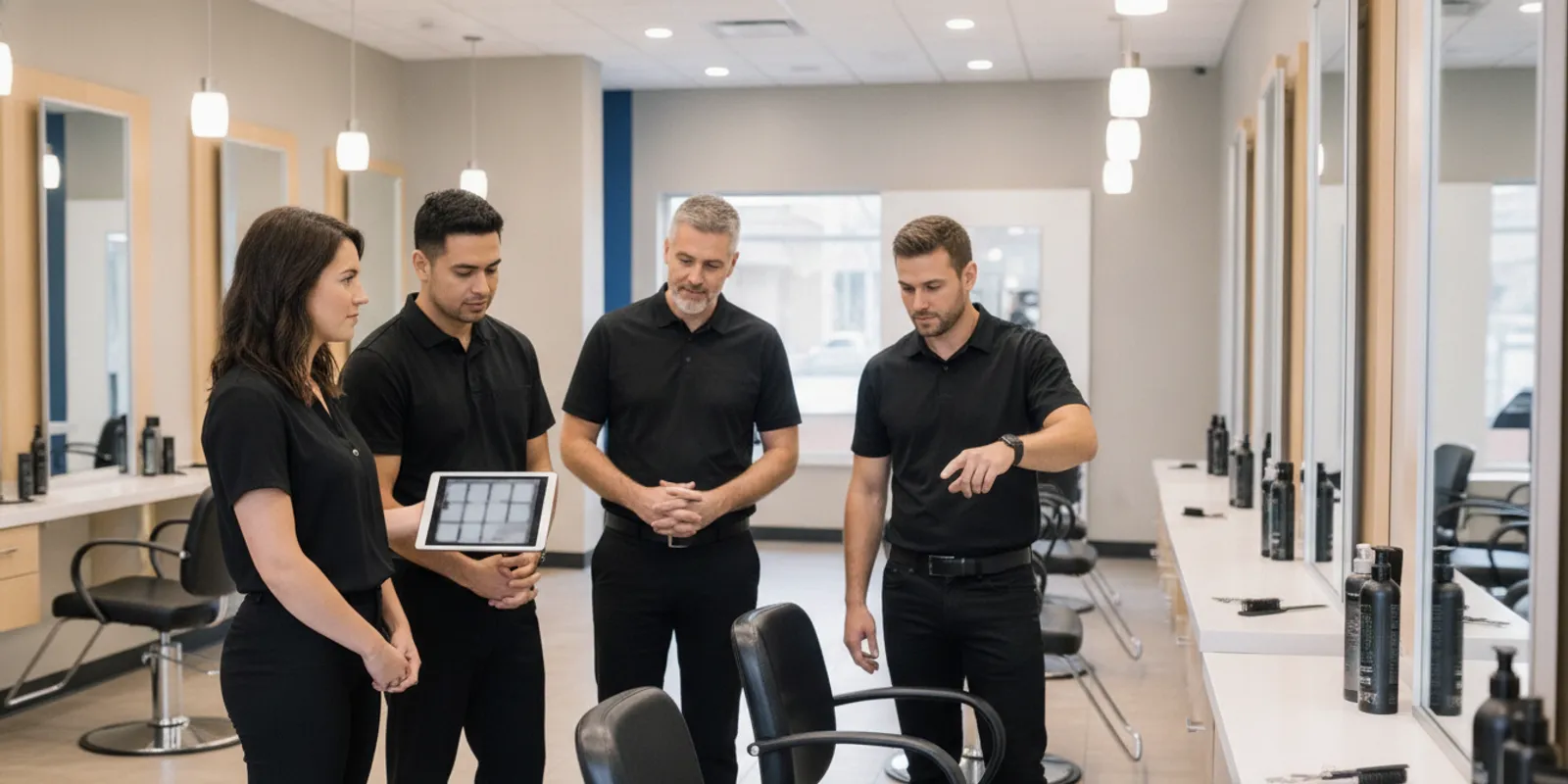
District salon manager jobs combine people leadership with responsibility for several salon locations. If you are considering this next step, the key question is how your work changes when you support managers and teams across a region instead of leading one salon day to day. The role calls for clear communication, consistent operating habits, sound judgment, and the ability to develop local leaders.
Apply for career opportunities with MjjM Salons
What does a district salon manager do?
A district salon manager, sometimes called a multi-unit or area manager, supports the performance and development of multiple salons. The exact span and title depend on the employer. In general, the role connects company expectations with the day-to-day work happening in each location.
Rather than handling every guest concern or schedule change personally, a district leader equips salon managers to handle them well. That can include coaching managers, checking that operating standards are understood, reviewing staffing and scheduling needs, and identifying where a location needs support. The aim is to help each salon deliver a dependable guest experience while building a capable team.
Salon leadership often includes staffing responsibilities. A career overview from Meridian University’s discussion of salon manager responsibilities describes staffing as part of the manager’s work. At district level, staffing conversations extend across multiple teams: leaders may help managers plan coverage, communicate recruiting needs, and support employee development without taking over each location’s daily decisions.
How is a district role different from a salon manager job?
A salon manager is generally focused on one location. The district-level role focuses on several locations through their managers and teams. This changes the scale of the work, the way priorities are set, and how a leader measures whether support is working.
| Area | Salon manager | District salon manager |
|---|---|---|
| Primary scope | One salon and its daily team needs | Several salons and the managers leading them |
| People leadership | Direct coaching and coordination with the local team | Coaching salon managers and supporting consistent team leadership |
| Scheduling | Builds or adjusts coverage for the location | Reviews location-level coverage challenges and helps managers plan solutions |
| Operations | Applies procedures in the salon and addresses local issues | Communicates expectations across locations and follows up on execution |
| Performance conversations | Discusses progress and concerns directly with team members | Works with managers on patterns, goals, follow-up, and leadership development |
| Typical work rhythm | Frequent on-site presence in one salon | A mix of visits, manager conversations, planning, and follow-up across locations |
- Area
- Primary scope
- Salon manager
- One salon and its daily team needs
- District salon manager
- Several salons and the managers leading them
- Area
- People leadership
- Salon manager
- Direct coaching and coordination with the local team
- District salon manager
- Coaching salon managers and supporting consistent team leadership
- Area
- Scheduling
- Salon manager
- Builds or adjusts coverage for the location
- District salon manager
- Reviews location-level coverage challenges and helps managers plan solutions
- Area
- Operations
- Salon manager
- Applies procedures in the salon and addresses local issues
- District salon manager
- Communicates expectations across locations and follows up on execution
- Area
- Performance conversations
- Salon manager
- Discusses progress and concerns directly with team members
- District salon manager
- Works with managers on patterns, goals, follow-up, and leadership development
- Area
- Typical work rhythm
- Salon manager
- Frequent on-site presence in one salon
- District salon manager
- A mix of visits, manager conversations, planning, and follow-up across locations
This comparison is a general guide, not a universal job description. Some employers give district leaders direct responsibility for specific processes; others expect them to coach and monitor through salon managers. Read an actual posting carefully and ask how authority, travel, reporting, and daily priorities are defined.
Which responsibilities shape the work?
Coaching managers and developing teams
District leaders help salon managers build confidence and consistency in their own leadership. Effective coaching starts with listening: What is working at the location? What is getting in the team’s way? What has the manager tried so far? From there, the district leader can agree on a specific next step and a time to check progress.
Coaching can include helping a manager prepare for a team conversation, think through a staffing challenge, or support a stylist who wants to improve. The district leader should avoid taking over every issue. If managers depend on someone else to resolve routine matters, their own decision-making cannot develop. A strong approach gives direction while leaving appropriate ownership with the local leader.
Maintaining operational standards across locations
Multiple salons need clear, repeatable expectations. District leaders help managers understand what the standard is, why it matters, and how to keep it in practice. They may visit locations, observe workflows, review routine processes, and follow up when a location needs clarification or additional support.
Consistency does not mean ignoring local context. A location’s staffing mix, schedule, and guest flow may differ from another’s. A district manager needs to distinguish between a reasonable local adjustment and a gap that needs attention. Explaining the purpose behind a standard makes it easier for managers to apply it thoughtfully rather than treat it as a checklist alone.
Supporting staffing and scheduling
Coverage planning is a continuing leadership responsibility. A district manager can help salon managers anticipate schedule pressure, communicate staffing needs early, and consider how planned time off or vacancies may affect service. The local manager is closest to the team’s day-to-day schedule; the district leader can identify wider patterns and help coordinate support where appropriate.
For a candidate, it is worth asking how much of the role is spent on staffing and schedule issues. Also ask who owns schedule approval, how location visits are arranged, and how leaders respond when a salon has an unexpected coverage gap. These details help distinguish a coaching and oversight position from a role that is mainly reactive problem-solving.
Leading performance conversations
Performance conversations should be specific, fair, and timely. District managers may help salon managers prepare for conversations about goals, expectations, progress, or concerns. A useful discussion names the observed issue, explains its impact, invites the employee’s perspective, and agrees on a practical next step. It should also establish when the manager and team member will revisit progress.
When a concern recurs across locations, a district leader can look for a shared cause. Managers may need clearer guidance, better communication, or a practical way to build a skill. Addressing the pattern can be more effective than treating every instance as unrelated. Keep documentation and follow-up consistent with the employer’s procedures.
How can a district manager organize a week across locations?
A multi-location schedule works best when visits and check-ins have a purpose. A leader might begin the week by reviewing open action items from each manager, identifying time-sensitive coverage or performance concerns, and setting priorities for on-site visits. A location with a new manager or a recurring process gap may need more direct attention than a team that is meeting expectations and handling its work independently.
During a visit, focus on a few observable questions rather than trying to review everything at once. Are the manager and team clear about the current priority? Do they have a workable plan for coverage? Are agreed procedures being followed? What support would help them act on the next step? Capture decisions and owners while the conversation is fresh. A short follow-up note can record the action, the person responsible, and the date to review progress.
Between visits, protect time for manager conversations and follow-through. If every day is filled with travel or urgent fixes, coaching and planning can disappear. A useful rhythm balances in-person observation with remote check-ins, documentation, and time to identify patterns across locations. The exact schedule varies by employer and geography, so ask how travel time and availability are handled before accepting a role.
How can a leader respond when a location is struggling?
Start by defining the issue in observable terms. “The team needs to improve” is too broad to guide action. A clearer description might be that the location has had repeated coverage gaps on particular shifts, or that managers are handling the same process differently. The district leader can then ask the manager what they have observed, what has already been tried, and what is within their control.
Next, separate the immediate response from the underlying cause. An unexpected absence may call for a short-term coverage plan, while repeated gaps may point to a need for earlier schedule review or clearer communication. Agree on a practical action, decide what support the district leader will provide, and set a check-in date. If the first approach does not work, review what happened and adjust the plan rather than letting the issue linger without ownership.
This method also helps leaders avoid applying the same fix everywhere. Two salons may show a similar symptom for different reasons. One manager may need help planning ahead; another may need clearer authority or additional coaching. A district leader’s role is to notice patterns while still understanding the local context behind each one.
What skills help a multi-location leader succeed?
- Coaching and feedback: You can give clear, respectful guidance and help managers turn it into action.
- Communication: You can explain expectations plainly, listen to different perspectives, and keep follow-up organized.
- Prioritization: You can separate urgent needs from important longer-term work across more than one location.
- Operational judgment: You can recognize when a standard needs attention and when a local adjustment is sensible.
- People awareness: You can approach performance matters with consistency, discretion, and respect.
- Planning: You can organize visits, check-ins, and action items so that no location is supported only when a problem escalates.
- Adaptability: You can move between different teams and situations without losing sight of shared expectations.
Experience as a salon manager can be a strong foundation, but the transition also requires a shift in mindset. Instead of measuring your impact by how many tasks you personally complete, consider whether managers are becoming more capable and whether teams understand what is expected of them.
How can you show readiness for district salon manager jobs?
Prepare examples that demonstrate how you lead through other people, not only how you perform as an individual contributor. Choose situations where you helped a manager or team solve a concrete problem, set a clear expectation, or improve a repeatable process. Explain the context, your role, the action you took, and what you learned. If you do not have a formal multi-location title, examples from mentoring, shift leadership, training, or supporting a second location can still show transferable skills.
Be specific about your method. Instead of saying you are “good at communication,” describe how you kept a manager informed, confirmed ownership, and checked whether a plan worked. Instead of claiming you can solve staffing issues, explain how you assessed coverage, gathered input, and helped a local leader choose a workable response. These examples let an interviewer understand your judgment without overstating your authority or results.
You can also prepare a simple first-month approach for a hypothetical region. For example, you might begin by learning each manager’s strengths and current priorities, reviewing existing expectations, and visiting locations to understand their routines. Then you could agree on a small number of follow-up goals with each manager. Present this as a way to listen and establish a baseline, not as a promise to change processes before understanding them.
How can you evaluate a district salon manager opportunity?
A title alone does not explain the job. Before applying or during an interview, gather details about the region, reporting structure, decision-making authority, and expected travel. Consider these questions:
- How many locations are included, and what is the expected travel pattern?
- Who do salon managers report to, and which responsibilities belong to the district leader?
- How often are one-to-one check-ins and location visits expected?
- What does success look like during the first few months?
- How are operational expectations communicated and followed up?
- What support is available when a location has staffing or scheduling challenges?
- How are performance concerns documented and escalated?
- What training or development is available to leaders moving into multi-location work?
Pay and benefits should also be reviewed in the specific posting or offer rather than assumed from a job title. Compare the full role, including travel expectations, schedule, responsibilities, and support. Do not treat a broad description of district work as a guarantee that every employer structures the job the same way.
How does multi-location leadership connect to MjjM Salons?
MjjM Salons is a family owned and locally operated Supercuts franchisee with salons across Maine, New Hampshire, and Massachusetts. The MjjM Salons website provides company information for candidates. That regional footprint makes leadership, communication, and consistent support relevant parts of the organization. It does not mean that every location or role has identical needs, and a blog guide should not be taken as confirmation of a particular opening.
If you are exploring a leadership path, learn about MjjM Salons and its organization, review the current career information, and check the salon locations to understand the company’s regional presence. You can also review the application information and use the direct MjjM Salons application funnel to see available opportunities. Check the current listing for role requirements, location, schedule, and the application steps.
Leadership opportunities can take different forms. A candidate may bring salon management experience, multi-site retail or service leadership, or strong coaching skills from another setting. The important step is to connect your experience to the actual position requirements rather than assume a particular background automatically qualifies you.
Explore opportunities and apply to MjjM Salons
Frequently asked questions
Do district salon managers work in one salon every day?
The schedule depends on the employer and the number of locations in the region. The work may include salon visits, meetings with managers, planning, and follow-up. Ask about travel and time on site when reviewing a specific job.
Do you need to have been a salon manager first?
Some employers may prefer direct salon management experience, while others may consider related leadership experience. Review the posting’s stated requirements and be ready to explain how your background prepares you to coach teams, manage operations, and support managers.
Is a district salon manager the same as a district manager?
Not always. Employers may use different titles for similar multi-location responsibilities, or use the same title for roles with different scope. Compare the locations covered, reporting relationships, decision authority, and daily duties rather than relying on the title alone.
How can I prepare to move from one salon to several locations?
Practice delegating, coaching other leaders, setting clear follow-up, and looking for patterns across teams. You can also prepare examples of how you handled a staffing challenge, improved a process, or supported a manager through a difficult conversation.
Apply for opportunities with MjjM Salons
Use the details in each current listing to decide whether the responsibilities, location, and expectations fit your leadership experience and career goals.