
MjjM Salons Blog
Cosmetology License Requirements in Massachusetts: A Practical Career Guide
By the MjjM Salons team
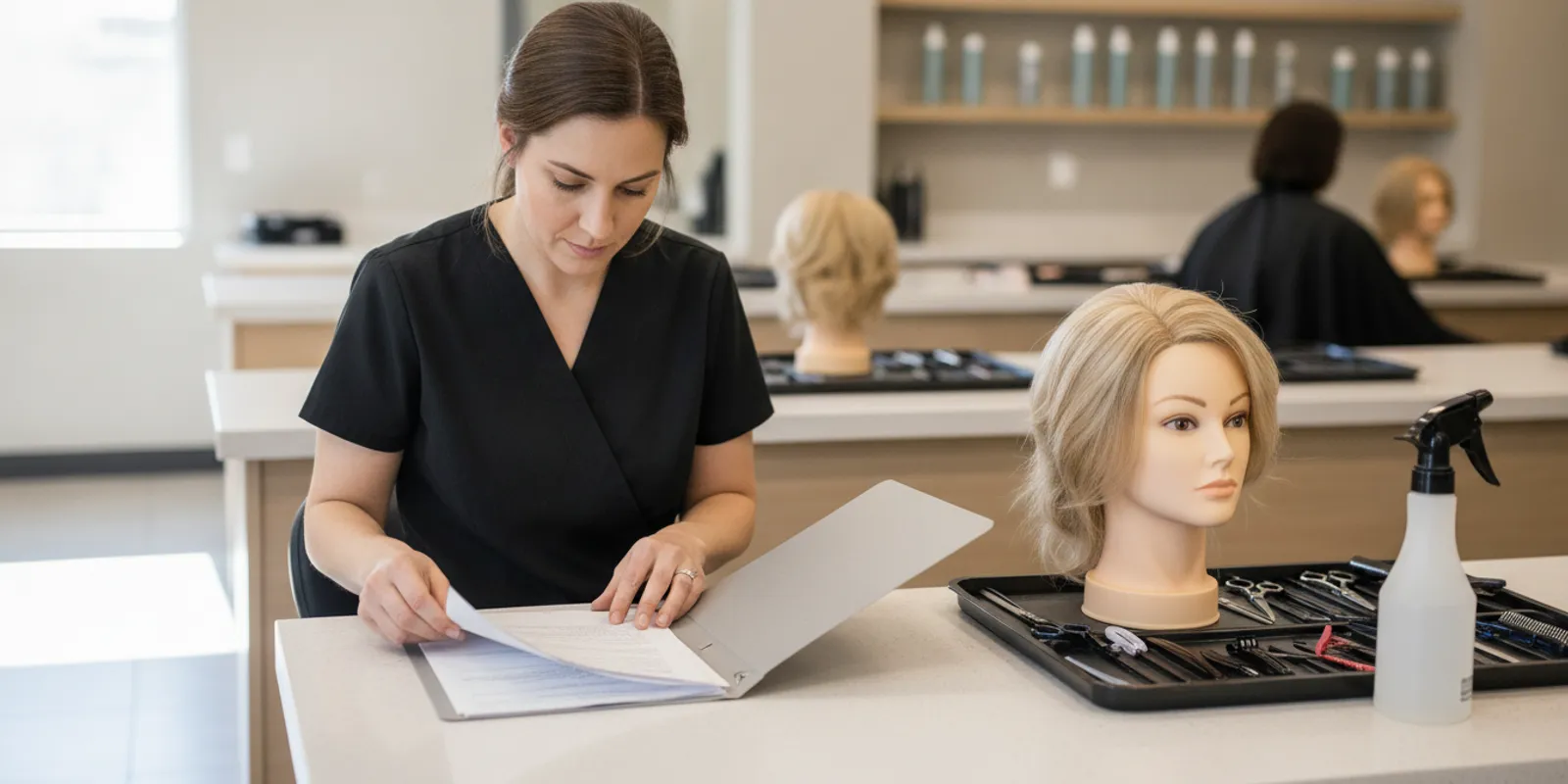
Understanding cosmetology license requirements massachusetts applicants must meet can help you plan the move from training to professional work. Start by identifying the credential route that applies to you, confirm education and examination steps with the state, prepare records before applying, and track renewal dates after licensure. Because forms and procedures can change, use current Massachusetts instructions for decisions about eligibility, fees, and timing.
Apply for cosmetologist jobs with MjjM Salons
Where should you verify Massachusetts requirements?
Begin with the Massachusetts Board of Registration of Cosmetology and Barbering, within the Division of Occupational Licensure. The Board’s current application material and official instructions should guide your next step. A general guide can help you organize questions, but it is not a substitute for current state directions. Avoid relying on old discussion posts, another state’s checklist, or a school’s broad description as the final authority.
The supplied regulatory reference, Massachusetts regulation 240 CMR 2.01 on cosmetology licensure, describes education and qualifying school settings. It helps explain the regulatory framework, but you should pair it with the Board’s current instructions for operational details such as application steps and examination procedures. If a summary and an older rule seem inconsistent, ask the Board how it applies to your situation instead of guessing.
Before enrolling, booking an examination, or setting a start date, make a dated verification note. Record the page or document you checked, its date, and any answer the Board gives you. This makes it easier to tell current instructions from a checklist saved months ago.
- Identify the credential category that matches the work you plan to do.
- Confirm the current education standard and which programs qualify.
- Ask how completed education is documented and how examination eligibility is determined.
- Review the current application packet, supporting materials, fees, and submission method.
- Find out how to verify license status and where renewal instructions appear.
When contacting the authority, describe your status: enrolled, recently graduated, trained elsewhere, or already licensed. A specific question about your route is more useful than asking only what a cosmetologist generally needs. Keep a copy of the response with your records, along with the date and the name of the office or unit that provided it, if available.
What education should you confirm before enrolling?
Verify the current Massachusetts education route before choosing a program or assuming earlier coursework will count. Regulation 240 CMR 2.01 describes a training requirement and qualifying school settings. Check the complete current rule and Board instructions for the exact standard, documentation, and eligibility conditions that apply to you. Do not base an enrollment decision on an informal estimate of hours.
Ask the school direct questions and, where practical, keep its answers in writing. Clarify how the program aligns with the state route, what proof of completion you will receive, and who can explain an unusual education history. If you are comparing schools, make the same inquiries of each so you can evaluate their answers on equal terms.
- Does this program meet current Massachusetts criteria for the credential I seek?
- What official record documents completed training, and who issues it?
- How are absences, make-up work, transfers, or program changes recorded?
- When does the school report completion or confirm examination eligibility?
- Who can help if my previous education does not follow the usual route?
For example, a student who completed part of a program elsewhere and then moved to Massachusetts should gather transcripts, dates, course descriptions, and proof of completed training. The student can then ask the Board how those records are evaluated. Do not assume a certain number of hours will transfer or that a school’s verbal estimate guarantees eligibility. Resolving the question early can prevent a mismatch between a planned graduation date and the state’s documentation requirements.
Keep copies of enrollment agreements, transcripts, completion records, and relevant correspondence. Use clear electronic file names and retain originals as directed by the school or Board. If a record’s name differs from your identity documents, ask how to correct or explain it before applying. A simple folder system can separate education records, examination information, application confirmations, and renewal notices.
How do examinations fit into the licensing process?
Once you understand whether your education qualifies, check the current examination instructions and use the state’s prescribed registration route. Depending on the current process and your route, there may be eligibility confirmation, one or more examinations, identification rules, scheduling steps, or other requirements. The state’s current materials determine the sequence; another state’s candidate handbook does not.
Build preparation around the official exam outline or candidate materials. List the tested areas, compare them with your coursework, and mark topics that need more review. Set a manageable schedule with practice, recall checks, review of safety procedures taught in school, and time to resolve questions. A schedule that tests what you can remember and apply is more useful than repeatedly rereading without checking comprehension.
Before booking, confirm identification requirements, name format, arrival time, permitted items, cancellation or rescheduling steps, and how results are communicated. Make sure your school record, application, and ID details are consistent. For questions about accommodations or eligibility, use the official contact channel well before an appointment.
A practical sequence is to check eligibility while finishing school, gather records as they become available, read the candidate instructions, and book only after any required authorization is confirmed. If a retake becomes necessary, review the official directions for the applicable steps and use result information to focus your study. Avoid planning around an assumed retake window or deadline that you have not verified.
Keep the examination timeline realistic. If a school has not yet confirmed completion or the Board has not confirmed eligibility, use that period to organize records and study rather than relying on an unconfirmed test date. When you receive an appointment or result notice, save it in the same folder as the related application materials.
What should you gather for the application?
Prepare the application after identifying the route that applies to you. The list below is a planning aid, not a complete or official checklist. Follow the current Board application instructions for your specific case. Applicants should be ready to provide accurate identity and contact details, education documentation, examination information, and any other requested records.
| Stage | Verify with the current authority | Practical preparation |
|---|---|---|
| Education | Qualifying route, school criteria, completion evidence | Save transcripts, dates, and completion records |
| Examination | Applicable exam, eligibility, registration, candidate instructions | Check ID and appointment procedures |
| Application | Current form, supporting records, fee, submission method | Review each field and retain confirmation |
| License status | How status is recorded and verified | Save confirmation and check the record |
| Renewal | Current cycle, process, and required materials | Track expiration and keep contact details current |
- Stage
- Education
- Verify with the current authority
- Qualifying route, school criteria, completion evidence
- Practical preparation
- Save transcripts, dates, and completion records
- Stage
- Examination
- Verify with the current authority
- Applicable exam, eligibility, registration, candidate instructions
- Practical preparation
- Check ID and appointment procedures
- Stage
- Application
- Verify with the current authority
- Current form, supporting records, fee, submission method
- Practical preparation
- Review each field and retain confirmation
- Stage
- License status
- Verify with the current authority
- How status is recorded and verified
- Practical preparation
- Save confirmation and check the record
- Stage
- Renewal
- Verify with the current authority
- Current cycle, process, and required materials
- Practical preparation
- Track expiration and keep contact details current
Before submitting, compare your name, address, email, education dates, and examination details across records. Confirm that required attachments are legible and belong to the correct applicant. If a field is unclear, ask before entering a guess. Save a copy of the completed submission, any payment confirmation, and a receipt or tracking record.
After filing, monitor the contact channels you supplied. Keep a short status log with submission date, confirmation number if available, and requests for additional information. Respond using the stated method and retain a copy. This record can help you confirm what you sent if the application needs follow-up. If the authority provides an estimated processing period, record it, but use the current official status process rather than assuming the estimate is a guarantee.
How can you avoid preventable application delays?
Delays can start with an assumption: that a school sent a record, that test results have been matched to an application, or that an older form remains accepted. A short audit before submission can catch these gaps early.
- Check the source date. Use the form and instructions currently linked by the state.
- Match identity details. Compare your application with school records and identification; resolve differences using official guidance.
- Confirm who sends records. Ask whether the school or testing provider sends each item and whether you must request it.
- Check completeness. Use the application’s checklist for signatures, attachments, and any required fee.
- Save evidence. Retain what you submitted, proof of delivery, and notices received.
- Follow up carefully. Use the official contact method and share identifying application information only through an appropriate secure channel.
For example, if a graduate believes a transcript was sent but the status notice says education documentation is missing, the next step is to ask the school whether it sent the correct record to the correct destination. Then follow the Board’s instructions for resolving the missing item. Sending duplicate or unrelated paperwork without checking may create confusion rather than speed review.
Protect sensitive identity records. Share documents only through the method the authority specifies, and do not put private information in ordinary email unless the Board says that is appropriate. Good recordkeeping should clarify the process without exposing more personal information than necessary.
When you follow up, include only the details the official channel requests. A concise note stating the application date, confirmation number, and the specific missing item can make the question easier to resolve. Keep copies of your inquiry and any reply, but avoid sending repeated messages before the stated response window has passed unless the authority instructs you to do so.
How do you keep a Massachusetts license current?
After receiving a license, note its expiration date and find the current renewal instructions well before it arrives. Confirm the renewal cycle, form, fee, and any documentation or other requirement for your credential. Details can change, so do not reuse an old reminder without checking the state’s current information.
Set two calendar reminders: one well ahead of expiration to verify the current process, and another closer to the deadline to confirm that your submission is complete. Keep your address and email current with the licensing authority so notices can reach you. Save renewal confirmations with your original license records.
Do not assume another state’s renewal schedule, continuing education rule, or grace period applies in Massachusetts. If you are moving, changing professional status, or unsure whether your license is active, use the state’s official resources to verify your record. Do not rely only on a third-party directory or an old document.
How can you plan for salon work while completing licensing?
Licensing and career planning can proceed together, as long as you do not represent yourself as eligible to perform work before your status permits it. While confirming requirements, you can learn about employer expectations, identify roles that fit your training, and prepare questions about onboarding and credential verification. Keep research about an opportunity separate from beginning duties that require a credential.
When comparing a salon role, consider employment arrangement, schedule, training, compensation details, benefits, team culture, and opportunities to grow technically or in management. Ask what license documentation is needed before a start date and who confirms the credential. Get clear answers rather than assuming every employer handles development or scheduling the same way.
MjjM Salons recruits cosmetology professionals in Maine and New Hampshire. Although this article addresses Massachusetts licensing, candidates can explore the MjjM Salons careers page, review the company background, or visit the locations overview to understand the company’s footprint. The company’s career and salon articles offer additional context. Check current role information rather than assuming an opening or location is available.
Massachusetts candidates should treat this licensing guide and a job search as separate planning questions. If you are considering employment in Maine or New Hampshire, verify the relevant state’s license requirements independently before relying on your Massachusetts status. You can also review how to apply to MjjM Salons when exploring future options.
A transition plan can be straightforward: verify education and examination steps, ask when your records will be ready, prepare a current résumé, and research roles that fit your goals. Apply when you understand the role’s requirements and can accurately describe your credential status. That keeps career planning aligned with the licensing process without promising a start date before your eligibility is clear.
Before an interview or application, prepare a short summary of your education, expected completion date if still enrolled, examination status, and any question about transferring or documenting prior coursework. These details allow an employer to understand where you are in the process without overstating your authorization. You can also ask what documentation will be needed during hiring and when it must be provided.
Apply for cosmetologist jobs with MjjM Salons
Frequently asked questions
Can I research the process before graduating?
Yes. Review current Board information, ask your school about records and eligibility, and plan study time. Whether you may apply or take an examination before graduation depends on current state instructions and your route, so confirm the sequence that applies to you.
Will training completed in another state count?
Do not assume it transfers automatically. Gather transcripts and completion records, then ask the Massachusetts licensing authority how it evaluates your particular education history before planning around transferability.
Where do I check current application fees and forms?
Use official Massachusetts Board of Registration of Cosmetology and Barbering resources. Verify the current form, fee, supporting records, and submission instructions immediately before applying.
What should I do if my application is missing a document?
Check the status notice and follow the Board’s stated method for resolving the missing item. Contact the school or testing provider if it is responsible for the record, and retain confirmation of the follow-up.
How do I confirm whether my license is current?
Use the state’s official licensing resources to check your record and follow current renewal instructions. Keep a copy of the result and any renewal confirmation with your professional files.
Explore opportunities and apply directly to MjjM Salons
A careful plan can help you move from education toward professional work with fewer surprises; verify each Massachusetts requirement with the state before taking action.