
MjjM Salons Blog
By the MjjM Salons team
Cosmetologist Job Interview Questions Franchise Salon Candidates Should Prepare For
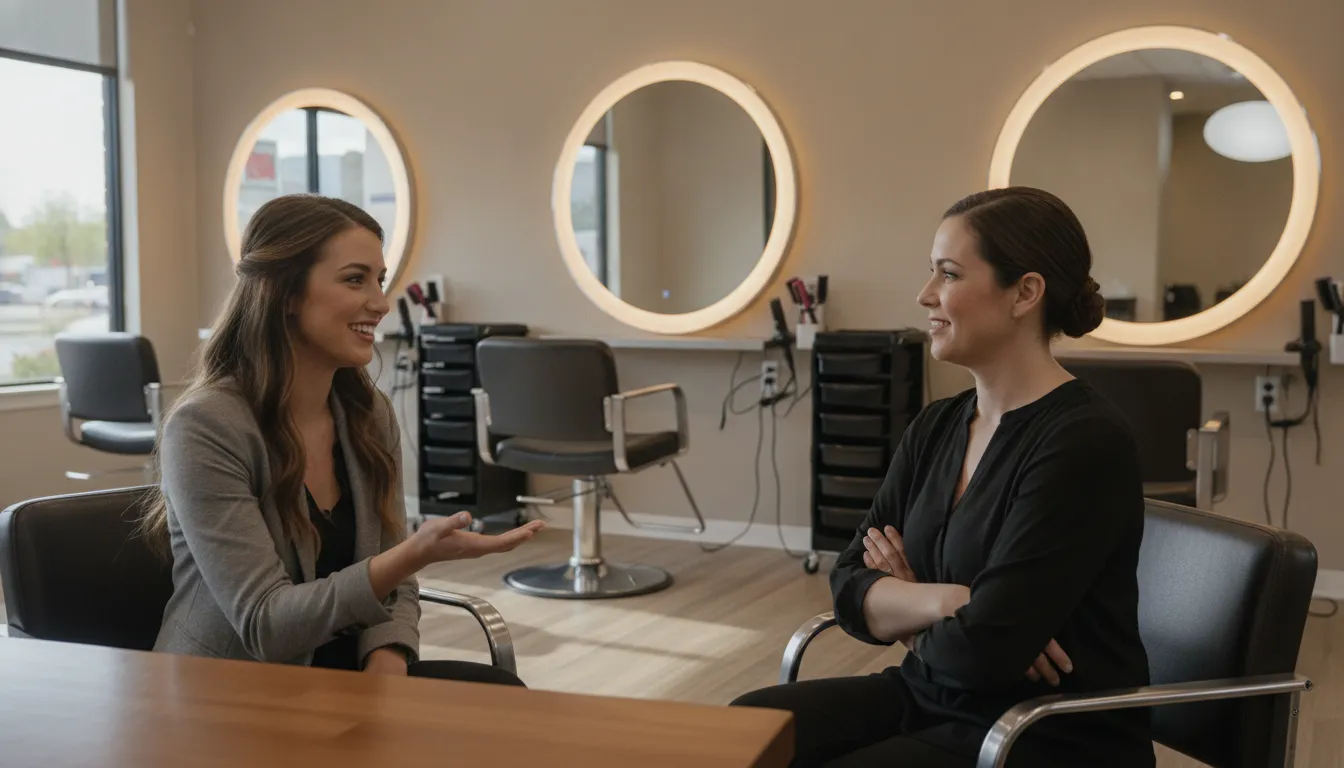
Candidates practicing cosmetologist job interview questions franchise salon topics should prepare for more than a list of services. Hiring managers want to understand how you consult with guests, manage time, follow safe procedures, respond to feedback, and contribute to a professional team. Prepare specific examples from school, internships, prior salon work, or customer-facing roles.
The best preparation is to practice concise answers about client care, technical strengths, difficult situations, sanitation, reliability, and career goals. Use a real example, explain the action you took, and describe what you learned. Then prepare questions that help you evaluate training, scheduling, service expectations, and team culture.
Use this guide alongside MjjM Salons' cosmetologist hiring guide to prepare for opportunities across Maine, New Hampshire, and Massachusetts.
What Do Cosmetologist Job Interview Questions at a Franchise Salon Cover?
Cosmetologist job interview questions at a franchise salon commonly cover technical readiness, guest communication, reliability, teamwork, and willingness to learn. The exact questions vary by location and role. Strong answers connect your training or experience to a specific behavior, such as confirming a guest's goals, protecting service quality during a busy period, or accepting coaching.
| Interview topic | What your answer should show |
|---|---|
| Technical skills | Honest ability, safe process, and a plan for continued learning. |
| Guest care | Listening, clear expectations, and calm problem-solving. |
| Teamwork | Reliability, communication, and respect for shared standards. |
| Career goals | A realistic interest in professional growth and feedback. |
Questions about experience and technical strengths
Be ready to explain your education, license status, hands-on practice, and strongest services. You may be asked about cutting, styling, color application, consultations, or related services offered at that location. Describe what you can perform confidently, then identify the skills you are still developing. Honest boundaries are more credible than claiming mastery of every service.
- Which services do you perform most confidently?
- How do you keep your technique safe, clean, and consistent?
- What skill are you currently working to improve?
- How do you confirm that a guest's requested result is realistic?
Questions about guests and judgment
Scenario questions often ask what you would do if a guest disliked a result or changed direction during a consultation. They may also test how you respond when expectations cannot be met safely in one appointment. Explain how you would listen without becoming defensive, clarify the concern, communicate options, and involve a manager when appropriate.
Use the STAR structure for a clear answer: describe the Situation, explain the Task, outline the Action you took, and finish with the Result. A school-clinic example is appropriate for a new graduate. Do not invent a salon story. A customer-service example can also work when it shows calm communication and professional judgment.
Questions about reliability and teamwork
Franchise locations depend on consistent procedures and dependable communication. A manager may ask how you handle a full schedule, support a colleague, respond to a change in priority, or receive feedback about your work. Show that you can protect the guest experience while staying aware of timing, cleanliness, shared responsibilities, and the next appointment.
How Can You Prepare for Cosmetologist Job Interview Questions at a Franchise Salon?
Prepare for cosmetologist job interview questions at a franchise salon by matching your examples to the role's service environment. Research the location, review your technical foundation, organize your portfolio, and practice answers aloud. Your goal is not to memorize a script. It is to make your experience easy for the manager to understand and evaluate.
Build five short examples
Prepare one example for each of these themes: client care, technical problem-solving, time management, teamwork, and learning from feedback. Each example can be 30 to 60 seconds. State the situation, your responsibility, the steps you took, and the result. Finish by connecting the example to the role you want.
- Client care: Explain how you listened, clarified the desired result, and communicated realistic options.
- Technical judgment: Describe how you followed a safe process and asked for help instead of guessing.
- Time management: Show how you stayed organized without rushing or neglecting sanitation.
- Teamwork: Explain how you communicated during a busy period and supported shared priorities.
- Growth: Share a technique or habit you improved after receiving constructive feedback.
Research the role without making assumptions
Review the salon's stated services, location, guest experience, and application information. MjjM Salons has opportunities across Maine, New Hampshire, and Massachusetts, so confirm which location and role your interview concerns. Read the company's guide to getting a job at a franchise salon and its advice for entry-level salon graduates if you are early in your career.
Do not assume that every franchise location uses the same schedule, service mix, training process, or hiring steps. Use your research to form useful questions, then let the manager explain the expectations for the specific opportunity.
Practice a concise answer to "Why this salon?"
A good response names a genuine reason, connects it to guest care, and explains how you hope to grow. For example: "I am interested in a professional franchise environment because I value clear standards, dependable teamwork, and the opportunity to keep building my technical skills. I also want to give guests a consistent experience while listening to their individual goals." Adapt the answer to the location and your own experience.
What Practical Skills Do Franchise Salons Assess?
A franchise salon may assess practical skills through a conversation, portfolio review, demonstration, or technical trial. The format varies, and not every salon uses the same assessment. Hiring teams may consider technique, sanitation, consultation, pace, communication, and your ability to explain decisions. Ask what will be evaluated before you begin.

Confirm the assignment before starting
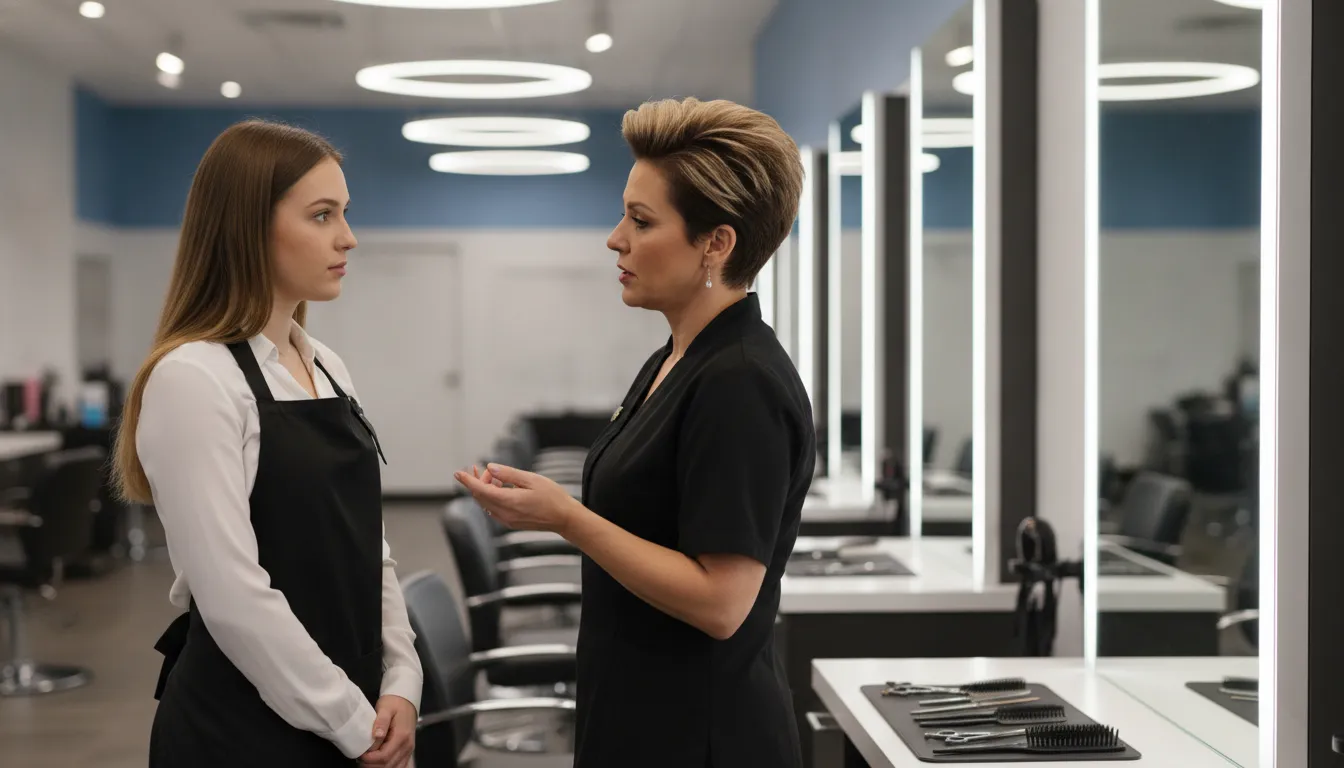
If you are asked to demonstrate a service, clarify the desired result, available tools and products, time limit, model or mannequin, and expected level of completion. Repeat the goal in your own words. This shows that you listen before acting and helps prevent avoidable misunderstandings.
During the service, keep your station organized and follow appropriate sanitation practices. Talk through the relevant parts of your process without overwhelming the evaluator. If you identify a concern, pause and ask for clarification. A thoughtful question is safer and more professional than an improvised step that could affect the guest or model.
Show consultation skill, not only technique
Technical work begins with understanding the guest. Ask about the desired result, relevant service history, maintenance expectations, and time available. Explain what is realistic and why. If the requested result needs more time or a different approach, communicate that respectfully and offer a practical next step.
- Listen carefully before recommending a service.
- Demonstrate clean, organized work habits.
- Balance careful technique with appropriate timing.
- Explain recommendations in clear, respectful language.
- State your strengths and limits honestly.
- Receive feedback without becoming defensive.
Q: What if you are asked to perform a service you have not mastered? A: Be direct about your current experience. Explain related skills you have practiced, ask what standard is expected, and describe how you would protect the guest experience. Showing judgment and a willingness to learn is more credible than overstating your ability.
Which Questions Should You Ask the Salon Manager?
Ask questions that clarify training, performance expectations, scheduling, guest needs, and team communication. A thoughtful interview should help both sides decide whether the opportunity fits. Choose four or five questions that matter most to you, rather than reading through a long list without discussing the manager's answers.
Training and first-month expectations
- What does onboarding look like for a new cosmetologist or stylist?
- How are technical standards and guest-service expectations taught?
- What would you like a new team member to accomplish in the first 30, 60, or 90 days?
- How is feedback delivered after a service or guest interaction?
MjjM Salons emphasizes professional development and structured training. Ask how those opportunities are delivered for the specific location. You can also review the site's cosmetologist career guidance before the interview, then ask the manager to explain what applies to the role you are considering.
Schedule, service mix, and team culture
- What services and guest needs are most common at this location?
- How far in advance are schedules usually shared?
- How do team members communicate during busy periods?
- What does reliability look like in this role?
- How do stylists request help or guidance during a service?
Keep your questions specific without assuming a particular schedule, benefit, compensation arrangement, or advancement path. The manager's answer will help you compare the opportunity with your availability and professional priorities.
Finish with a clear next-step question
Near the end, ask, "Is there anything about my training or experience that you would like me to clarify?" This lets the manager raise any unanswered concern. Then ask about next steps and when to expect a response. Thank the manager. Follow any requested instructions promptly.
What Should You Bring to a Cosmetologist Interview?
Bring materials that help the manager understand your readiness without turning the interview into a presentation. A current resume, portfolio, license or school documentation when requested, and a short list of questions are usually useful. Confirm the location, arrival instructions, and requested materials before the appointment.
Portfolio and resume checklist
- Choose portfolio examples that show your strongest relevant work.
- Be prepared to explain the guest goal, your role, and your process.
- Include school or practice work when you are a new graduate.
- Describe developing skills honestly rather than presenting them as finished.
- Keep the resume easy to scan and consistent with your application.
If you are moving from school into your first role, MjjM Salons' post-school salon job guide can help you organize your preparation. Candidates with limited experience can also review hair stylist opportunities in New Hampshire to understand how job-seeker content may describe salon roles.
Appearance and arrival
Choose a clean, professional appearance that still feels like you. Arrive early enough to manage traffic, parking, or an unfamiliar building without rushing. During the interview, listen closely and answer the question asked. A calm, prepared approach communicates the same reliability and guest awareness that a manager will want to see on the salon floor.
How Do You Evaluate the Opportunity After the Interview?
Evaluate the opportunity by comparing what you learned with the kind of career environment you want. Consider whether the manager explained training, service expectations, scheduling, feedback, and next steps clearly. Notice whether the conversation treated you as a professional and gave you enough information to make an informed decision.
Look for specific answers
General statements about growth are less useful than a clear explanation of how training and feedback work. Ask who provides coaching, how progress is discussed, and what support is available when a stylist is still developing. MjjM Salons presents itself as a career destination for hair artists, so candidates should ask how that professional-development focus appears in the location and role. Candidates can also prepare for MjjM Salons interviews by reviewing the role and location details before applying.
Compare the role with your goals
Think about your preferred services, schedule, learning style, guest interactions, and long-term direction. A franchise environment may appeal to candidates who value recognizable standards, team support, and a defined operating structure. Another professional may prioritize independence or a different service mix. Neither preference is automatically better. The right choice depends on the fit between the opportunity and your goals.
Before you decide, review the broader MjjM Salons careers page and write down any remaining questions. A clear follow-up can help you decide whether to continue the process.
Apply for cosmetologist opportunities with MjjM Salons
Frequently Asked Questions
What are common cosmetologist job interview questions at a franchise salon?
Expect questions about your technical strengths, client consultations, difficult guests, time management, sanitation, teamwork, reliability, and career goals. Prepare a short example for each topic. The interviewer may also ask about your license status, education, portfolio, schedule, and willingness to receive feedback.
How can a new graduate answer questions about limited experience?
Be honest about what you have done, then connect school clinics, practice work, customer service, and related experience to the role. Explain which techniques you are building and how you respond to coaching. Specific evidence and a clear learning plan are stronger than overstating your readiness.
What should I ask the salon manager during the interview?
Ask about onboarding, technical training, first-month expectations, feedback, schedules, common services, team communication, and next steps. These questions help you understand the actual role and show that you are evaluating the opportunity thoughtfully.
What should I bring to a franchise salon interview?
Bring a current resume, a clean portfolio if available, requested license or school documentation, and a short list of questions. Confirm the appointment details in advance. Arrive early, dress professionally, and be ready to explain the choices shown in your portfolio.