
MjjM Salons Blog
Best Salons to Work For in New Hampshire Cosmetologists
By the MjjM Salons team
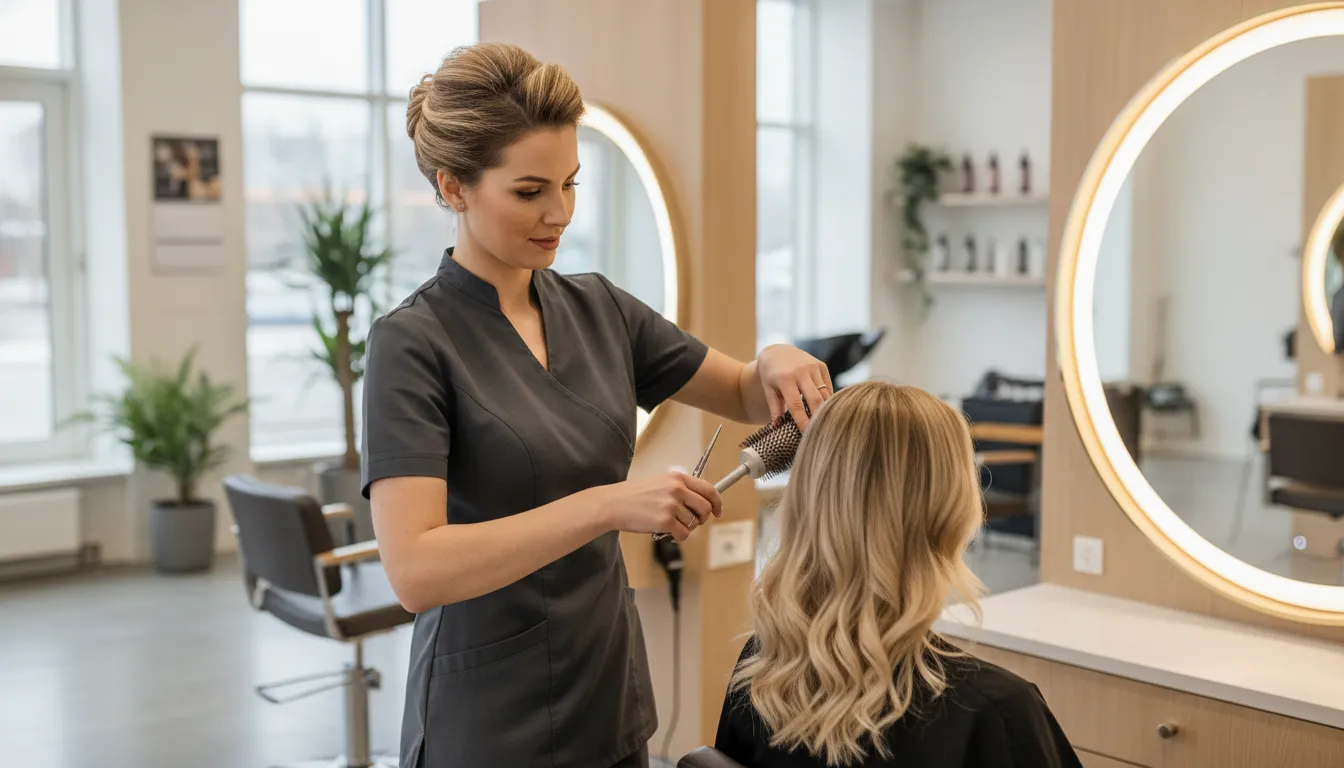
Choosing a salon employer is about more than the hourly rate or a busy book. For New Hampshire cosmetologists, the right workplace should support the license you worked to earn. Respect your schedule, and give you a realistic path to improve your skills and income. National employment for barbers, hairstylists, and cosmetologists is projected to grow 5 percent from 2024 to 2034, so candidates have good reason to compare employers carefully.
The best salons to work for in new hampshire cosmetologist candidates are those that combine dependable support with scheduling flexibility. Continuing education, fair compensation, and a positive team culture. Before accepting an offer, ask how training works, how performance is rewarded, what advancement looks like, and whether the salon's expectations fit your life.
Whether you are newly licensed, returning to the industry, or ready for a stronger career path, a structured comparison can make the decision clearer. Our cosmetologist career guide offers broader regional context, while the next section focuses on the practical signs of a good New Hampshire salon employer.
Explore open cosmetologist roles with Mjjm Salons
What should you look for in a salon employer in New Hampshire?
The best salon employer is not defined by commission alone. Before accepting a position, evaluate whether the salon supports your schedule, professional development, earning goals, and relationships with coworkers. These factors matter in a growing field: the U.S. Bureau of Labor Statistics projects 5 percent employment growth for barbers, hairstylists, and cosmetologists from 2024 to 2034, faster than the average for all occupations. Review the BLS outlook when considering the broader market.
Scheduling flexibility that matches your life
Ask how schedules are created, how far in advance they are posted, and whether the salon accommodates school, family responsibilities, or another job. A customer research finding reports that 78 percent of stylists prioritize scheduling flexibility over higher wages when evaluating their professional environment. That does not make compensation unimportant. It shows why a slightly higher advertised rate may not be the better offer if the schedule is unpredictable or difficult to adjust.
Clarify the expectations for evenings, weekends, holidays, opening shifts, and last-minute coverage. Also ask whether you can request consistent days off and how schedule changes affect your income. A clear answer is more useful than a general promise to be flexible.
Education and a realistic path to growth
Look for an employer that treats education as part of the job rather than an occasional perk. Ask whether training is paid, which services or techniques are covered, and how often education takes place. Ongoing learning can help you build confidence, expand your service menu, and prepare for greater responsibility.
Growth should also be specific. Find out whether experienced cosmetologists can mentor newer team members, take on leadership duties, or move into other roles. If you are still completing your licensing requirements, confirm what the salon can and cannot provide. New Hampshire requires either at least 1,200 hours at a state-approved cosmetology school or 3,000 hours over at least 18 months under a licensed cosmetologist. Along with other requirements such as good professional character and a high school diploma or equivalent. Read the New Hampshire licensing requirements and verify details with the state.
Compensation, culture, and daily support
Compare the full compensation structure, not just the commission percentage. Ask how service sales, retail sales, tips, cancellations, supplies, and training time are handled. Review the expected schedule alongside the pay model, then use this guide to cosmetologist salary expectations as one reference point for your questions.
Finally, pay attention to team culture during the interview and any working interview. Continuous education, competitive commission, and a positive team environment are commonly identified as retention factors. A healthy culture should be visible in how managers communicate, how new hires are supported, and how the salon handles busy periods. Research on balance in the hair industry also highlights the importance of employers that do not treat constant overwork as a measure of commitment. For more context on regional roles and professional career paths, read the complete hiring guide for Maine and New Hampshire. Then compare those standards with the specific offer, manager, and salon environment you would be joining.
Franchise salons vs independent salons in New Hampshire: pros and cons for stylists
The best employment model depends on how you want to build your cosmetology career. A franchise salon may provide shared systems, structured training, and a larger team. An independent salon or salon-suite model may offer more control over your schedule, services, and day-to-day business decisions. Neither option is automatically the right choice for every stylist in New Hampshire.
It is also important to distinguish an independent salon from a private suite. In a salon-suite arrangement, an independent stylist typically rents a private workspace and manages more of the business, including bookings, supplies, marketing, and client retention. That autonomy can be appealing, but it may also bring responsibilities that are handled centrally in an employed salon.
| Factor | Franchise salon | Independent salon or suite |
|---|---|---|
| Training | May offer standardized onboarding, mentorship, continuing education, and established service procedures. | Training varies by owner or stylist. You may choose your own education, but you may also pay for and organize it independently. |
| Flexibility | Schedules may follow salon coverage needs, with flexibility depending on the local manager and staffing model. | Often provides greater control over hours, appointments, services, and time away, although client demand still shapes your schedule. |
| Pay stability | Compensation may follow a defined wage, commission, or bonus structure. Ask how pay changes with bookings, tips, and training time. | Income can be closely tied to bookings and pricing. Suite rent, supplies, payment processing, and other operating costs may be your responsibility. |
| Culture | A team environment can provide collaboration, shared learning, and support during busy periods. | You may have more independence and control over your environment, but less built-in interaction or coverage from coworkers. |
Work-life balance should be part of the comparison
Flexibility is not a minor perk. Customer research indicates that 78% of stylists prioritize scheduling flexibility over higher wages when evaluating their professional environment. At the same time, research on hustle culture in the hair profession has linked pressure to maintain an always-on pace with negative effects on work-life balance. When you interview, ask who controls the schedule, how changes are approved, whether unpaid training is expected, and what happens when you need time away.
For either model, review the complete offer rather than comparing a single pay number. Consider education, mentorship, product costs, booking support, advancement opportunities, and the quality of communication from the manager or owner. A franchise may be a useful fit for a stylist who values structure and team support. An independent model may suit someone ready to manage more of the client and business experience. The strongest choice is the one that matches your goals, financial comfort, preferred schedule, and working style.
For broader questions about evaluating roles across the region, use this complete hiring guide for Maine and New Hampshire.
Where Cosmetologists Find the Best Salons to Work For in New Hampshire
Finding the best salon employer in New Hampshire involves more than comparing the hourly rate or advertised commission. A strong opportunity should make the full arrangement clear: how compensation is calculated. How schedules are built, what training is available, and whether a stylist can develop over time. These details help you compare a busy salon with a genuinely supportive workplace.
Look beyond the headline pay rate
Pay is important, but the highest quoted rate is not always the strongest offer. Ask whether the figure is hourly, commission-based, or a combination of the two. Clarify how tips, product sales, overtime, cancellations, and busy or slow periods affect your earnings. It is also useful to ask when compensation is reviewed and whether additional responsibilities create a path to higher pay.
For regional context, review this guide to cosmetologist salary expectations before comparing individual offers. The goal is not to treat one number as a guarantee, but to understand what questions to ask and whether an employer explains its pay structure openly.
Schedule flexibility is part of the job's value
A schedule that works with your life can be as important as the wage attached to it. One customer research finding reports that 78% of stylists prioritize scheduling flexibility over higher wages when evaluating their professional environment. Ask how far in advance schedules are posted, how shift changes are handled, and whether part-time, full-time, evening, or weekend arrangements are available.
Also look for an employer that treats boundaries realistically. Research from the Professional Beauty Association has examined how salon hustle culture can harm work-life balance among hair professionals. A conversation about expected hours, appointment pacing, time off, and support during busy periods can reveal more than a general promise of flexibility. Read the professional career paths for cosmetologists guide for additional regional considerations.
Growth should be visible, not implied
The best employers explain how a stylist can keep learning and take on more responsibility. Look for continuous education, practical mentorship, and a positive team culture alongside a competitive commission structure. These elements support retention because they give professionals reasons to build a future with the salon rather than constantly search for the next opportunity.
Industry demand also makes growth planning relevant. The U.S. Bureau of Labor Statistics projects 5% employment growth for barbers, hairstylists, and cosmetologists from 2024 through 2034, faster than the average for all occupations. That outlook does not guarantee a position or a particular income, but it reinforces the value of choosing an employer that invests in current skills and long-term development.
Compare regional employers on the same criteria
Mjjm Salons operates across Maine, New Hampshire, and Massachusetts. So candidates can evaluate a regional employer with a broader footprint while keeping the decision focused on the specific salon and role. Ask the same pay, scheduling, education, and advancement questions at each interview. Then review the employer's current job opportunities and compare the written offer with what you were told in person.
How to compare job offers from NH salons as a cosmetologist
A job offer can look attractive at first glance, but the details determine whether it supports a sustainable cosmetology career. Compare the full arrangement, not just the advertised hourly rate or commission percentage. The following checklist can help you assess training, earnings, schedule, culture, and long-term opportunity on equal terms.
- Confirm the training and licensing support Ask what training is available after you are hired, who provides it, and whether time spent in training is paid. A credible employer should be able to explain how its onboarding, mentorship, and continuing education work. New Hampshire licensing standards provide a useful baseline. State law requires either at least 1,200 hours at an approved cosmetology school or at least 3,000 hours over a minimum of 18 months under a licensed cosmetologist. Candidates must also meet professional character and education requirements. An employer does not replace the licensing process, but it should clearly support safe, supervised professional development. Ask whether you will have access to practical coaching, product education, and feedback as your skills develop.
- Compare the compensation structure in writing Look beyond the headline pay figure. Clarify whether compensation is hourly, commission-based, or a combination, and ask how service revenue, retail sales, tips, bonuses, and reviews affect your earnings. Confirm when pay increases are considered and whether there are deductions for supplies, tools, or other costs. It can help to review regional cosmetologist salary expectations before deciding whether an offer is competitive. A transparent employer should explain realistic earnings for a new hire and an experienced stylist without promising a result that cannot be guaranteed.
- Test the schedule for real flexibility Ask how schedules are built, how far in advance they are posted, and how shift changes or time-off requests are handled. Flexibility may matter more than a modest difference in base pay. Customer research cited by Mjjm Salons reports that 78% of stylists prioritize scheduling flexibility over higher wages. Consider the actual commute, evening and weekend expectations, appointment volume, and whether the schedule can accommodate family, school, or another professional commitment. Request a sample schedule if possible, rather than relying on a general statement that the salon offers flexible hours.
- Evaluate the team culture and workload Visit the salon during a normal operating period and observe how managers communicate with staff and how team members treat one another. Ask how the salon handles busy periods, client concerns, cancellations, and performance feedback. A supportive culture should encourage high standards without making constant overwork the measure of commitment. Research from the Professional Beauty Association has examined how salon hustle culture can harm hair professionals' work-life balance. Ask direct questions about breaks, coverage, realistic booking expectations, and how new stylists are supported when they need help.
- Map the growth path before you accept Find out what advancement could look like after six months, one year, and beyond. Possible steps may include advanced education, mentoring, lead stylist responsibilities, management, or opportunities across multiple locations. Ask for examples of people who have progressed within the organization and what performance standards supported that progression. National employment for barbers, hairstylists, and cosmetologists is projected to grow 5% from 2024 to 2034, according to the U.S. Bureau of Labor Statistics. A growing field still rewards candidates who choose employers with a clear development plan. Compare each offer against your priorities, then review Mjjm Salons' current job opportunities if training, flexibility, and progression are central to your decision.
What regional franchise operators in NH offer that corporate chains do not
A regional franchise operator can occupy a useful middle ground between a national corporate chain and a single independent salon. The brand, training resources, and operating systems may be shared across locations. While local leaders still understand the hiring market, customer base, and practical realities of working in New Hampshire. That combination can matter to a cosmetologist who wants structure without feeling disconnected from the people making day-to-day decisions.
Industry demand also makes the quality of an employer worth examining closely. The U.S. Bureau of Labor Statistics projects 5% employment growth for barbers, hairstylists, and cosmetologists from 2024 to 2034, faster than the average for all occupations. A growing field can create opportunities, but growth alone does not tell you whether a specific salon will provide useful support or a sustainable schedule. Compare the employer's actual training, management, and advancement practices rather than relying on the size of its name.
Local support with a larger operating network
Regional operators can provide a clearer support structure than a solo booth-rental arrangement. A multi-location network may have established onboarding, scheduling processes, education, and managers who can help a stylist navigate common challenges. It may also create opportunities to learn from peers at nearby salons or to pursue additional responsibility as the organization grows. Ask who provides mentorship, how often education is offered, and whether training is paid or otherwise supported.
This does not make a franchise automatically better than an independent salon. Some independent owners offer excellent coaching, strong relationships, and meaningful flexibility. The relevant question is how consistently the employer delivers the conditions you need. Research on salon work-life balance has raised concerns about hustle culture and its effect on hair professionals. A regional operator that treats scheduling and workload as part of retention, rather than as an afterthought, may be a better fit for some stylists.
Flexibility and a realistic path forward
Scheduling deserves specific attention during an interview. Customer research indicates that 78% of stylists prioritize scheduling flexibility over higher wages when evaluating their professional environment. Ask about advance notice for schedule changes, availability expectations, part-time options, time-off requests, and how busy periods are staffed. Get the policy in writing when possible, then compare it with the schedule you actually want to maintain.
Growth should be equally concrete. Strong salon employers commonly pair continuing education with a competitive commission structure and a positive team culture. Ask what advancement looks like after six months or a year, who evaluates performance, and whether experienced stylists can mentor, train, or manage. If the business uses a salon-suite model, clarify how independent stylists operate within the facility, what support remains available, and which responsibilities belong to the stylist.
For a broader overview of professional career paths for cosmetologists in the region, review the complete hiring guide. You can also browse Mjjm Salons' current job opportunities and compare the details with other NH employers before deciding.
Explore salon job opportunities with Mjjm Salons
Frequently Asked Questions
What cosmetology jobs are in high demand in New Hampshire?
Demand is strongest for licensed professionals who can deliver dependable hair services, build repeat clientele, and work well within a team. Nationally, employment for barbers, hairstylists, and cosmetologists is projected to grow 5 percent from 2024 to 2034, according to the Bureau of Labor Statistics.
Where is the best place to live as a cosmetologist in New Hampshire?
The best location depends on your preferred pace, commute, clientele, and schedule. Compare salons near larger employment centers with those in smaller communities, then ask whether the employer offers enough demand, consistent hours, education, and advancement to support your goals.
How do you evaluate a salon employer in New Hampshire?
Ask for specifics about scheduling, compensation, training, mentorship, advancement, and team expectations. A strong employer can explain how education is provided, how performance is reviewed, and what success looks like beyond filling appointments. Also, pay attention to whether the culture supports sustainable work-life balance rather than constant pressure to accept more clients.
What should a cosmetologist look for in a salon job?
Look for a clear pay structure, predictable scheduling, continuing education, supportive leadership, and a realistic path to grow. Confirm the licensing expectations before accepting an offer. New Hampshire requires either 1,200 hours at an approved cosmetology school or 3,000 hours over at least 18 months under a licensed cosmetologist. Along with good professional character and a high school diploma or equivalent. See the New Hampshire licensing requirements for details.
Ready to explore salon opportunities with Mjjm Salons?
The right salon employer can give you a clearer path to build your skills, serve clients, and grow your cosmetology career in New Hampshire, Maine, or Massachusetts. Review the available roles and see whether Mjjm Salons is a fit for your goals, schedule, and preferred work environment.