
MjjM Salons Blog
Beauty Salon Contract of Employment Template
By the MjjM Salons team
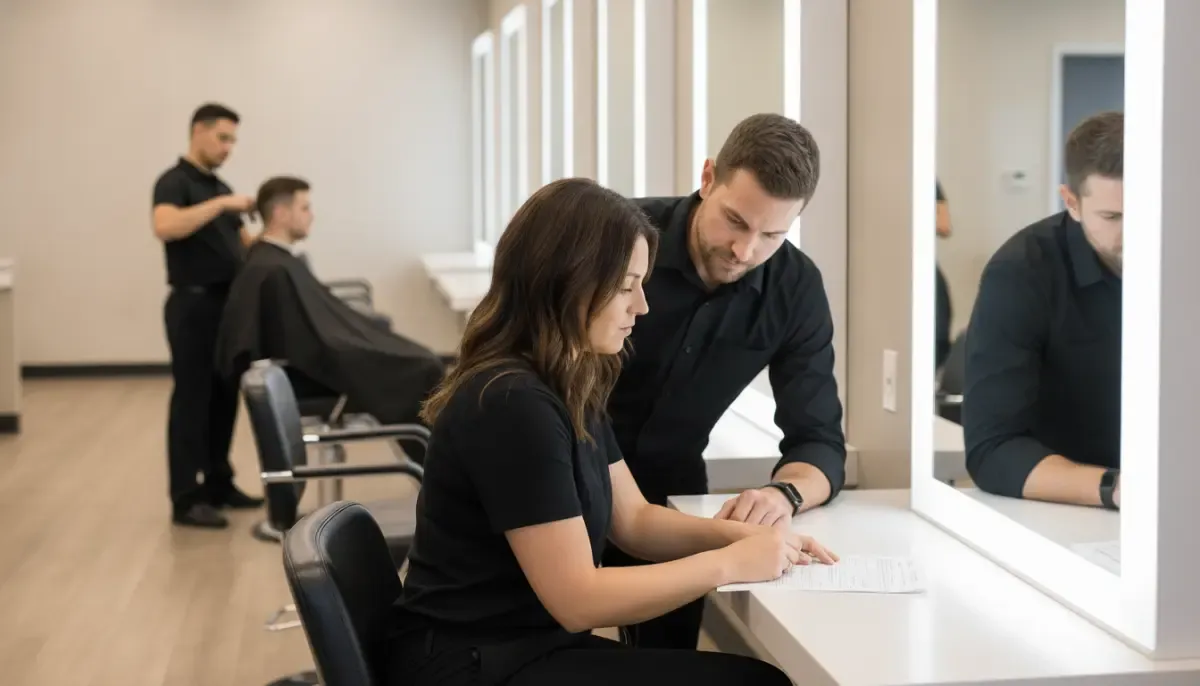
A beauty salon contract of employment template is a written checklist, not a form you should copy and sign. Before you accept a stylist role, read who employs you and how you are classified. Then check pay, which hours count, which benefits apply, what the job includes, and how advancement is decided. A template can show you the blanks. Only the signed offer for that role is the agreement.
See salon careers at MjjM Salons
What a beauty salon contract of employment template should include
Search results often show blank forms written for salon owners. Those samples can still help a candidate. Use them to see which terms belong in writing, then compare that list with the offer in front of you. Do not treat a downloaded form as your contract, and do not assume every salon uses the same terms.
A useful beauty salon contract of employment template usually names the employer and the employee, the start date, the workplace, and the person you report to. It should also state whether the role is full time, part time, or temporary, and whether the relationship is employment or something else. Job title alone is not enough. The duties section should match the work you will actually do.
Pay language should name the rate or salary, how often you are paid, and how tips, commission, or bonuses are handled if they exist. Hours language should name the usual schedule, how far ahead it is posted, and how changes are communicated. Benefits language should say who is eligible and when coverage starts, not only that benefits exist.
Also look for training, license support, time off, notice, and what happens to client information if you leave. If a blank is filled with "see handbook" or "as discussed," ask for the page or the written example. A verbal promise about Saturdays off or a future promotion is hard to compare later.
Which contract facts should you confirm first?
Start with the facts that change the job if they are wrong. Write each one in one of three groups: confirmed in writing, explained but not documented, or still unanswered. That record is your review, even when the employer does not hand you a long contract on day one.
| Check | What to look for in writing | Why it matters |
|---|---|---|
| Employer | Legal employer, salon, and start date. | The brand on the door may differ from the employer on the offer. |
| Classification | Employee or another status. Full time, part time, or temporary. | The label affects pay rules and who provides benefits. |
| Pay | Rate or salary, pay period, tips, and any bonus rule. | A verbal pay formula is hard to compare. |
| Schedule | Expected hours, posting time, and time-off requests. | Flexible still needs a process you can plan around. |
| Benefits | Which benefits apply, who is eligible, and the start date. | A benefits list is not coverage for your role. |
| Duties | Services plus any reception, retail, opening, or cleanup work. | Extra duties change the pace of the day. |
| Advancement | Training, review timing, and the next-step criteria. | Named steps are easier to judge than a growth claim. |
- Check
- Employer
- What to look for in writing
- Legal employer, salon, and start date.
- Why it matters
- The brand on the door may differ from the employer on the offer.
- Check
- Classification
- What to look for in writing
- Employee or another status. Full time, part time, or temporary.
- Why it matters
- The label affects pay rules and who provides benefits.
- Check
- Pay
- What to look for in writing
- Rate or salary, pay period, tips, and any bonus rule.
- Why it matters
- A verbal pay formula is hard to compare.
- Check
- Schedule
- What to look for in writing
- Expected hours, posting time, and time-off requests.
- Why it matters
- Flexible still needs a process you can plan around.
- Check
- Benefits
- What to look for in writing
- Which benefits apply, who is eligible, and the start date.
- Why it matters
- A benefits list is not coverage for your role.
- Check
- Duties
- What to look for in writing
- Services plus any reception, retail, opening, or cleanup work.
- Why it matters
- Extra duties change the pace of the day.
- Check
- Advancement
- What to look for in writing
- Training, review timing, and the next-step criteria.
- Why it matters
- Named steps are easier to judge than a growth claim.
Bold takeaway: if pay, classification, hours, or benefit eligibility is still unanswered, ask for it in writing before you accept. Those four items change the offer more than a friendly description of the team.
How should you read pay and classification terms?
Classification comes before the pay rate. In U.S. wage law, calling someone an independent contractor, or paying them on a 1099, does not by itself decide the relationship. The U.S. Department of Labor's Fact Sheet 13 explains that employee or contractor status under the Fair Labor Standards Act looks at the economic reality of the work. Employees are covered by federal minimum wage and overtime rules. Independent contractors are not.
Ask a direct question: "Is this role employment with the salon, or an independent arrangement?" Then ask what document will say so. MjjM Salons uses an employee model, not booth rental. That is a company fact about MjjM. It is not a promise that every other salon you compare will use the same model. If you want the booth-rental comparison itself, read booth rental versus salon employment and then come back to the written terms of the offer you have.
For pay, write down the hourly rate or salary, the pay period, and whether tips are separate from wages. If commission or a bonus is mentioned, ask when it is earned, when it is paid, and what happens during leave or a notice period. Do not invent a percentage the offer does not state.
Federal overtime rules also belong on the checklist, with a limit. The Department of Labor's regular-rate overview says most employees must receive at least one and one-half times their regular rate for hours over 40 in a workweek. The regular rate is based on actual pay for the week, and an agreement cannot simply relabel that math. Some retail commission roles can meet a narrow overtime exemption. Do not assume a salon commission plan qualifies. Ask whether the role is nonexempt and how hours over 40 are paid.
State wage rules can be stricter than the federal floor. This article does not state Maine, New Hampshire, or Massachusetts rates. If the offer quotes a rate, compare it with the current state labor page or ask the employer which rule they use. For a separate look at published pay context, see the Massachusetts cosmetologist salary guide. That guide is not a substitute for the rate in your offer.
Which schedule and hours terms belong in the offer?
A schedule line that says "flexible" is not a contract term you can plan around. Ask for the usual weekly hours, whether the role is full time or part time, and which days or dayparts are expected. Then ask how far ahead the schedule is shared and how you request time away.
Hours worked can be broader than the time you are cutting hair. The Department of Labor's Fact Sheet 22 says the workday generally runs from the start of the principal activity to the end of it. Time an employee is suffered or permitted to work can count even if it was not requested, such as staying late to finish an assigned task. Ask which opening, closing, cleaning, meeting, and training time is paid, and how that time is recorded.
Also ask what happens when the book is light or a colleague is out. A clear answer names who adjusts the schedule and when you are told. An unclear answer is a follow-up, not a reason to guess. If part-time work is what you want, compare the written hours with a part-time cosmetologist jobs guide so you know which questions fit that schedule.
MjjM describes flexible scheduling as part of its employee offering. Treat that as a topic to confirm for the salon and role, not as a guarantee of particular days. Ask which location you would work, how schedules are built there, and whether student or graduate availability is considered. Openings and hours vary by salon.
How do you check benefits, duties, and advancement?
Benefits should be read as eligibility rules, not as a brochure. The MjjM Salons careers page lists support that eligible full-time employees may receive. That list includes medical and dental coverage, paid vacation and holidays, and sick time. It also includes mental-health support, annual license-fee reimbursement, student-loan assistance, and advancement paths. The same page says benefits vary by eligibility and role. Ask which of those apply to the job you are considering, and when each one starts.
Duties deserve the same specificity. A salon offer may include haircuts and color, plus reception help, retail, opening or closing, and cleaning between clients. Ask which of those are part of the role and which are occasional. Also ask how built-in clientele works at that location: how appointments are assigned, how walk-ins are handled, and what a newer stylist's book looks like in the first months. MjjM describes built-in clientele and a private workspace with operating support. Confirm how that works for the position rather than assuming every chair is booked the same way.
Advancement terms are often the vaguest lines in an offer. Replace "room to grow" with three checks: what training is available after onboarding, how often goals are reviewed, and what a realistic next step requires. MjjM describes paid training, ongoing technique development, coaching, and license reimbursement. Ask which of those are available in the role, whether education time is paid, and who you go to with a technical question on a busy day.
Keep culture questions short and tie them to the document. You might ask how feedback is given and how a policy change is communicated. Those answers help you judge the workplace, but they do not replace the written terms above. If you want a wider career comparison after the contract review, the Supercuts careers overview is a separate read.
Use this checklist before you accept
Work top to bottom. Stop when an item is either in the offer or written down as a question you still need answered.
- Name the employer. Confirm the legal employer, the salon location, and your start date.
- Confirm classification. Ask whether the role is employment, and whether it is full time, part time, or temporary.
- Write the pay formula. Record the rate or salary, pay period, tips, and any commission or bonus rule, including when it is paid.
- Mark overtime. Ask whether hours over 40 in a workweek are paid at time and a half, and which time records are used.
- Pin down the schedule. Note expected hours, how far ahead the schedule is shared, and how time off is requested.
- List paid time. Ask whether opening, closing, cleaning, meetings, and training count as paid hours.
- Match benefits to the role. Check eligibility and start dates instead of copying a general benefits list.
- Match duties to the day. Confirm services, client flow, and any reception, retail, or closing work.
- Name the next step. Ask what training, review timing, and advancement criteria apply in the first year.
- Separate promises from terms. Move anything "as discussed" into the written offer or leave it on your question list.
This checklist is general information, not legal advice and not an employment offer. If a term is confusing, ask the employer to explain it or speak with a qualified adviser before you sign. MjjM does not publish a universal employment contract for every role. Confirm the terms of the position you are considering.
How this applies when you look at MjjM Salons
Use the checklist, then check it against what MjjM actually states. MjjM is the employer behind participating Supercuts salons in Maine, New Hampshire, and Massachusetts, with 27 salons across those states. It is not a booth-rental company. The public careers page describes a private workspace, operating support, built-in clientele, paid training, flexible scheduling, and the full-time benefits noted above, with eligibility that varies by role.
Nothing on that page sets your personal pay rate, your weekly hours, or a guaranteed promotion. Ask those questions for the location you want. You can review MjjM salon locations before you apply so the conversation starts with a real salon, not a general region.
Application is a separate step from signing an employment agreement. MjjM uses a chat-to-apply system that guides candidates through the initial application. You apply to MjjM Salons. Licensed cosmetologists and hairstylists, current students, recent graduates, experienced professionals, and returning stylists are invited to explore openings. If you are earlier in that path, the entry-level salon jobs guide covers the graduate starting point, while this article stays on the written terms.
If you want a question answered before you apply, the careers page also lets you contact MjjM's recruiting team. A question is not an application. When you are ready, use the verified application path and bring your checklist to the follow-up.
Apply for salon careers with MjjM Salons
Frequently asked questions
What is a beauty salon contract of employment template?
It is a sample list of employment terms, such as the employer, classification, pay, hours, duties, benefits, and notice. Use it to see what to ask for in writing. The signed offer for your role is the document that applies to you, not a blank form from the internet.
Which terms should a stylist verify before accepting?
Verify the legal employer, whether the role is employment, the pay formula, which hours are paid, how the schedule is set, which benefits you are eligible for, the actual duties, and how advancement is reviewed. If any of those are only verbal, ask for them in writing before you decide.
Does MjjM Salons offer booth rental?
No. MjjM Salons uses an employee model with a private workspace and operating support. It is not a booth-rental opportunity. Confirm the classification and the other terms for the specific role rather than assuming they match another salon.
Where can I see MjjM benefits before I apply?
The MjjM careers page lists support that may be available to eligible full-time employees, including medical and dental coverage, paid vacation and holidays, sick time, and license-fee reimbursement. Benefits vary by eligibility and role, so ask which ones apply to the opening you want.
How do I apply to MjjM Salons?
Apply directly to MjjM Salons through the chat-to-apply system. You can also review salon locations or contact the recruiting team with a question first. Applying starts the conversation. It does not replace a written offer.
Read the offer for pay, hours, classification, benefits, duties, and advancement. Keep unanswered items on a short list, and apply to MjjM Salons when the employee model fits the work you want.