
MjjM Salons Blog
Balayage vs Highlights Difference: How to Choose
By the MjjM Salons team
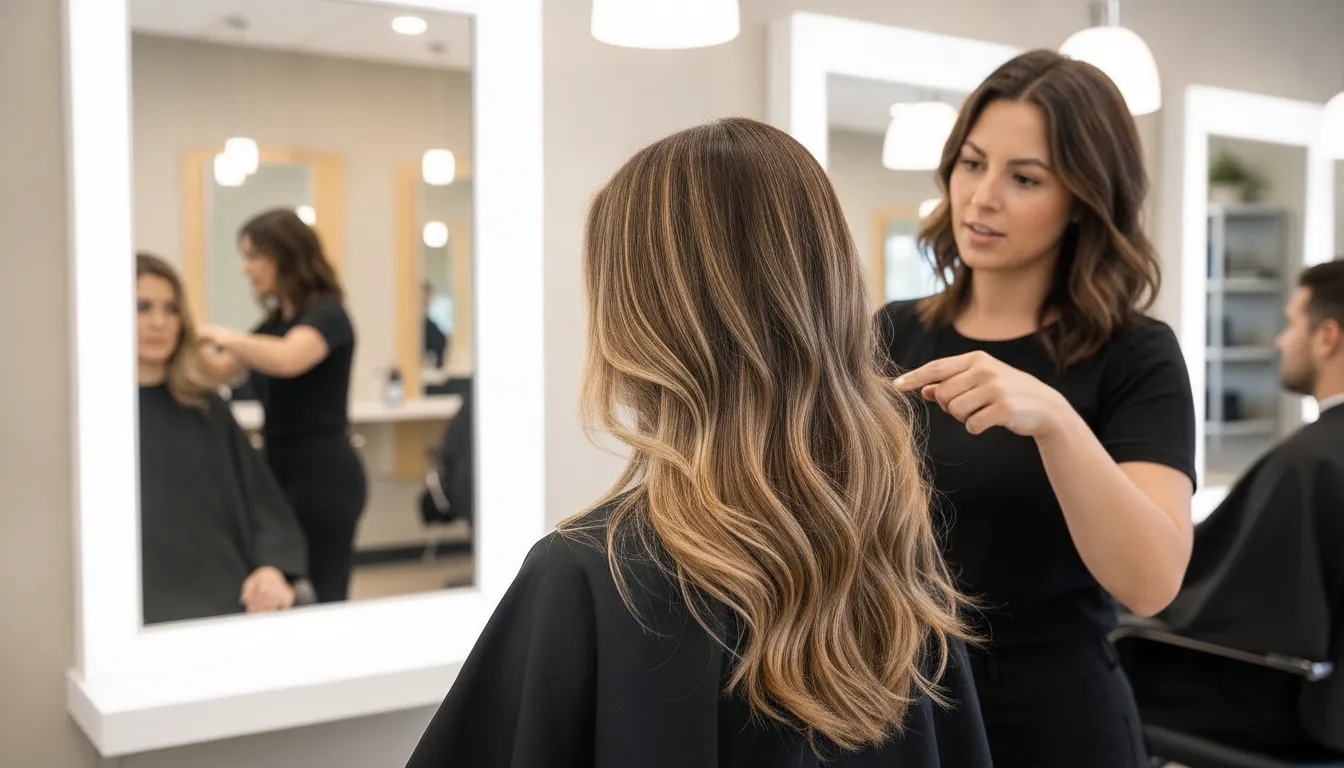
Choosing between balayage and traditional highlights starts with the result you want, not with a universal rule about which service is better. The technique, placement, desired contrast, hair history, and maintenance preferences all shape the right choice for your appointment.
The balayage vs highlights difference is mainly how lightener is applied. Balayage is generally hand-painted onto selected sections for softer, blended dimension. Traditional highlights use foils and sectioned strands for more defined placement and contrast. Your stylist can help match either approach to your goals and routine.
MjjM Salons color services begin with a one-on-one consultation and require an appointment. Balayage starts at $150, while highlights start at $100. Final pricing and availability vary by provider and location. Understanding the technique difference is the first step toward discussing the look you want.
What Is the Difference Between Balayage and Traditional Highlights?
The main difference is how the lightener or color is placed. Balayage is a freehand technique in which a stylist paints selected strands. Placement often begins below the root or through the mid-shaft and ends. Traditional highlights usually use foils to isolate woven or sliced sections. This allows lightener or color to be applied closer to the root and through a more defined section.
Neither method is universally better. The right choice depends on the amount of contrast you want. How you prefer your color to grow out, and the placement that suits your hair and overall style.
| Feature | Balayage | Traditional highlights |
|---|---|---|
| Application | Freehand painting on selected strands. | Sectioned strands isolated in foils. |
| Typical placement | Often below the root, from mid-shaft toward the ends. | Can begin close to the root and extend through the section. |
| Visual effect | Soft, blended dimension. | More defined brightness and contrast. |
| Stylist control | Painted design follows hair movement. | Foils control sectioning, saturation, and lift. |
- Feature
- Application
- Balayage
- Freehand painting on selected strands.
- Traditional highlights
- Sectioned strands isolated in foils.
- Feature
- Typical placement
- Balayage
- Often below the root, from mid-shaft toward the ends.
- Traditional highlights
- Can begin close to the root and extend through the section.
- Feature
- Visual effect
- Balayage
- Soft, blended dimension.
- Traditional highlights
- More defined brightness and contrast.
- Feature
- Stylist control
- Balayage
- Painted design follows hair movement.
- Traditional highlights
- Foils control sectioning, saturation, and lift.
With balayage, the stylist can vary placement and saturation to create dimension that follows the natural movement of the hair. Because the color commonly begins lower than the root, the transition may appear softer as the hair grows. This does not mean every balayage result looks the same or that it eliminates maintenance. Hair history, texture, starting color, and the desired level of lightness all affect the finished appearance.
Foil highlights offer a more structured approach. The stylist separates specific strands and encloses them in foils. This supports consistent processing and precise placement. Highlights may be concentrated around the face or crown for partial coverage. They may also be distributed across the head for a fuller result. Starting closer to the root can create clearer contrast. It may also make regrowth more noticeable, depending on the color difference and the way the hair grows.
These technique distinctions are also explained in professional cosmetology education, including this overview from the Cosmetology and Barbering Academy. During a consultation, a stylist can assess existing color and discuss preferred contrast and placement. They can then explain which approach is practical for your hair history and upkeep preferences.
Balayage and highlights are not always completely separate ideas. Balayage describes an application method, while highlights describe lighter pieces or sections within the hair. A stylist may use one technique or a combination of techniques to create the desired placement. The service name alone does not show every detail of the plan, which is why a consultation matters.
Which Technique Fits Your Hair Goals and Routine?
The right choice depends less on a universal ranking and more on the look you want to maintain between appointments. Balayage may suit someone seeking softer dimension that blends into the grow-out. Traditional highlights may be a better fit for someone who wants visible contrast, consistent brightness, or precise placement.
Desired contrast and root visibility
Balayage generally places lightener lower on the hair, often from the mid-shaft toward the ends. That placement can create a softer transition at the root and a more blended appearance as new growth comes in. It is worth discussing if you prefer natural-looking dimension rather than a clearly defined highlight pattern.
Traditional highlights use foils to isolate selected strands and can place lightener closer to the root. This gives a stylist control over placement, saturation, and lift. The result can be more noticeable contrast or brightness in specific areas. New growth may be easier to see, especially when the contrast between the natural color and highlights is strong.
Texture, hair history, and the desired result
Texture and previous color work matter when choosing either technique. Your stylist may need to consider how your hair has been colored or lightened. They will also consider its current condition and how it responds during an appointment. Hair history can affect which sections are appropriate to lighten and how closely the desired result can be matched.
A consultation is the right time to share previous color services, at-home products, and reference photos. Balayage and highlights can also be combined or adapted in some cases. That decision should come from an assessment of your goals and starting point.
Upkeep and grow-out
There is no universal maintenance schedule. Balayage is often selected by clients who want a more blended grow-out. Traditional highlights may require attention sooner when root regrowth becomes visible. Timing depends on hair growth, the amount of contrast, the placement of the lightener, and how closely you want to maintain the original result.
For more detail on coverage and service choices, review the Supercuts highlight service options. Then discuss your preferred contrast, routine, and hair history during a one-on-one consultation before booking the color service.
Color goals can also change over time. Someone beginning with subtle dimension may later want brighter framing pieces. Someone with a strong contrast preference may eventually prefer a softer transition. Talk about the result you want now and how you want it to evolve. This helps the stylist choose placement that makes sense for your next appointment as well as this one.
How Much Do Balayage and Highlights Cost at MjjM Salons?
MjjM Salons lists balayage starting at $150 and highlights starting at $100. These are starting prices, not guaranteed totals. Final cost can vary by provider and location. Availability of each technique may also differ across salons. Confirm the current service menu and pricing with the MjjM location you plan to visit.
Coverage is one practical factor behind the difference between a partial and a more extensive color service. Partial highlights generally focus on areas such as the face or crown. Full highlights use foils across the whole head. MjjM also lists color services starting at $80 for partial color and $100+ for full color. Those figures provide context for service scope. They should not be treated as a quote for balayage or highlights.
Other details discussed during a consultation can affect the service plan. These include the amount of hair being colored, the desired placement and contrast, and whether additional color steps are appropriate. For a broader explanation of hair color service pricing factors, see MjjM's related guide.
Color services require an appointment rather than an assumed walk-in visit. Each service begins with a one-on-one consultation. Provider schedules, local offerings, and pricing can change. Use the published starting prices as a planning reference only.
What Happens During a MjjM Color Consultation?
Color services at MjjM Salons require an appointment rather than a walk-in visit. The service begins with a one-on-one consultation. This conversation gives you and the stylist an opportunity to clarify the result you want. Review your hair history, and determine whether the requested technique fits your starting point.
To make the consultation useful, be prepared to discuss the following:
- Your hair history: Tell the stylist about recent color, highlights, balayage, bleaching, relaxers, or other chemical services. Mention any previous color that may still be present, even if it has grown out.
- Your desired result: Explain whether you want soft dimension, brighter pieces around the face, more visible contrast, or a broader change. Describe the overall effect you prefer rather than relying only on a service name.
- Reference photos: Bring a few clear photos that show the color, brightness, and placement you like. Reference images help make terms such as natural, bright, or blended more specific.
- Placement and coverage: Discuss where you want lightness concentrated. Partial highlights may focus on the face or crown, while full highlights provide coverage across the head.
- Maintenance expectations: Talk about how often you prefer to refresh your color and how visible you want regrowth to be between appointments. A stylist can explain how placement may affect upkeep.
- Appointment planning: Ask which service is offered at your preferred salon, what the current starting price is, and how much time should be reserved. Estimates are not guarantees because the plan depends on the service and your hair history.
Find a MjjM Salons location to check local color-service availability and discuss your goals with the appropriate salon team.
How Do You Choose Between Balayage and Highlights?
Start with the result you want to see in the mirror, then consider how often you want to maintain it. Balayage may suit someone who prefers softer, lower-contrast dimension that begins below the root and blends through the lengths. Traditional highlights may be a better match for someone seeking brighter, more defined strands or precise placement.
Your natural texture and hair history also matter. A stylist can adjust placement for straight, wavy, or curly hair so the color supports the way you wear it. Previous color and lightening can affect which approach is practical. Bring reference photos, but treat them as a starting point rather than a promise.
Because balayage commonly begins lower than the root, its grow-out can appear more blended for some clients. Highlights placed close to the root can show regrowth sooner and may call for more regular visits. Neither pattern is universal. Natural growth, contrast level, hair density, and placement all influence maintenance.
A consultation may also lead to a blended or combined approach. That recommendation depends on your hair history, desired contrast, and the services available at the selected location. MjjM color services require an appointment and begin with a one-on-one consultation.
Find a MjjM Salons location and plan your color consultation
Frequently Asked Questions About Balayage and Highlights
What is the difference between balayage and highlights?
Balayage is a hand-painted technique that generally places lightener lower on the hair for a blended result. Traditional highlights use foils and sectioned strands, often beginning closer to the root, for more defined and controlled contrast. The right option depends on your desired look, hair history, and maintenance preferences.
Which lasts longer, balayage or highlights?
Balayage often grows out more softly because the color is blended away from the root. Highlights can show regrowth sooner when lightener begins close to the scalp. There is no universal refresh schedule. Growth rate, starting color, placement, and the result you want all affect maintenance.
Does balayage look more natural than highlights?
Balayage can create softer, dimensional color with a gradual transition. Highlights can provide brighter, more uniform sections and clearer contrast. Neither is automatically more natural for every person. Placement, tone, hair texture, and the stylist's plan determine how the finished color looks.
Is balayage more expensive than highlights?
At MjjM Salons, balayage starts at $150 and highlights start at $100. These are starting prices, not guaranteed quotes. Final cost can vary by provider, location, hair length, color history, and the amount of work needed. Confirm current pricing during your consultation.
Is balayage considered a full highlight?
No. Balayage is a hand-painted highlighting technique, while a full highlight generally uses foils across the whole head. A stylist may recommend either service, a partial service, or a blended approach based on your goals and hair history. Color services require an appointment and consultation.
Schedule Your MjjM Salons Color Appointment
Choosing between balayage and traditional highlights is easier when a professional can review your hair history, desired level of contrast, maintenance preferences, and current availability. Confirm the best fit, starting pricing, and appointment details with your local salon team.
Find a MjjM Salons location and schedule your color consultation